A groundbreaking new audit released Thursday has exposed large-scale noncompliance with China’s national policy to cut unnecessary single-use plastic waste in the hospitality sector, revealing that star-rated hotels — the first establishments required to phase out routine provision of disposable plastic amenities — are falling even further behind their non-star-rated counterparts in meeting regulatory requirements.
The investigation was jointly conducted by two leading Chinese environmental nonprofits: the Institute of Public and Environmental Affairs (IPE) and the Wuhu Ecology Center, with technical and strategic guidance from the China Forum of Environmental Journalists. The research combined nationwide public oversight activities with on-the-ground field surveys to paint a comprehensive picture of policy adherence across China’s accommodation industry.
The policy in question was first rolled out by China’s Ministry of Commerce in August 2020, as part of the country’s broader national strategy to curb growing plastic pollution. The phased rule mandated that all star-rated hotels end the proactive placement of disposable plastic toiletries and amenities in guest rooms by the end of 2022, with the requirement expanding to all hotels, guest houses, and homestays nationwide by the end of 2025.
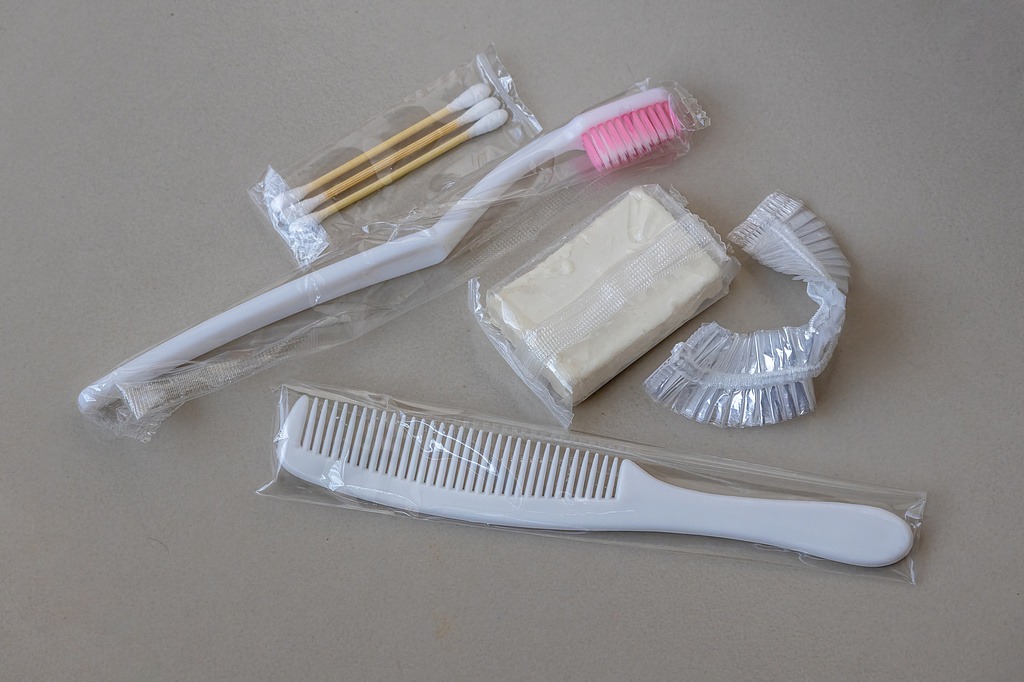
Despite this clear five-year phase-in period for the first phase of the mandate, the 2025 public monitoring initiative led by IPE and its partner NGOs confirms that the vast majority of hotels across China continue to automatically place disposable plastic toothbrushes, combs, and other single-use amenities in guest rooms without request.
The hotel plastic reduction monitoring project, which collects real-time, photo-verified data from volunteer observers across the country, had expanded to cover 1,867 hotels across 256 Chinese cities by the close of 2025. Of these surveyed locations, only 8.4 percent have stopped proactively placing disposable toothbrushes, and just 12.1 percent have ended routine provision of disposable plastic combs.
Most alarmingly, the report classifies star-rated hotels — which were given a two-year head start to comply with the rule — as the most consistent “laggards” in the sector. Every single one of the 40 five-star hotels included in the survey was found to still automatically provide full sets of disposable plastic amenities to guests. Further, data confirms that the share of compliant star-rated hotels for both disposable toothbrushes and combs is lower than the corresponding compliance rate among unrated accommodation establishments.
Ma Jun, founding director of IPE, outlined two core barriers driving widespread noncompliance among high-end and star-rated properties. First, a long-standing industry norm in China ties the perceived quality of hotel service directly to the inclusion of free disposable amenities, creating a cultural expectation that operators are reluctant to challenge. High-end hotels’ core customer base, which includes a large share of frequent business travelers, tends to prioritize granular service details, and intense market competition has left most properties fearful that becoming an early adopter of plastic reduction would harm customer satisfaction and put them at a competitive disadvantage against peers that continue to offer disposables.
Second, Ma noted that current regulatory frameworks impose only weak enforcement constraints on star-rated and high-end hotels. While 16 Chinese cities have introduced formal financial penalties for hotels that continue proactively providing prohibited disposable plastics, only 280 penalty cases were recorded across these jurisdictions between 2019 and 2025. And nearly all of these penalties were issued to small and medium-sized non-star-rated hotels, with almost no enforcement action taken against high-end star-rated properties.
Compounding these issues, Ma added that plastic waste reduction carries very little weight in China’s official hotel star-rating assessment framework and national green hotel certification programs, removing a key incentive for properties to invest in compliance.
Industry data underscores the scale of the plastic waste problem the policy is intended to address. According to the China Hospitality Association, China was home to more than 570,000 separate accommodation facilities and over 19 million guest rooms as of the end of 2024. A 2025 industry report estimated that China’s accommodation sector consumed 73,000 metric tons of disposable plastic products in 2020 alone, a figure that has remained largely steady due to widespread noncompliance with the reduction rule.