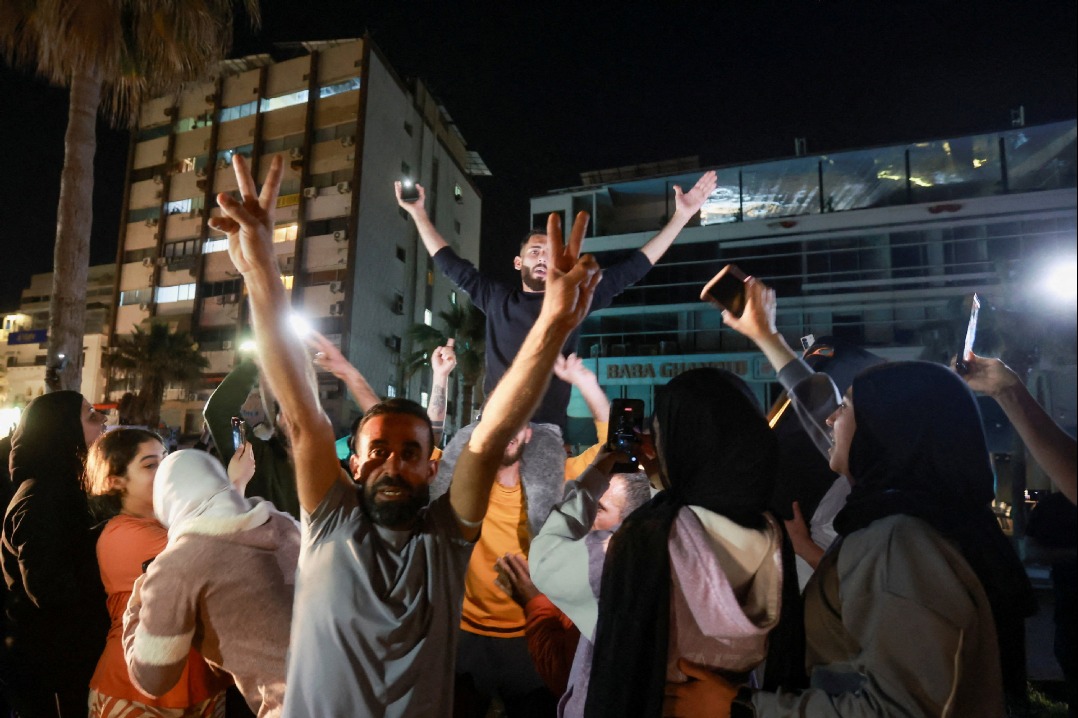
On April 17, 2026, a 10-day ceasefire agreement between Israel and Lebanon officially entered into force, bringing a long-awaited pause to more than a month of devastating cross-border escalation that has killed over 2,000 people. The truce was announced earlier by U.S. President Donald Trump, and its implementation has been met with widespread welcoming reactions from the international community, which has simultaneously called on all involved parties to uphold the terms of the deal and work toward a permanent end to hostilities.
Stephane Dujarric, chief spokesperson for United Nations Secretary-General Antonio Guterres, issued a statement affirming the UN’s support for any action that brings an end to violence and human suffering on both sides of the Blue Line, the demarcation line between Israel and Lebanon. Dujarric also stressed the urgent need for all relevant parties to strictly adhere to the newly implemented ceasefire terms.
Ahmed Aboul-Gheit, Secretary-General of the Arab League, characterized the truce as an important first step to ease the acute hardship faced by the Lebanese population. He called for immediate compliance from all sides and urged the launch of substantive, good-faith negotiations to lock in a permanent, sustainable ceasefire arrangement.
According to Iran’s official news agency IRNA, Iranian Foreign Ministry spokesman Esmaeil Baghaei also expressed support for the truce, noting that the agreement forms a component of a broader two-week Iran-U.S. ceasefire deal mediated by Pakistan that was designed to halt the wider regional conflict.
Egypt’s Foreign Ministry framed the ceasefire as a critical intervention to lower soaring regional tensions and put a stop to what it described as Israeli aggression against Lebanese territory. The Egyptian government called on the global community to step up and fulfill its shared responsibility to ensure the truce holds long-term, clear the way for unimpeded delivery of life-saving humanitarian aid, and allow thousands of displaced civilians to safely return to their homes of origin.
The United Arab Emirates’ Ministry of Foreign Affairs released a statement through the Emirates News Agency, expressing hope that the temporary truce will lay the groundwork for a more stable regional environment and serve as a catalyst for lasting peace. The ministry also reiterated the critical need for sustained, coordinated international action to prevent the resumption of hostilities and mitigate the widespread humanitarian and security fallout that has impacted countries across the Middle East.
Qatar’s Foreign Ministry echoed these sentiments, describing the ceasefire as a meaningful milestone in de-escalation efforts. The ministry, speaking to Qatar News Agency, expressed hope that the truce will reinforce both regional and global initiatives working toward a comprehensive, just, and lasting peace settlement for the entire Middle East region.
This latest truce comes after a previous ceasefire that had been in place since November 2024, which was marked by almost daily Israeli airstrikes across Lebanese territory. That fragile agreement collapsed entirely on March 2, when Hezbollah launched a barrage of rockets toward Israel in solidarity with Iran, triggering a massive intensification of Israeli air operations across Lebanon that pushed the two sides to the brink of full-scale war. As displaced Lebanese civilians began returning to their home communities over the weekend, crowds gathered in cities including Sidon to celebrate the halt in fighting, though global leaders remain cautious that long-term peace will require sustained diplomatic effort.