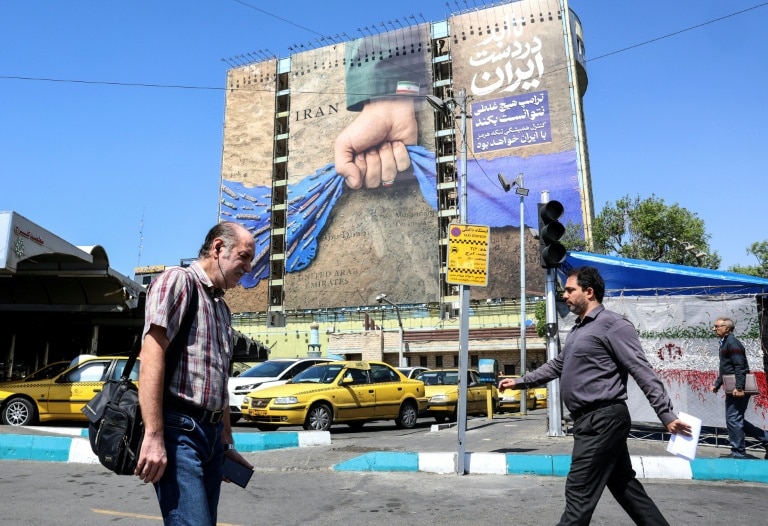
The ongoing Middle East conflict, triggered by US-Israeli airstrikes on Tehran that began on February 28, has produced a wave of interconnected political, economic and military developments across the globe, spanning diplomatic efforts, energy market shifts, security operations and financial market reactions.
One of the most immediate points of confusion emerged following remarks by former US President Donald Trump, who claimed that Israeli and Lebanese leaders planned to hold direct talks on Thursday. However, a senior anonymous official source confirmed to Agence France-Presse that Lebanese authorities have no knowledge of any scheduled contact with Israel, and no official notification of such negotiations has been delivered through formal diplomatic channels.
As global energy markets face heightened volatility tied to the conflict, the Australian government has moved quickly to shore up its strained domestic fuel reserves. Prime Minister Anthony Albanese announced Thursday that Canberra has finalized a deal to secure an extra 100 million liters of diesel supplied by Brunei and South Korea, addressing growing concerns over supply chain disruptions tied to Middle East hostilities.
For the global semiconductor industry, Taiwanese manufacturing giant TSMC, the world’s largest contract chipmaker, moved to calm investor fears this week. The company stated that it does not anticipate near-term disruptions to its access to critical industrial materials including helium and hydrogen, even as the conflict disrupts regional trade routes.
On the security front, Iranian state media outlet IRNA reported that the country’s Revolutionary Guards have detained four individuals suspected of espionage on behalf of Israel’s Mossad intelligence agency, per an official statement from the elite military force.
Pakistan is actively pushing for diplomatic de-escalation ahead of a potential second round of peace talks between the US and Iran. Pakistani Prime Minister Shehbaz Sharif confirmed he held a meeting with Saudi Arabia’s de facto leader Crown Prince Mohammed bin Salman in Jeddah, as part of a regional tour that also includes Qatar. Both Saudi Arabia and Qatar have been targeted by Iranian retaliatory strikes following the initial US-Israeli attacks on Tehran that sparked the full-scale war. Sharif wrote on social platform X that he reaffirmed Pakistan’s unwavering commitment to facilitating dialogue between Washington and Tehran, with the goal of reaching a lasting peace agreement for the region.
Tensions remain high around the Strait of Hormuz, the world’s most critical chokepoint for global oil and gas exports. Top military adviser to Iran’s supreme leader Mojtaba Khamenei issued a stark warning: if US forces launch a ground invasion of Iran, Iranian forces will take American troops hostage, and will sink any US vessels that enforce a military blockade on the strait. Hardline Iranian politician Mohsen Rezaei doubled down on the threat, claiming that a US ground invasion would play into Iran’s hands, saying “we would take thousands of hostages, and then for each hostage we would get a billion dollars”.
The US has expanded its economic pressure on Iran this week, unveiling a new round of sanctions targeting more than 20 individuals tied to Iranian oil transportation, alongside multiple companies and tankers linked to the shipping network run by petroleum magnate Mohammad Hossein Shamkhani. Shamkhani is the son of Ali Shamkhani, a senior security official and adviser to Iranian supreme leader Ali Khamenei; both father and son were killed in the opening US-Israeli airstrikes on February 28 that launched the war. US Treasury Secretary Scott Bessent said in an official statement that the Treasury department is moving aggressively under its “Economic Fury” campaign to target regime elites who profit at the expense of ordinary Iranian citizens.
The humanitarian toll of the conflict is set to grow sharply, according to World Bank Chief Economist Indermit Gill. Speaking to AFP, Gill warned that global ripple effects from the war could push an additional 60 million people into acute food insecurity. Gill noted that 300 million people already face severe hunger globally, and that figure could jump by 20% very rapidly as the conflict’s economic and trade disruptions spread.
Despite the rising humanitarian risks, global stock markets have rallied sharply this week on growing optimism for a diplomatic breakthrough. Japanese stock indices hit an all-time record high on Wednesday, driven by investor hopes that the US and Iran will extend their existing ceasefire to allow for further talks to end the war and reopen the Strait of Hormuz. All major Wall Street indices also closed at record highs the same day.
Israeli Prime Minister Benjamin Netanyahu reaffirmed alignment with US goals in a televised address Wednesday, saying that Israel and the United States share identical objectives when it comes to containing Iran. “We want to see enriched material removed from Iran; we want to see the elimination of enrichment capability within Iran; and, of course, we want to see the (Hormuz) strait reopened,” Netanyahu stated.