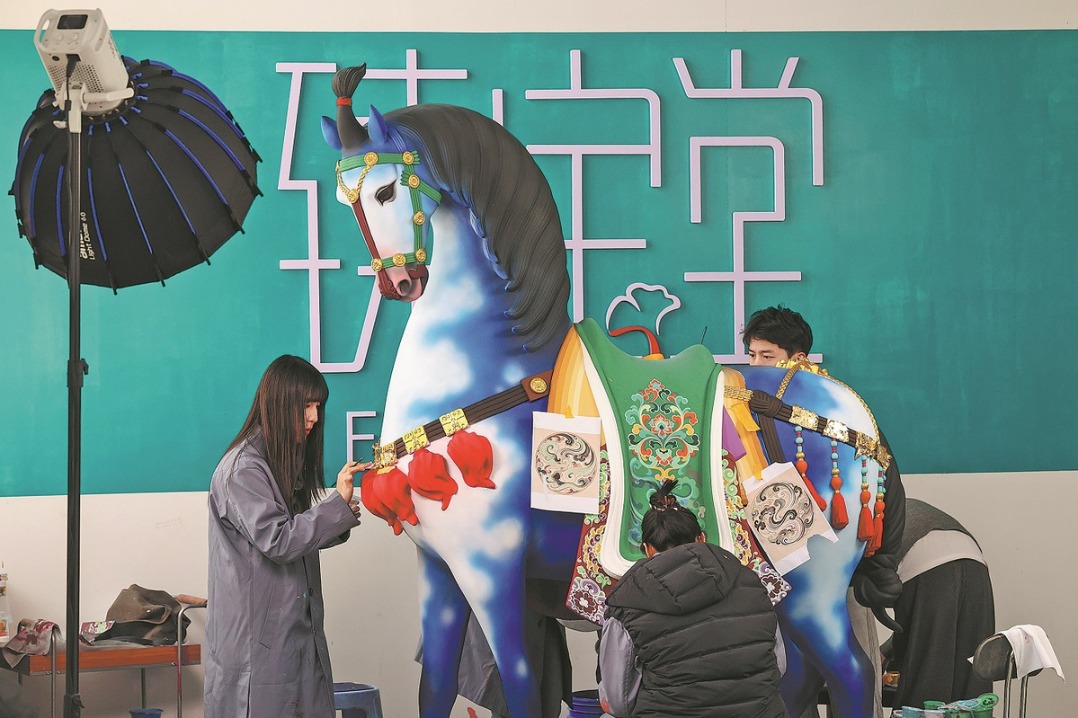
Nestled in Dongli District, Tianjin, the historic Clay Figure Zhang studio has long been home to grand, traditional sculptures of legendary Chinese figures like Guan Yu and Confucius. This Spring Festival, however, a new addition drew wide attention: a collection of vivid, compact clay figurines crafted to celebrate the Year of the Horse, bridging centuries-old craft with contemporary appeal.
As the sixth-generation custodian of Clay Figure Zhang — a Tianjin-origin folk art form inscribed as a national intangible cultural heritage of China in 2006 — Zhang Yu walks a careful line: he upholds time-honored craftsmanship while constantly exploring fresh modes of expression to connect with younger generations.
With a history stretching more than 200 years, Clay Figure Zhang has earned global acclaim for its strikingly lifelike, hand-painted figurines, which are molded from specially processed clay sourced from local canals. The craft has long been celebrated for its vivid realism, capturing everything from mythic heroes and Peking Opera characters to the subtle, intimate details of ordinary daily life.
Zhang emphasizes that safeguarding the authenticity of the centuries-old tradition does not equal rigidly clinging to outdated practices. “Our works, even when rooted in tradition, need to resonate with modern viewers if the craft is to survive and thrive,” he explained.
In his work of preservation, strict adherence to the craft’s traditional, multi-step production process remains non-negotiable. Creating a single finished Clay Figure Zhang figurine requires three core phases — sculpting, hand-painting, and firing — broken down into 18 separate, meticulous steps that demand years of practice to master.
The raw clay itself follows a rigorous preparation process: it is harvested from the banks of Tianjin’s South Grand Canal, carefully sorted, left to air-dry naturally for three full years, then kneaded repeatedly to build the ideal balance of adhesiveness and breathability that gives Clay Figure Zhang its signature texture and durability.
The sculpting process begins with building a internal support framework, followed by incremental layering of clay, gradual refining of the figure’s contours, and painstaking work on tiny, high-detail features such as ears, a step that only skilled artisans can execute with consistent precision.
Zhang credits the craft’s 200 years of cross-generational popularity to its enduring connection to everyday life. “The heart of Clay Figure Zhang creation has always been the lives of ordinary people, or vivid portrayals of characters people know from traditional theater,” he said. “Traditional culture is never an abstract concept. It’s something that flows naturally through our daily lives, and that is what we strive to carry forward in every piece we make.”