On a crisp Monday in April 2026, a small group of 120 displaced Palestinian women were granted just a few hours of restricted access to their Jenin refugee camp homes, part of the occupied West Bank, more than a year after Israeli military forces launched a sweeping offensive that forced tens of thousands of residents to flee. What was supposed to be a rare opportunity to retrieve personal belongings and inspect damaged properties became a new chapter of trauma, marked by invasive searches, deliberate humiliation, and the shattering final sight of entire neighborhoods reduced to smoldering rubble.
Since the large-scale military operation began in January 2025, Israeli forces have expelled approximately 40,000 Palestinians from Jenin camp and surrounding population centers in the northern West Bank. The incursion has left most of the camp in catastrophic ruins, with large swathes sealed off to civilian residents and permanent military outposts installed across seized residential property. Monday’s access was only the second such limited entry permitted for displaced residents, following a smaller outing in July 2025 that allowed just 25 women to enter the camp.
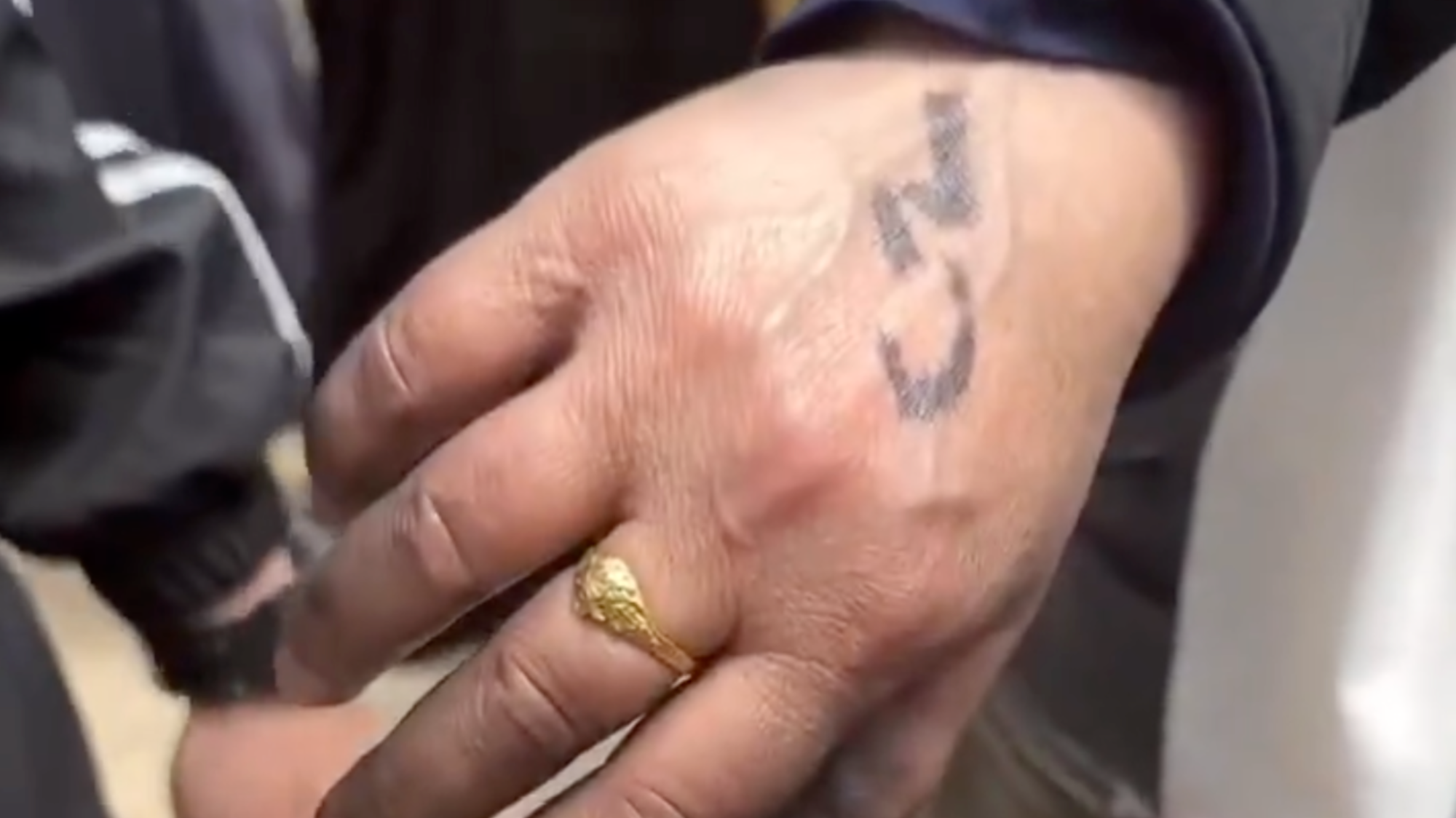
Before the women were allowed past the heavily fortified camp entrance, soldiers marked each woman’s hand with inked numbers and letters, sorting them by the neighborhood where their homes were located. Multiple women reported hours of degrading treatment even before entry: forced to stand for three hours under the blazing Middle Eastern sun, with troops intentionally altering neighborhood classification markings to extend the delay. Um Fadi Wahdan, a 60-something resident of the camp’s Wahdan neighborhood who spoke to Middle East Eye, described the chaotic, abusive processing that preceded the two-hour visit.
When Wahdan finally reached her family’s five-story home—where more than 30 of her extended family once resided—she found nothing but ash and charred remains. The entire structure had been burned to the ground. “I went to the Wahdan neighbourhood where my house is. I was shocked to find it completely burned down, all five storeys. I wish I hadn’t gone,” she told reporters. She left with nothing, her grief compounded by the fact that the visit reopened wounds that had just begun to heal: her son Saeed was killed by Israeli forces in an August 2024 vehicle airstrike, one son has been detained by Israeli authorities for seven years, and a third remains in Palestinian Authority security custody.
Wandering through the camp, Wahdan found a landscape unrecognizable from the home she grew up in. Open sewage pooled across crumbling streets, dozens of intact residential homes had been converted into military barracks, and filth covered every surface. Where once families gathered, now only military vehicles and armed patrols move freely.
For 60-year-old Abeer al-Sabbagh, a displaced woman whose home was bombed by Israeli forces in 2023—a strike that killed three members of her family—the abuse extended beyond waiting and marking. Al-Sabbagh, who fled the camp in 2023 with her elderly mother (who has since died in exile), recounted that female Israeli soldiers forced all 120 women to undergo invasive strip searches inside a seized former family home, which had been cleared of all furniture and converted into a temporary military holding area.
Al-Sabbagh said when she tried to refuse the search and leave, soldiers told her she would not be allowed to exit without undergoing the procedure. “It was indecent, especially since there were women in their twenties among us, and we didn’t know if there were hidden cameras,” she told Middle East Eye. Frightened by the overwhelming military presence and devastated by what she could already see of the destruction, al-Sabbagh turned back before reaching her neighborhood. “There isn’t a single house left fit for habitation,” she said.
The accounts of the 120 women paint a devastating picture of the aftermath of Israel’s year-long military occupation of the Jenin refugee camp. For displaced residents who have spent more than a year living away from their homes, the rare, tightly controlled visit did not provide closure—instead, it confirmed that the community they knew is gone, and their treatment at the hands of Israeli forces added a new layer of dehumanizing trauma to an already devastating displacement.