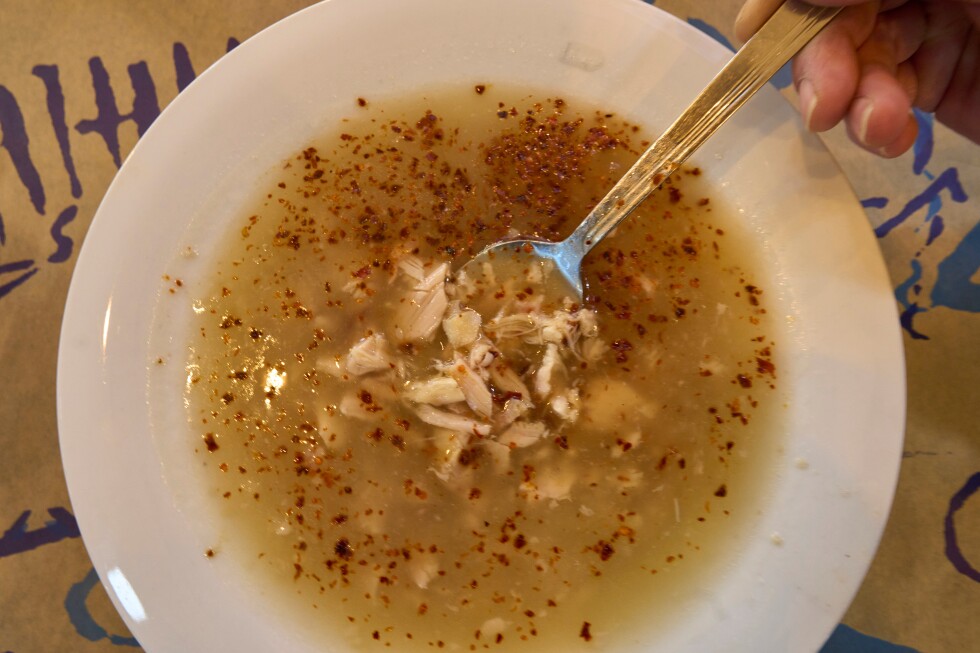
A decades-long culinary rivalry between Greece and Turkey has reignited over a humble, hearty offal soup, with both nations staking competing claims to the dish as Greece pushes to have it recognized as an official intangible cultural heritage by UNESCO.
In the northern Greek port city of Thessaloniki, Dimitris Tsarouhas, a third-generation restaurateur who has spent decades perfecting the recipe for what Greeks call patsa, is leading the charge for UNESCO registration. The dish, a slow-simmered broth made from bovine bellies and trotters, has long been a beloved staple in Greek culture — particularly as a soothing morning meal that locals swear eases the discomfort of hangovers and even treats chronic stomach ailments. Proponents of the Greek claim trace the dish’s origins all the way back to 8th century BCE, referencing a mention in Homer’s *Odyssey* that describes a similar preparation served at a feast for Penelope’s suitors, moments before Odysseus reveals his identity after 10 years of travel. According to Tsarouhas, the epic describes a dish of stuffed bovine belly mixed with suet and blood — a description he says matches the core of modern Greek patsa perfectly.
Tsarouhas has not undertaken this effort alone. Working alongside a local Thessaloniki cultural association and Lena Oflidis, the only historian to have published a full book on the soup’s history, he has compiled a comprehensive dossier to submit to UNESCO outlining Greece’s historical and cultural connection to the dish. For the chefs who prepare patsa daily, the recipe’s lineage is clear: 22-year veteran patsa chef Pantazis Koukoumvris explains that ancient Greek cooks developed the preparation, which was later adopted by Byzantine chefs, passed to the Ottoman Empire, and preserved through generations in Greek cooking.
Beyond its legendary roots, regular patrons and proponents point to the dish’s practical and cultural place in modern Greek life. Dozens of customers flock to Tsarouhas’ restaurant at all hours, starting at dawn, to enjoy a bowl, customized to preference with coarsely or finely chopped meat, topped with mustard, hot pepper flakes and sesame seeds. Tsarouhas, citing medical research, notes that the slow-cooked trotters contain nearly 33.4% consumable collagen, making it a popular remedy for joint pain after surgery, stomach ulcers and other digestive issues linked to alcohol consumption. Long-time patron Christos Mousoulis emphasizes that regardless of any similarities between the Greek and Turkish versions, patsa has been a fixture in Greek family life for generations. “We grew up with Greek patsa,” he explained. That shared cultural connection, he argues, is the foundation of Greece’s claim.
But across the Aegean Sea, Turkish chefs, restaurateurs and members of the public are pushing back hard against the Greek bid, calling it an attempt to appropriate a dish that Turks have called iskembe çorbası, or simply iskembe, as a national staple for centuries. Unlike Greek patsa, which includes both tripe and trotters, Turkish iskembe is made exclusively with slow-cooked tripe, simmered for 8 to 9 hours overnight before being served in a rich garlicky broth.
Ali Turkmen, a 59-year-old Istanbul restaurateur who has specialized in iskembe for decades, says the dish is inherently tied to Turkish cultural identity. “It’s been a staple in our culture for centuries. Tripe soup is something specific to Turks,” he said, echoing the long-running pattern of culinary disputes between the two neighbors that have already included competing claims to baklava, stuffed grape leaves, and Turkish coffee, all legacies of centuries of shared Ottoman history.
Turkish historical evidence points to 17th-century writings from famed Ottoman traveler Evliya Celebi, who documented street vendors selling tripe and trotter soup in the streets of Istanbul in his *Book of Travels*, proving a 400-year recorded history of the dish in Turkish lands. Turkish media has widely framed the Greek bid as cultural appropriation, and members of the public are calling for official pushback. “Tripe soup is one of the dishes we should be promoting to the world,” said Murat Pajik, a regular customer at Istanbul’s iconic Alem Iskembe restaurant. “Measures need to be taken to protect our heritage.” Another patron, Engin Cakar, called the Greek claim futile: “This tripe dish is from our grandfathers, our mothers. It belongs to us.”
Despite the public friction, Tsarouhas remains confident in Greece’s case, striking a conciliatory tone amid the dispute. “Nobody’s stopping them from making their own claim,” he said. “We believe that we have all the documentation to secure certification for patsa as Greek heritage. We don’t have anything to divide with our neighbors — rather the taste unites us.”
The UNESCO registration process is expected to take months, leaving the question of which nation can lay claim to the beloved soup still very much up in the air.