As obesity emerges as one of China’s fastest-growing public health crises, local governments across the country have rolled out a creative, incentive-driven strategy to encourage residents to lose weight: trading lost body mass for free groceries, from premium beef to fresh produce. One of the most high-profile of these programs, launched in the eastern Chinese city of Wuxi, has already drawn massive public interest since kicking off in March.
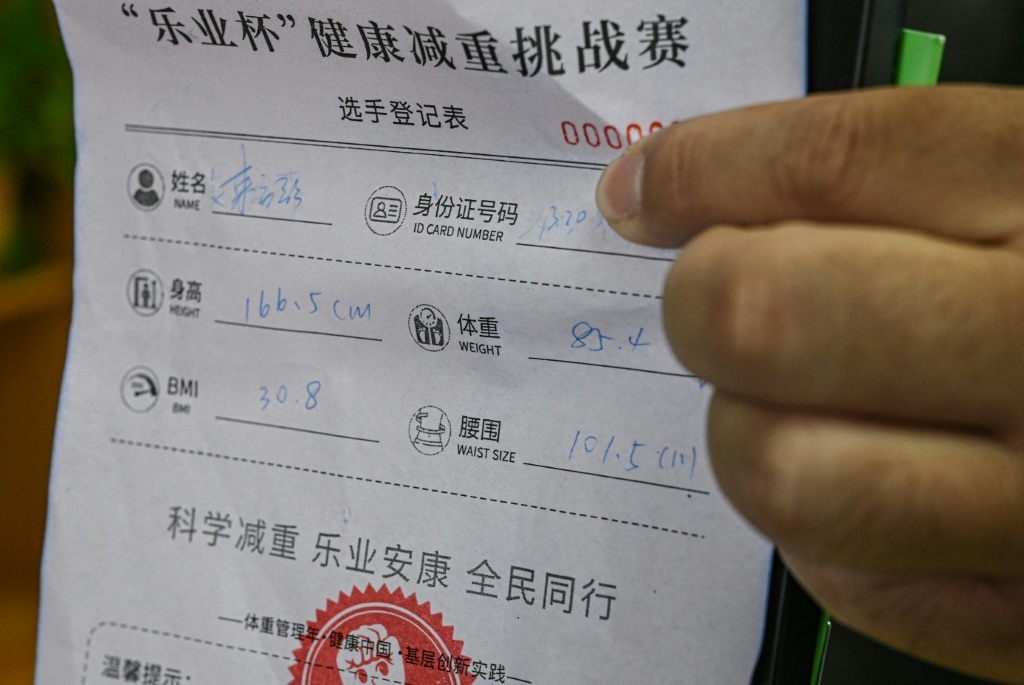
At Wuxi’s local community center, hundreds of participants like 44-year-old Shu Fangqiang, a man with a BMI of 30 that qualifies him as obese, have already signed up. The program’s rules are simple: for every 500 grams a participant loses by the final weigh-in scheduled for January 2027, they earn 500 grams of boneless beef, or 1.5 kilograms of bone-in beef. Those who exceed weight loss targets can even earn premium cuts such as oxtail, with a maximum total reward capped at 10 kilograms of free meat. Organizers reported that more than 1,000 eligible local residents have registered, with thousands more turned away due to local residence requirements. When an AFP correspondent visited the site, queues for initial measurements stretched to a dozen people in both men’s and women’s lines, with staff logging height, weight, BMI and waist measurements, offering encouraging notes, and on-site doctors providing personalized health guidance. Event banners also emphasize safe, sustainable weight loss over rapid results, warning against dangerous practices such as unregulated diet drugs, self-induced vomiting and extreme fasting.
For many participants, the program offers a welcome extra push to stick to long-planned health goals. “Even without the beef, I wanted to lose weight for my health,” Shu said, noting that his excess weight has disrupted his sleep, hurt his productivity at work and impacted his overall quality of life. He aims to lose 20 kilograms through the program. Forty-four-year-old participant Zheng Haihua added that the incentive helps hold her accountable to her goal of moving more and cutting back on overeating, admitting that “when you see delicious food, it’s hard to resist.”
Wuxi’s “Trade Fat for Beef” initiative is far from unique. Similar community-led programs have popped up across China and gone viral on Chinese social media. In southwestern Yunnan province, a “Flab for Potatoes” program rewards participants for shrinking their waistlines, with top performers eligible for free chicken instead of potatoes. National supermarket chain Yonghui Superstores has launched its own version, allowing customers to trade 1.5 kilograms of weight lost over 10 days for 500 grams of beef, crayfish or kiwifruit.
Public health data underscores the urgency of China’s obesity challenge. The World Health Organization estimates that as of 2022, more than one-third of Chinese adults are overweight, and 8.3 percent meet the WHO’s definition of obesity. While those rates are far lower than the United States’ 72.4 percent overweight and 42 percent obesity rates, China’s obesity crisis has grown at an alarming pace: the Chinese Center for Disease Control and Prevention reports the national obese population tripled between 2004 and 2008. By 2021, a study published in *The Lancet* found China had 402 million overweight or obese adults over 25 — the largest obese population of any country worldwide. The 2021 study attributed the trend to China’s rapid urbanization, which has pushed more workers into sedentary office jobs, shifted national diets toward processed, high-sugar and high-fat foods, and reduced average daily physical activity. If current growth rates continue, China’s National Health Commission (NHC) projects that 70.5 percent of Chinese adults could be overweight or obese by 2030, using the commission’s stricter national obesity criteria.
National public health officials have already launched nationwide anti-obesity campaigns, driven by concerns over rising rates of chronic obesity-linked diseases and growing healthcare costs. Local community programs like Wuxi’s are widely seen as a complementary effort to boost public engagement. Local physician Wu Changyan called the incentive model “a fun way to get people motivated” to adopt healthier habits, noting that modern life’s conveniences and chronic workplace stress have made it easier than ever for people to gain excess weight. Still, some public health experts urge tempered expectations. Li Sheyu, a clinical professor at Sichuan University’s West China Hospital, noted that these programs are fundamentally a traditional incentive-based approach to weight loss, not a transformative solution for the national obesity crisis. “I would not consider it a gamechanger in the big picture,” he said. “But it is a good example of disseminating weight-loss ideas to the public.”