LIMA, Peru — A historic presidential election in Peru has entered its third day of vote counting, with the Andean nation now confirmed to face a June runoff after no candidate secured the absolute majority required for an outright win. As of Tuesday morning, final identities of the two advancing contenders were still pending official confirmation from electoral bodies, though partial tallies point to a surprise showdown between two right-wing candidates.
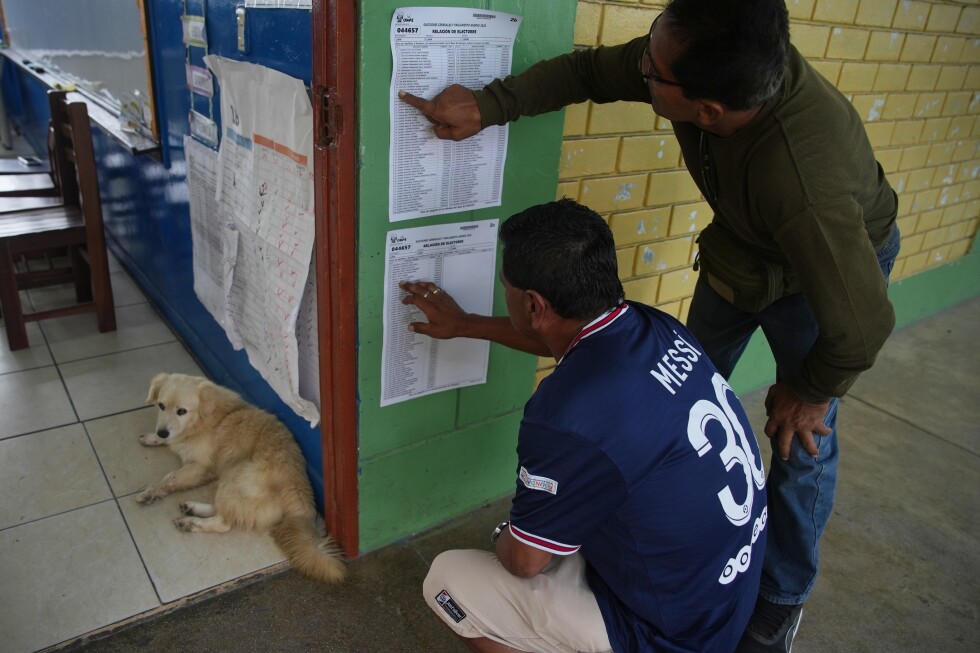
The April general election was thrown into disarray almost immediately after polls opened, when widespread failures in ballot distribution to voting stations across the country and abroad left thousands of registered voters unable to cast their ballots on Sunday. Electoral authorities responded by extending voting into Monday, a last-minute adjustment that affected more than 52,000 Lima-based voters as well as Peruvians registered to vote at two U.S. polling locations in Orlando, Florida and Paterson, New Jersey.
With 72% of all ballots processed as of Tuesday, updated figures from Peru’s National Office of Electoral Processes place conservative candidate Keiko Fujimori in the lead with 16.92% of voter support. Fujimori, who is making her fourth bid for the presidency, is the daughter of disgraced former Peruvian president Alberto Fujimori, whose legacy continues to divide national public opinion. Trailing in second place at 12.95% is Rafael López Aliaga, an ultra-conservative former mayor of Lima, the country’s capital. If the current standings hold, the two right-wing candidates will compete for the presidency in the June 7 runoff, a turn that highlights the dramatic shift in Peru’s political landscape amid widespread public anger with established institutions.
Under Peruvian electoral law, a candidate must win more than 50% of the popular vote to claim the presidency outright. The winner of the June runoff will make history as the country’s ninth presidential administration in just 10 years, a statistic that underscores the extreme political instability that has gripped the South American nation in recent years — Peru has already seen three different presidents hold office since October alone.
Voting is a legal requirement for all Peruvian citizens between the ages of 18 and 70, with non-participation carrying a fine of up to $32, a penalty that has added stress to voters already frustrated by logistical failures. Many Peruvians who waited hours to vote on Monday expressed deep dissatisfaction with the chaotic electoral process. “I’m fed up,” said 56-year-old Iris Valle, who cast her ballot at a Lima public school on Monday, noting she feared losing pay from her employer after missing work to fulfill her mandatory voting obligation.
The election unfolded against a backdrop of rising violent crime and persistent corruption scandals that have eroded public trust in political leaders. Polling conducted ahead of the vote found that a large majority of Peruvian voters view all 35 candidates — the largest field in the country’s history — as either dishonest, unprepared for the presidency, or both.
Despite deep political uncertainty and a surge in criminal activity, Peru’s economy has outperformed many expectations, posting annual growth of more than 3% in both 2024 and 2025. The country’s strong performance has been largely driven by its status as one of the world’s top copper exporters, a key commodity for global manufacturing and clean energy transition. While this growth is lower than the 5% to 6% annual expansion Peru recorded during the 2000s commodity boom, it has defied predictions that repeated political turnover would tank economic activity.
Will Freeman, a Latin American Studies fellow at the Council on Foreign Relations, attributed the country’s steady economic growth to the enduring institutional stability of Peru’s central bank. “Although Peru has had all these presidents, it has had only one central bank president since the mid-2000s, Julio Velarde,” Freeman explained. “He’s been a real source of stability and given investors some confidence that there is an institutional core that remains from one presidency to the next in Peru.”
Even so, Freeman warned that the country cannot rely on existing institutional stability to sustain long-term growth. Recent policy decisions passed by Peru’s Congress reflect a shift toward more conservative economic populism, he said, and current growth rates still lag far behind the boom years of the 2000s.
Both leading candidates have centered their campaigns on promises of aggressive anti-crime action, a platform tailored to widespread public anxiety over rising violence. Fujimori has pledged an iron-fisted crackdown on criminal activity, though her political party has backed recent legislative changes that legal experts argue make it far harder to prosecute and convict offenders. The reforms, supported by Fujimori’s bloc in Congress, eliminated preliminary detention for certain offenses and raised the legal bar for law enforcement to seize assets connected to criminal activity. If elected, Fujimori has proposed allowing criminal trial judges to serve anonymously and requiring incarcerated people to work in exchange for food rations.
Her closest rival López Aliaga has put forward an even harderline agenda, proposing to construct new high-security prisons in Peru’s remote Amazon region, also backing anonymous judge protections, and promising to expel all undocumented foreign residents living in the country.
Beyond the presidential race, Sunday’s election also marked a historic shift in Peru’s legislative system: for the first time in more than 30 years, voters elected members of a new bicameral Congress, following recent reforms that grant substantial new powers to the newly created upper legislative chamber. The outcome of congressional elections will also shape the next administration’s ability to pass policy, regardless of who wins the presidency in June.
This report was contributed by Cristina Garcia Cano from Caracas, Venezuela. Associated Press coverage of Latin American and Caribbean affairs can be found at https://apnews.com/hub/latin-america.