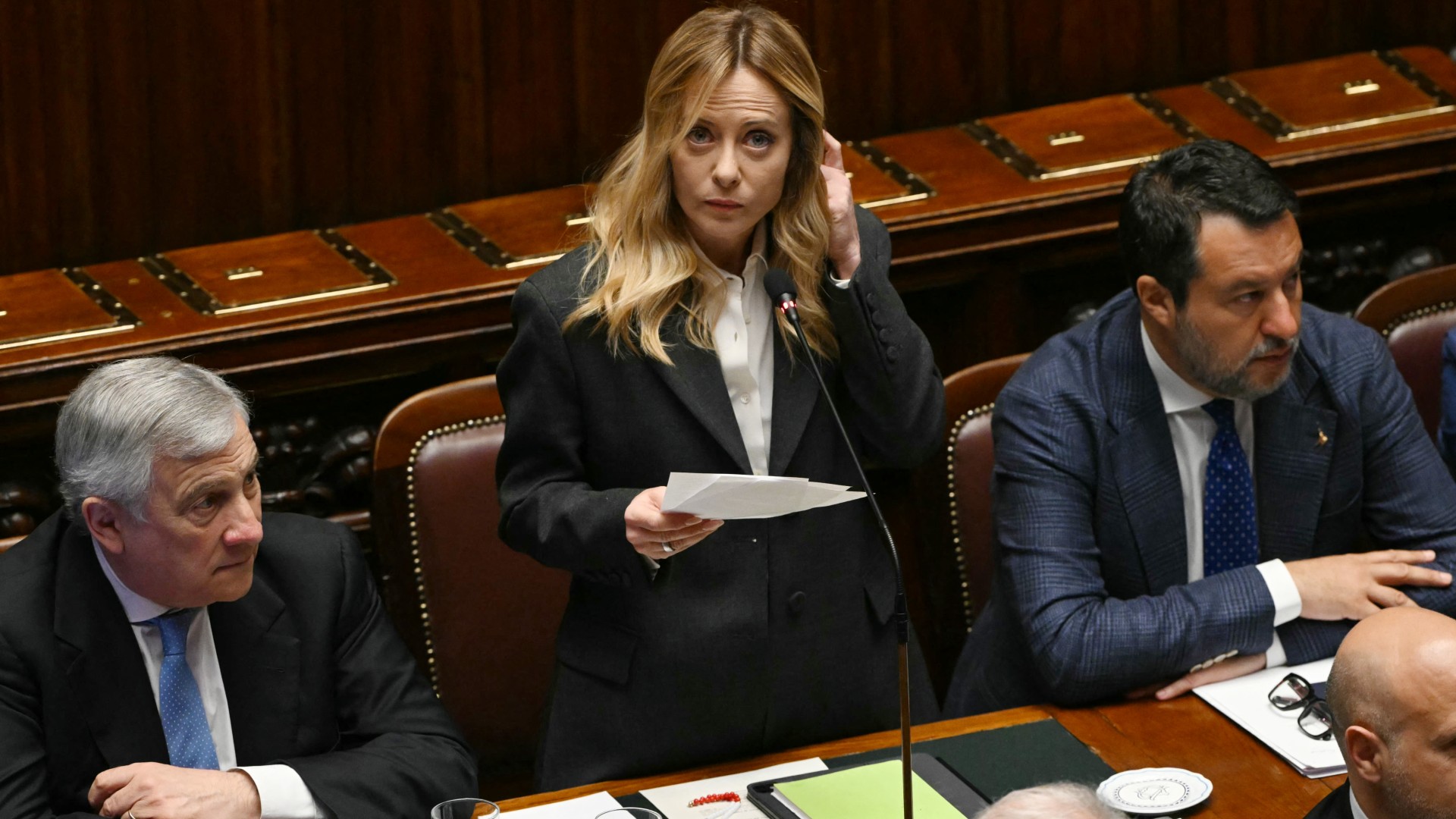
On a Tuesday appearance at a Verona wine industry fair, Italian Prime Minister Giorgia Meloni confirmed a sweeping policy shift: Rome has moved to suspend the automatic five-year renewal of its bilateral defence cooperation framework with Israel, a decision that marks a notable break from the Italian right-wing government’s previously close alignment with Tel Aviv.
The agreement in question, which first entered into force in April 2016, is structured to auto-renew every five years unless one party intervenes to halt the process. It covers a broad range of military collaboration, including cross-border exchanges of military equipment, joint training programs, and cooperative research and development initiatives for defence technology. According to leading Italian national news agency Ansa, Italian Defence Minister Guido Crosetto has already formalized the suspension in an official letter sent to his Israeli counterpart, Israel Katz.
A source familiar with the internal deliberations confirmed to Reuters that the decision was finalized during a high-level meeting on Monday, which included Meloni, Foreign Minister Antonio Tajani, Defence Minister Crosetto, and Deputy Prime Minister Matteo Salvini. The policy change comes amid a rapidly escalating series of diplomatic spats between the two nations, triggered by recent Israeli military actions targeting positions in Lebanon that have directly impacted Italian interests.
Just one week prior, the Italian government officially condemned an incident where Israeli forces opened fire on a convoy transporting Italian UN peacekeepers deployed in southern Lebanon. While no peacekeepers were injured in the strike, one Italian military vehicle was significantly damaged, prompting Rome to summon Israel’s top diplomat in Rome to register a formal protest.
The escalation continued this week, with Foreign Minister Tajani undertaking an official visit to Beirut on Monday, where he publicly delivered a sharp rebuke of Israeli military operations in Lebanon. “Lebanon is a brother country that we hold in our hearts. That is why today I came to Beirut to convey to President Aoun Italy’s solidarity following the unacceptable attacks by Israel against the civilian population,” Tajani stated during his trip. “The Government will do everything possible to achieve peace and put an end to the suffering of the Lebanese people. We must avoid at all costs another escalation like the one in Gaza.”
In response to Tajani’s public comments, Israeli officials summoned Italy’s ambassador to Tel Aviv in a reciprocal act of diplomatic protest, further deepening the rift between the two longtime partners. Until recent weeks, Meloni’s right-wing administration had positioned itself as one of Israel’s staunchest allies within the European Union, making this suspension of core defence cooperation one of the most significant public breaks from that alignment to date.