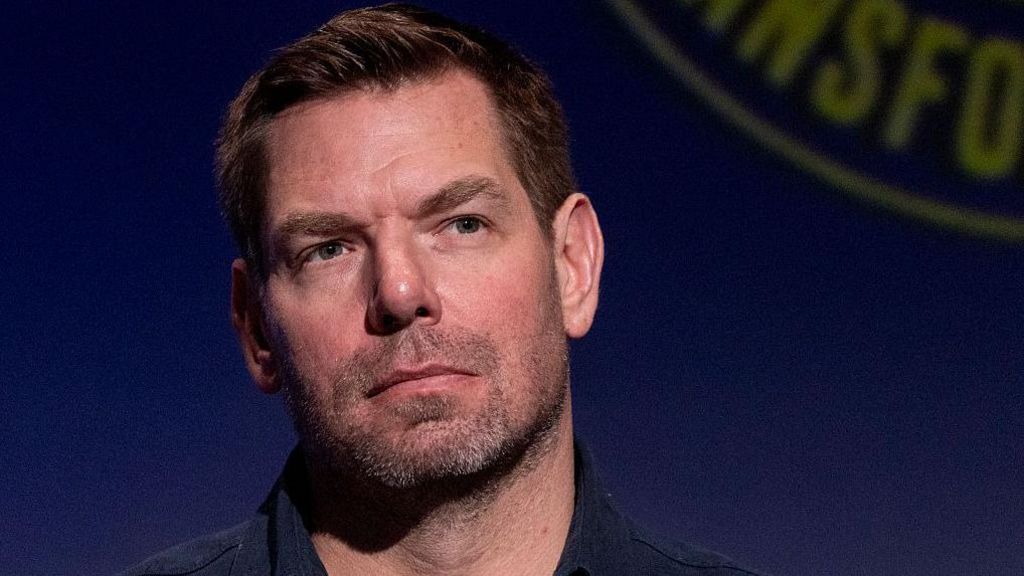
The 2026 California gubernatorial election, a contest Democrats have long considered a safe win for their party, has been thrown into unprecedented turmoil following the sudden exit of its leading Democratic contender. Representative Eric Swalwell announced his withdrawal from the race Sunday, mere days after multiple women published sexual assault and misconduct allegations against him through major outlets including the San Francisco Chronicle and CNN. Swalwell has forcefully denied all serious false accusations, though he acknowledged poor judgment in past decisions. Hours after the U.S. House Ethics Committee launched a formal investigation into the claims Monday, Swalwell also announced he would resign his congressional seat entirely.
Swalwell’s departure has amplified a cascade of pre-existing problems that have plagued California’s Democratic party for months in the lead-up to the June primary. Term limit rules bar incumbent Democratic Governor Gavin Newsom from seeking re-election, and high-profile, widely recognized state politicians – including former Vice President Kamala Harris – have opted not to enter the race. That has left a crowded field of eight lesser-known Democratic candidates, all struggling to build name recognition and traction across California’s massive, costly media market. Even before Swalwell’s exit, the fragmented field had split the Democratic base, alarming party strategists.
A March opinion poll from the University of California, Berkeley Institute of Governmental Studies sent shockwaves through state political circles when it found two Republican candidates leading all contenders in voter support, thanks to the fractured Democratic vote. Under California’s unique nonpartisan primary system, the top two vote-getters advance to the November general election regardless of partisan affiliation. That means a June primary outcome could leave Democrats completely shut out of the general election ballot – a nearly unthinkable scenario in one of the most reliably blue states in the U.S., which has not had a Republican governor since Arnold Schwarzenegger left office in 2011.
Political experts warn that such an outcome would represent an unforced error of historic proportions for Democrats, particularly in a state where former President Donald Trump’s approval rating hovers below 30%. Beyond the state’s borders, the results of this gubernatorial race carry national weight: California is the fifth-largest economy in the world, and its pioneering policies on climate change, consumer protection, and technology often shape regulatory frameworks across the entire country.
Before his exit, Swalwell had begun to build momentum, pulling ahead of the rest of the crowded Democratic field and positioning the party to lock down a spot in the general election. With his sudden exit, no clear candidate has emerged to absorb his support. Veteran Democratic strategist Garry South, who has managed four gubernatorial campaigns across California, described the current state of the race as unlike anything he has ever witnessed. “The Democratic field was already pretty muddled, even after Swalwell took a small lead,” South noted. “Now, it’s just an outright morass.”
Two candidates are widely seen as the top contenders to pick up Swalwell’s supporters: former Congresswoman Katie Porter and billionaire climate activist Tom Steyer. Neither, however, is a guaranteed lock to win a spot in the general election. Porter has previously faced public reports of alleged staff mistreatment, though she has pledged to improve how she supports her team. Steyer has poured $89 million into campaign advertising across the state, according to the San Francisco Chronicle, but has yet to see a corresponding jump in poll numbers.
The remaining Democratic field includes former U.S. Health and Human Services Secretary Xavier Becerra, San Jose Mayor Matt Mahan, California Superintendent of Public Instruction Tony Thurmond, former Los Angeles Mayor Antonio Villaraigosa, and former State Controller Betty Yee. None of the current candidates, however, have the statewide star power political analysts say the party needs to cut through the clutter, and many voters report struggling to distinguish between the crowded slate of contenders.
For many California voters, the lack of name recognition has left them undecided just two months out from the June 2 primary. Joko Tamura, a 58-year-old Santa Monica resident and registered Democrat who plans to vote in the election, says she does not even recognize half the candidates running. While she has heard of Steyer and Porter, she says she lacks enough information to settle on a favorite, with homelessness and the state’s crippling cost of living topping her list of policy concerns. Jacob Casey, a 42-year-old physician, says his busy schedule has left him unable to follow the race closely, and he is still waiting for a candidate to break through.
Mark DiCamillo, who led the March UC Berkeley poll that first exposed Democrats’ weakness, called the current state of the race unprecedented. “I haven’t seen a primary election for governor with this level of indecision, and lack of voter enthusiasm, with less than two months to go before voting starts to take place,” DiCamillo told the BBC, adding that “voters really don’t have a clear picture of any one of the candidates.”
In the wake of Swalwell’s exit, both Porter and Steyer have moved quickly to fill the political vacuum. Porter has centered her messaging on California’s ongoing housing affordability crisis, framing policy proposals to speed up construction approvals and cut through red tape to lower building costs and expand access to diverse, affordable housing for state workers. Steyer has also leaned into cost of living issues, releasing a social media video outlining his plan to lower living costs for California residents, and attacking former President Trump over the ongoing conflict in Iran, arguing working-class Californians are bearing the financial brunt of the conflict. That messaging has resonated with some undecided voters like Leila Salem, a 28-year-old independent Los Angeles voter who staunchly opposes the war, though she says she still plans to research candidates before making her choice.
While Democrats grapple with internal chaos, California’s Republican party is also facing its own divisions. The two leading GOP candidates are former Fox News host and one-time British Prime Minister David Cameron advisor Steve Hilton, and Riverside County Sheriff Chad Bianco. The March poll found Republican voters evenly split between the two candidates, and with Democrats holding a 2-to-1 voter registration advantage in the state, locking the Democratic party out of the general election remains the GOP’s only plausible path to a November victory.
Many political analysts expected that Trump’s recent endorsement of Hilton would shift momentum in the GOP race, consolidating Republican support behind Hilton and pushing him ahead of at least one Democratic candidate. However, neither candidate secured the official endorsement of the California Republican Party during its recent convention, leaving the two evenly matched among the party’s base.
Wesley Hussey, a political science professor at Sacramento State University, notes that Democrats have clear reason for anxiety after the collapse of their presumptive front-runner. Still, he added that a conventional general election matching one Democrat and one Republican remains possible if Swalwell’s supporters consolidate behind Porter, Steyer, or even a last-minute entry into the race. “It’s going to take a few days for the dust to settle in this new version of the race,” Hussey said.