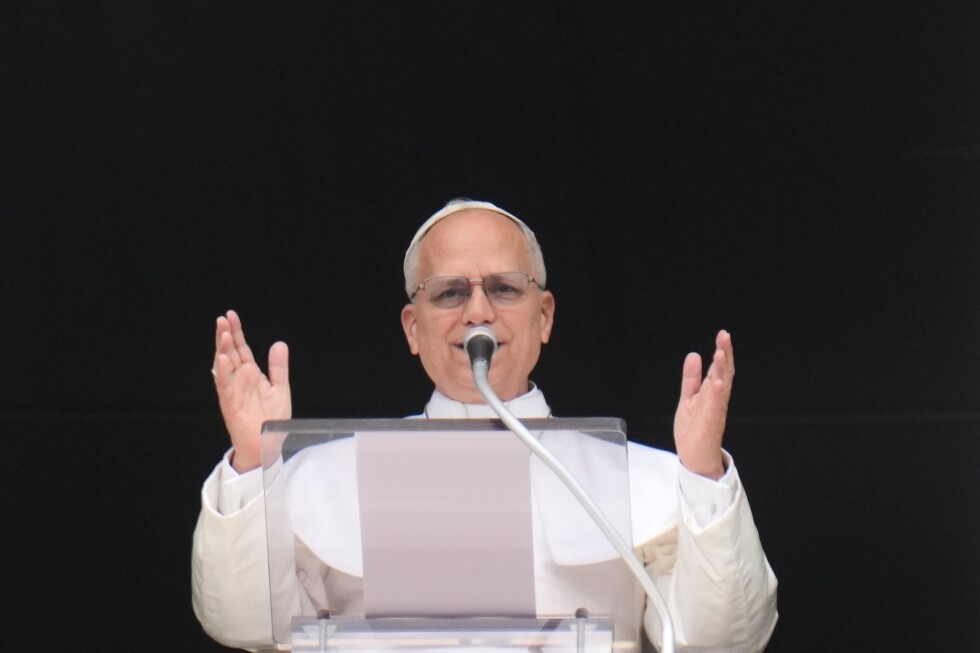
VATICAN CITY (Rewritten Report) — History is being made this week as Pope Leo XIV, the first American-born pontiff in Catholic history, touches down in Algeria on Monday for the first-ever papal visit to the North African nation. The two-day stop kicks off an ambitious 11-day, four-country tour across Africa — a region increasingly recognized as the dynamic growing heart of the global Catholic Church — that will also take him to Cameroon, Angola, and Equatorial Guinea.
Upon arrival at Algiers’ international airport, Pope Leo was scheduled to be welcomed by Algerian President Abdelmadjid Tebboune, followed by an official meeting at the El Mouradia presidential palace. The first day of the itinerary includes an address to national authorities, a visit to Algiers’ iconic Great Mosque, an interfaith gathering at the landmark Our Lady of Africa basilica, and a solemn prayer vigil at a nearby monument honoring migrants who lost their lives in shipwrecks while attempting to cross the Mediterranean to Europe.
The 19th-century Roman-Byzantine basilica, constructed during France’s colonial rule of Algeria, will host a unique interfaith gathering bringing together a Catholic nun, a Pentecostal worshiper, and a Muslim representative to share testimonies ahead of the pope’s remarks. The trip’s official motto, drawn from Pope Leo’s standard opening greeting for all his public engagements, is “Peace be with you,” and Vatican officials have confirmed that advancing interfaith harmony between Christians and Muslims and a global message of peace will serve as the visit’s core themes, particularly amid rising religious and geopolitical conflict around the world.
Vatican statistics show Algeria is home to a tiny Catholic community of roughly 9,000 people, most of whom are foreign residents, living alongside a majority Sunni Muslim population of nearly 47 million. Remarkably, Algiers Archbishop Jean-Paul Vesco, a French cardinal, noted that nine out of 10 daily visitors to the Our Lady of Africa basilica are Muslim, a quiet demonstration of everyday coexistence in the country. “It’s wonderful to be able to show that we can be brothers and sisters together, building a society despite our different religions,” Vesco told the Associated Press on the eve of the pope’s arrival. “And that is what our church has been doing since this country gained independence.”
Despite this grassroots harmony, the visit takes place against a backdrop of ongoing international scrutiny of religious freedom in Algeria. The U.S. government has included Algeria on its special watch list for severe religious freedom violations, noting that while the country’s constitution recognizes faiths other than Islam and permits private worship that adheres to public order regulations, proselytizing to Muslims by non-Muslims is a criminal offense, and multiple independent Christian denominations have faced government pressure including forced church closures. Some Algerian citizens have raised questions about the long-term impact of the papal visit on religious minorities: “I imagine it’s a good thing that a pope is visiting Algeria,” said Selma Dénane, a student in the coastal city of Annaba. “But what will it change afterward? Will Christians be able to say, ‘I am a Christian’ without fear or stigmatization?’”
The trip also includes a powerful tribute to religious martyrs of Algeria’s brutal modern history. Three decades after winning independence from France, the country descended into a 1990s civil war known locally as the “black decade,” which killed an estimated 250,000 people as government forces battled an Islamist insurgency. Nineteen Catholics were among those killed, including seven Trappist monks from the Tibhirine monastery south of Algiers, who were kidnapped and murdered in 1996, as well as two nuns from Pope Leo’s own Augustinian religious order. On Monday, the pope will pay homage to the 19 martyrs, all of whom were beatified in 2018 in the first such ceremony ever held in the Muslim world. He will also meet with remaining Augustinian nuns who operate an interfaith social services program out of the Algiers basilica that supports people of all religious backgrounds.
Archbishop Vesco pointed out a striking coincidence: Pope Leo was elected to the papacy on May 8, which is the Catholic feast day of these 19 Algerian martyrs. Vesco extended an invitation to visit immediately after Leo’s election, and the pope has long drawn inspiration from the community: he has adopted a phrase from Christian de Chergé, the martyred prior of the Tibhirine monastery, as a personal mantra — speaking of “unarmed and disarming peace” — and has cited the line repeatedly since the night of his election. “Obviously he will speak a lot about peace, it’s urgent and current,” Vesco said.
Beyond its interfaith and pastoral goals, the Algeria visit is a deeply personal pilgrimage for Pope Leo, a lifelong member of the Augustinian order. The order draws its founding inspiration from St. Augustine of Hippo, the 5th-century theological and philosophical giant of the early Christian church, who was born in what is now Algeria and spent nearly all his life in the region. On Tuesday, the pope will travel to Annaba, the modern city built on the site of ancient Hippo where St. Augustine served as bishop for 30 years, to walk in the saint’s footsteps.
From his first public address after his election, Pope Leo has introduced himself as a “son of St. Augustine,” and has referenced the early church father repeatedly in speeches, homilies, and official documents over his first year in office. Paul Camacho, associate director of the Augustinian Institute at Villanova University — Pope Leo’s Augustinian-run alma mater near Philadelphia — noted that references to St. Augustine are a consistent throughline in the pope’s teaching. “I don’t know if I have seen a statement, a homily, an apostolic letter or exhortation that doesn’t reference Augustine,” Camacho said. “The shadow that he casts on Western thought, not just the Roman Catholic Church but on Western thought more broadly, is very, very long indeed.”
This reporting was compiled from original on-the-ground contributions by Ouali and Santalucia in Algiers, Algeria.