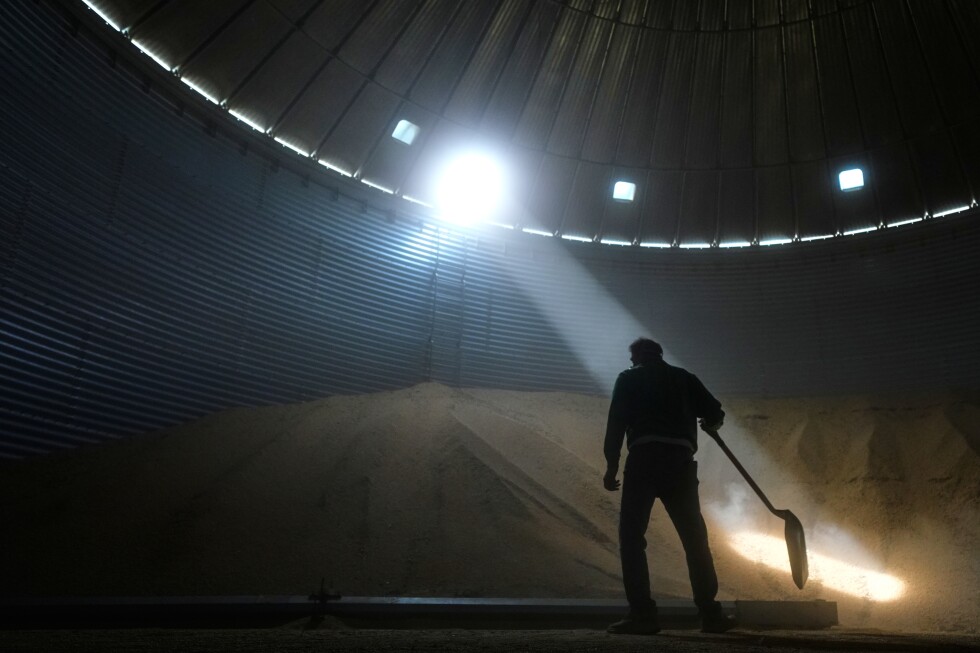
As 60-year-old fifth-generation farmer Doug Bartek stepped into a Nebraska grain bin this spring, shoveling soybeans toward a conveyor amid gusty plains winds, the weight of mounting industry stress was far heavier than any load of grain. For Bartek, who chairs the Nebraska Soybean Association and runs a 2,000-acre operation near Wahoo where three-quarters of the land is rented, this planting season has brought a tangled web of crises that have left many American soybean producers trapped between skyrocketing input costs and stagnant, depressed crop prices.
Bartek’s anxiety is far from unique. Across the U.S. Midwest, which produces the bulk of the nation’s soybean crop, thousands of commercial grain farmers are grappling with overlapping economic pressures that have pushed many toward negative margins, cash flow crunches, and even the risk of bankruptcy. What began as a gradual trend of rising costs and oversupplied global markets has been compounded in recent months by trade policy fallout and geopolitical conflict in the Middle East, creating a perfect storm for an industry that forms the backbone of American agriculture.
Soybeans have grown from a minor crop to one of the United States’ most valuable agricultural exports over the past 60 years. Driven by rising international demand, particularly from China, production exploded in the 1990s, and today soybeans and corn are the two dominant row crops across U.S. farm country. But even before recent geopolitical and trade disruptions, farmers faced systemic financial headwinds. Global soybean production has consistently hit new record highs in recent years, largely fueled by expanded output from Brazil, which overtook the U.S. as the world’s top soybean producer years ago. The resulting global supply glut has kept soybean prices stubbornly low for nearly a decade.
At the same time, every major cost associated with farming has climbed steadily, and in many cases sharply. U.S. Department of Agriculture data shows overall farm production expenses, including seed, pesticides, equipment, and land, have trended upward for decades, with soybean operating costs remaining elevated since 2020 and projected to rise again by 2026. For many Midwest farmers who rent at least part of their land — a common arrangement across the region — rising rental rates have added an extra layer of strain. Bartek notes that many absentee landowners, unfamiliar with the struggles of on-the-ground farming, are hiking rents to cover their own rising property taxes, passing that cost directly onto producers.
Paul Mitchell, a professor of agricultural and applied economics at the University of Wisconsin-Madison, says the combination of low commodity prices and bloated input costs has left many farmers in a critical liquidity crunch. Long-term industry consolidation has amplified this pressure: the number of U.S. farms has shrunk for decades, as larger, more capital-intensive operations have absorbed smaller struggling farms. Today’s modern commercial farm requires far more financial reserves than it did a generation ago, leaving producers far more vulnerable to sudden market and cost shifts.
Market forces are not the only drag on farmer profits. In 2025, sweeping tariffs imposed by the Trump administration on Chinese goods triggered a full-scale trade war, with Beijing responding by placing retaliatory tariffs on U.S. soybeans — China was the top global buyer of American soybeans at the time, representing a critical export market for Midwest producers. The result was an immediate collapse in soybean prices that left farmers who needed to sell to cover operating costs and mortgage payments facing devastating losses.
While the two nations reached a trade deal later that year, with China committing to large annual soybean purchases and the Trump administration rolling out a $12 billion emergency aid package for affected farmers, industry experts and producers agree the damage was lasting. Even with federal aid, the American Soybean Association estimates farmers still lost nearly $75 per harvested acre of soybeans from the 2025 crop. More importantly, the trade war pushed China to permanently shift its purchasing toward competing suppliers, primarily Brazil, accelerating the long-term decline of U.S. soybean market share in China. Today, U.S. soybean exports remain 15% to 20% below pre-trade war levels, a gap that has never been filled by other global markets, according to Iowa State University agricultural economist Chad Hart.
“We’re not nearly as dominant in the world export market as we used to be,” explained Joseph Glauber, former chief economist at the U.S. Department of Agriculture. Global competitors have reaped permanent benefits from the trade shift caused by the dispute, he added.
The most recent shock to hit soybean farmers came from the February 2026 Iran conflict, after joint U.S.-Israeli attacks on Iran triggered a near-total shutdown of shipping through the Strait of Hormuz, a critical global chokepoint for energy and commodity trade. The shutdown sent global oil prices soaring, pushing up the cost of gasoline and diesel that farmers rely on for planting, harvesting, and transporting crops. More critically, the disruption cut off access to key fertilizer exports from the Persian Gulf: roughly half of the world’s traded urea, a widely used nitrogen fertilizer, comes from the Middle East, which is a top supplier of U.S. fertilizer imports.
While soybeans do not require nitrogen fertilizer, nearly all U.S. soybean farmers also grow corn, which depends heavily on nitrogen inputs. The result was an immediate, dramatic spike in fertilizer prices that has not fully abated.
A two-week ceasefire was reached in early April that called for reopening the Strait of Hormuz, but ongoing tensions over related conflicts have kept shipping slow, and fertilizer prices remain far higher than pre-conflict levels. While many farmers locked in fertilizer prices last fall by purchasing ahead of planting season, producers short on cash last year are now facing unmanageable input costs, according to Dave Walton, an Iowa farmer and vice president of the American Soybean Association. The conflict also damaged critical energy and chemical export facilities in the Middle East, and supply chain disruptions for crop chemical inputs will persist long after the ceasefire, according to Seth Goldstein, senior equity analyst at investment research firm Morningstar.
For many corn and soybean farmers like Chris Gould of Maple Park, Illinois, the cumulative effect of higher fuel and fertilizer costs makes a negative return nearly inevitable this growing season. “It’s hard to say if I’m gonna come out ahead or behind on this whole deal,” Gould said. “But I suspect I’m going to come out behind.”
The cumulative strain of these overlapping crises is already showing up in national farm health metrics. While still relatively low by historical standards, farm bankruptcies continued to climb in 2025, according to the American Farm Bureau Federation. A late March survey of 400 U.S. farmers conducted by Purdue University’s Center for Commercial Agriculture found that nearly half of respondents reported their operations were in worse financial shape than one year prior. Goldstein warns that if input costs continue to outpace crop price growth, the U.S. will see more bankruptcies in coming months.
For Bartek, who has farmed Nebraska soil for 43 years, the thrill of spring planting remains — but the uncertainty about the future has never been heavier. He has watched neighbors lose their farms to bankruptcy or forced retirement auctions, and even heard of farmers dying by suicide amid unmanageable financial stress. Today, he questions whether he made the right choice in helping his son purchase his own farm just a few years ago. Like many of his peers across the Midwest, Bartek compares modern commercial farming to a high-stakes gamble, where producers bet millions of dollars on an unpredictable growing season, with increasingly little guarantee of a return that will cover their costs.