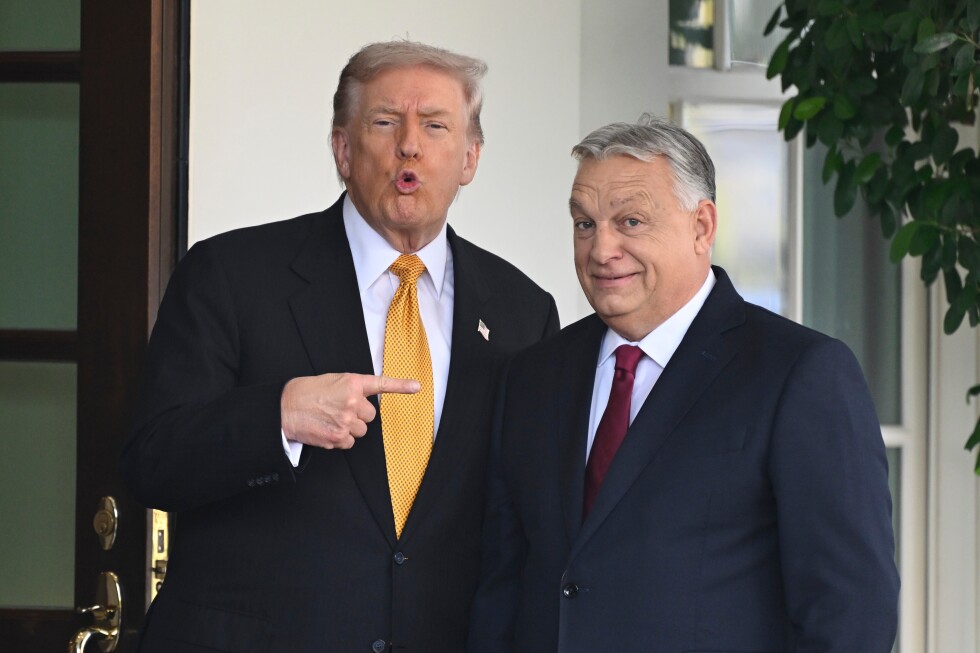
Half a globe away from Washington D.C., a small European nation delivered a seismic political upset over the weekend that is already reshaping conversations about authoritarianism, democratic resilience, and Donald Trump’s global influence on the modern right. After 16 years in power, Hungarian Prime Minister Viktor Orbán — a towering icon of global conservative illiberalism with deep ties to leading U.S. right-wing figures — was ousted from office in a result that carries sweeping implications for both transatlantic politics and U.S. domestic discourse.
Orbán’s rise to long-term power was built on a deliberate, well-documented project of authoritarian consolidation. First elected as an anti-communist activist in 1998, he shifted sharply to the nationalist right after losing office in 2002. Returning to power in 2010 amid the global recession, Orbán and his Fidesz party leveraged a parliamentary supermajority to rewrite Hungary’s constitution, restructuring the judiciary to stack courts with party loyalists, redraw legislative districts to lock in electoral advantages, and pressure independent media outlets to sell to allies of the ruling party. He embraced a brand he called “illiberal democracy”, built a massive border barrier to block migration from Africa and Asia, cracked down on LGBTQ+ rights, stifled press freedom, and undermined judicial independence — moves that led the European Union to formally classify Hungary as an “electoral autocracy”.
For years, Orbán has been a beloved figure among large swathes of the U.S. conservative movement. Donald Trump, who has long drawn parallels between his own political agenda and Orbán’s approach to consolidating power, openly backed the incumbent’s re-election bid. In a high-profile move that highlighted the depth of that support, Trump dispatched Vice President JD Vance to Budapest just one week before the election — while the U.S. was already engaged in active conflict with Iran — to campaign on Orbán’s behalf. Leading conservative organizations have also cultivated close ties to the Hungarian leader: the American Conservative Union, chaired by Matt Schlapp, hosted the first European iteration of its Conservative Political Action Conference (CPAC) in Budapest and has made the country a regular stop for conservative gatherings, with Orbán even headlining CPAC’s 2022 conference in Dallas.
But Orbán’s defeat has exposed growing limits to Trump’s ability to sway outcomes for allied politicians abroad, analysts and political figures say. The ongoing Iran war, which has roiled global energy markets and sparked widespread public anger across Europe, eroded whatever advantage Vance’s last-minute campaign visit could deliver. Even with a heavily rigged electoral playing field that gave Orbán’s ruling party enormous structural advantages, Hungarian voters — frustrated by soaring inflation, economic stagnation, and the fallout of the ongoing regional conflict — delivered a clear vote for change. This outcome aligns with a broader global trend of voter discontent that has hurt incumbents across the ideological spectrum in recent elections.
The result has drawn reactions from across the U.S. political spectrum, with many lawmakers from both parties celebrating Orbán’s ouster. Republican Rep. Don Bacon of Nebraska used the moment to criticize overt U.S. interference in foreign democracies, writing on X: “Don’t fiddle-paddle in other democracies’ elections.” Republican Sen. Roger Wicker of Mississippi added: “The freedom-loving people of Hungary have voted decisively in favor of democracy and the rule of law.” Even Schlapp, a long-time Orbán ally, acknowledged the public desire for change, noting that the economic and energy turmoil spurred by the Iran war significantly hurt the incumbent’s standing. “The people of Hungary were saying, ‘We’re having a difficult time with inflation, the economy and the war. Let’s try the new guy,’” Schlapp said. Far-right Romanian European Parliament member Diana Sosoaca went further, calling Vance’s pre-election visit a “big mistake” given widespread European anger over the conflict.
For U.S. democracy watchers and political observers, Orbán’s defeat carries particularly sharp lessons for American politics, given the well-documented parallels between Orbán’s consolidation of power and Trump’s own political ambitions. For years, Democrats have warned that Trump has sought to use executive power to tilt electoral outcomes in his favor, pointing to his 2020 attempt to overturn Joe Biden’s election victory and his ongoing efforts to reshape election rules for 2028. Ian Bassin, executive director of nonpartisan anti-authoritarian group Protect Democracy, framed the Hungarian result as a reassuring signal for U.S. voters: “Even a guy who rigs the system can be defeated when the people unite and turn out against him.”
Democratic lawmakers have echoed that framing, drawing direct parallels between Orbán’s project and Trump’s efforts in the U.S. “He was essentially doing what Donald Trump is trying to do here in the United States,” said Sen. Chris Van Hollen of Maryland. “My read of the election is that the people of Hungary rejected that, just like people in the United States are rejecting that here at home.” Rep. Ro Khanna of California even used the upset to jab Vance directly, writing on X: “Your ally Orban conceded. In 2028, will you @JDVance follow suit if you lose?”
Some experts, however, warn against overstating the lessons of Orbán’s defeat for U.S. democracy. Harvard political scientist Steven Levitsky, co-author of *How Democracies Die*, noted that while the result proves oppositions can win even on a tilted playing field, Trump has already taken steps toward authoritarian consolidation that Orbán never attempted. He pointed to Trump’s use of the Justice Department to target political opponents and fatal shootings of protesters by U.S. immigration authorities as steps beyond what Orbán’s government enacted. Still, Levitsky noted the broader global takeaway: “Democracies are facing many challenges in many parts of the world, but so are autocracies.”
Beyond U.S. politics, Orbán’s ouster carries immediate geopolitical implications for the war in Ukraine. Orbán was the European leader closest to Russian President Vladimir Putin, and he repeatedly blocked European Union military and humanitarian aid to Ukraine following Russia’s 2022 full-scale invasion. As of Sunday, Trump had not issued any public comment on Orbán’s defeat.