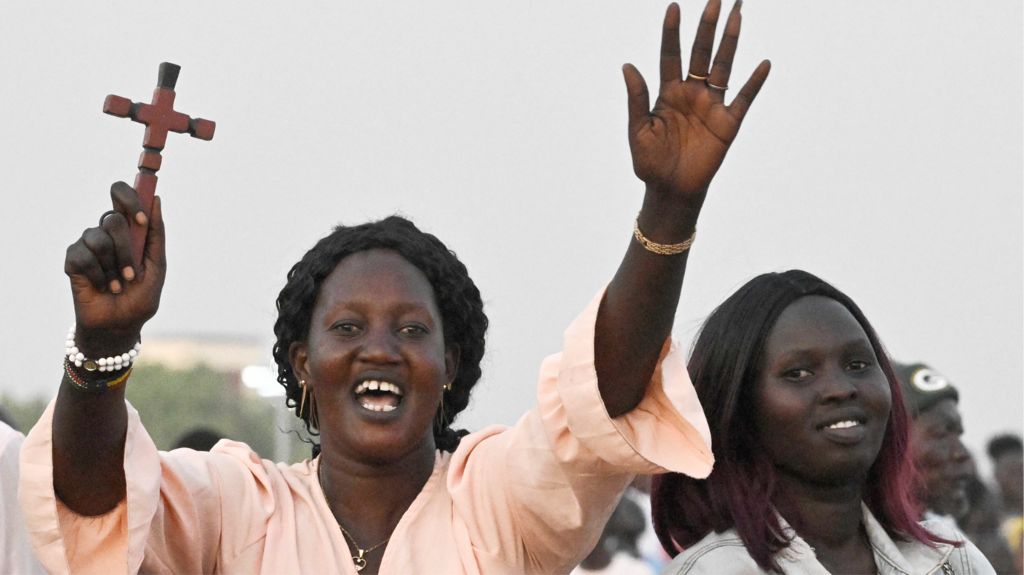
Pope Leo XIV is set to kick off a high-stakes 11-day pastoral tour across four African nations this Monday, with a core mission to shift global focus to the continent amid its rapidly growing role in global Catholicism, a senior Vatican official has confirmed. This trip marks only the second major international visit the Pope has undertaken since his election to the papacy in May last year, underscoring the Vatican’s growing prioritization of African Catholic communities.
Recent 2024 demographic data underscores why the tour is ranked as a personal priority for Pope Leo: more than 288 million Catholics — over one-fifth of the global Catholic population — currently reside in Africa, making the continent one of the fastest-growing regions for the Catholic Church. Latest Vatican surveys also confirm a striking, consistent increase in the number of baptized Catholics across the region, further cementing Africa’s centrality to the Church’s future.
Covering nearly 18,000 kilometers across 18 separate flights, the Pope’s itinerary includes stops in 11 cities across Algeria, Cameroon, Angola, and Equatorial Guinea. In a deliberate symbolic choice, Pope Leo has selected Algeria — a majority Sunni Muslim nation and the only stop on the tour without a large Catholic population — as his first port of call. The country holds deep personal significance for the Pope: it is the birthplace of 4th-century theologian St. Augustine, and Pope Leo is the first pontiff from the religious order that follows Augustine’s teachings of community and humility, principles that have shaped his papacy.
This visit will mark the first time any pope has traveled to Algeria. A core focus of the Algeria leg will be advancing interfaith dialogue between Christianity and Islam: the Pope will visit the Great Mosque of Algiers, as well as the Basilica of Our Lady of Africa, a shared pilgrimage site for both Muslims and Christians. The basilica’s iconic Black Madonna statue bears an inscription reading “Pray for us and the Muslims,” a testament to the shared spiritual heritage of the two faiths in the region. Father Peter Claver Kogh, rector of the basilica, shared with the BBC that the Catholic community expects Pope Leo to encourage their work building a peaceful, harmonious world where people of all faiths coexist. Still, the choice to open the tour in Algeria has drawn criticism from international human rights groups, which have documented the imprisonment of Christian and Ahmadi Muslim minorities for charges of “unauthorized worship” and offending Islam, a practice that remains widespread in the country.
After departing Algeria, the Pope will travel to Cameroon, where a decade-long separatist conflict in the country’s two Anglophone regions will frame his visit. The United Nations estimates that at least 6,000 people have been killed in the violence, which grew out of tensions between English-speaking separatists and the Cameroonian government dominated by French-speaking leaders, and more than 500,000 people have been displaced from their homes. Bamenda, the capital of the conflict-battered North-West region, will host a papal Mass for peace and justice at the city’s airport, a gathering many local residents hope will become a catalyst for national reconciliation. Ernestine Afanwi, a 45-year-old displaced woman who fled Bamenda after separatist fighters destroyed her home and shop, now lives with her six children in a makeshift settlement for internally displaced people in Yaoundé, the capital. She told the BBC that if she could meet the Pope personally, she would share her story and ask him to bless the war-torn region, saying she believes his visit can bring long-awaited resolution to the conflict.
The third stop on the tour, Angola, will center on the themes of peace and post-conflict reconstruction, following a 27-year bloody civil war that ended in 2002. Between 40% and 55% of Angolans identify as Catholic, with the Church’s presence in the country dating back to the late 15th century, when Portuguese explorers and missionaries first arrived on the Angolan coast. During his visit, the Pope will meet with local bishops and celebrate an open-air Mass expected to draw roughly 200,000 faithful worshippers.
The final stop on the tour is Equatorial Guinea, where more than 70% of the population identifies as Catholic. The Pope is expected to address issues of social justice during his visit, as the country’s long-ruling President Teodoro Obiang Nguema has held power for nearly 50 years, making him one of the longest-serving sitting heads of state in the world. Critics have repeatedly accused Obiang’s government of widespread human rights abuses and systemic oppression, allegations the regime has consistently denied. In addition to meeting with national authorities, Pope Leo will visit a local psychiatric hospital and a prison, and hold a gathering with the country’s youth.
While this is Pope Leo’s first pastoral visit to Africa since his election to the papacy, the 70-year-old pontiff is no stranger to the continent: before his elevation, when he was still Cardinal Robert Prevost, he traveled to multiple African nations including Kenya and Tanzania. Over the 11-day tour, he will deliver roughly 25 public addresses, meet with national political leaders, engage with local Catholic communities, and host a series of interfaith engagement events.
Vatican officials note that the ambitious, intensive itinerary is a clear signal of the Holy See’s commitment to deepening its engagement with African Catholicism. By choosing to undertake such an extensive tour of the continent, Pope Leo aims to reinforce Africa’s central role in global Catholic life, framing it as a region defined by profound faith, enduring resilience, and massive potential for future growth, according to Vatican statements.