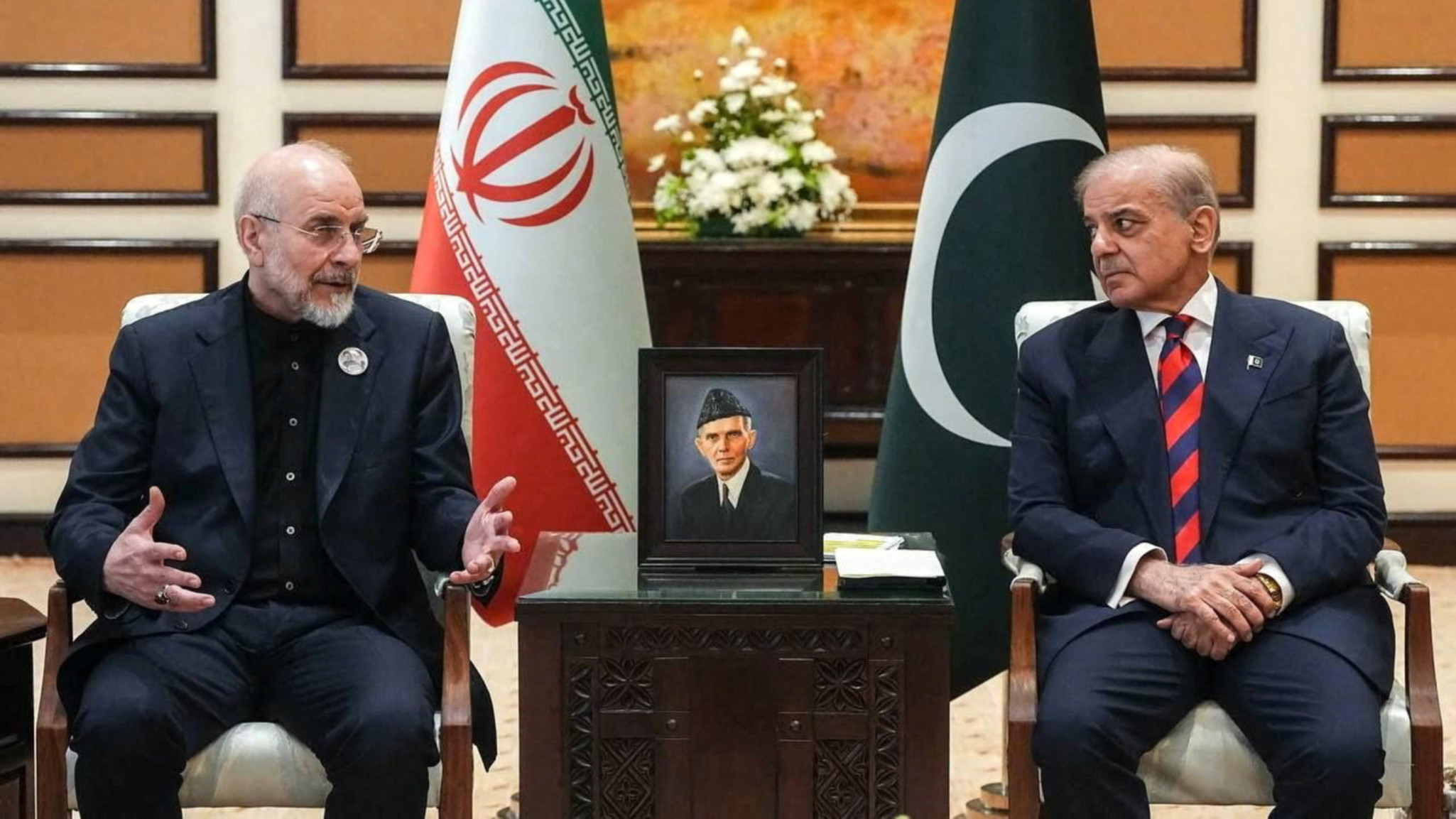
Six weeks after open conflict erupted between the United States and Iran, the two long-adversarial nations convened their highest-level face-to-face negotiations in half a century Saturday in Pakistan’s capital of Islamabad, marking the first direct formal high-level meeting between the two sides since Iran’s 1979 Islamic Revolution. The two-hour closed-door session brought together a high-powered American delegation led by Vice President JD Vance, special envoy Steve Witkoff, and former White House senior advisor Jared Kushner, while Iran was represented by parliamentary speaker Mohammad Bagher Ghalibaf and Foreign Minister Abbas Araghchi. Pakistan’s army chief also joined the opening round of talks, as the South Asian nation served as a neutral mediator for the breakthrough diplomatic engagement. The talks entered a pause after the initial session, even as competing and contradictory accounts of early progress and on-ground developments began to emerge even before negotiators released any official joint statement. One key point of contention is the status of the Strait of Hormuz, the strategically critical waterway that carries roughly a fifth of the world’s daily oil supplies. Iran’s blockade of the strait earlier sparked the largest single disruption to global energy markets in modern history. A senior anonymous U.S. official told news outlet Axios that multiple U.S. Navy vessels traversed the strait on Saturday, but both Iranian state television and an anonymous Pakistani source outright denied any U.S. ships had passed through the waterway. Shortly after the opening of talks, former U.S. President Donald Trump claimed on social media that the process of clearing the Strait of Hormuz had already begun, adding that all 28 of Iran’s mine-laying vessels had been sunk. No independent confirmation of this claim has emerged as of Saturday evening. Another conflicting report centers on the fate of billions of dollars in Iranian assets frozen by U.S. sanctions in foreign banks, primarily in Qatar. A senior unnamed Iranian source earlier told Reuters that the U.S. had agreed to release these assets, a statement that was immediately rejected by a U.S. official. The direct Saturday meeting came after hours of pre-negotiation shuttle diplomacy led by Pakistani Prime Minister Shehbaz Sharif, who worked to align both sides on basic terms before the first face-to-face encounter. Iranian state media outlined Tehran’s core pre-negotiation red lines that Washington must accept for any final agreement: progress on the status of the Strait of Hormuz, the full unfreezing of Iranian blocked assets, war reparation payments from the U.S., and a comprehensive immediate ceasefire across the entire Middle East region. A key non-U.S.-Iran conflict at the top of Tehran’s negotiating agenda is the ongoing Israeli military campaign in Lebanon, where strikes have continued despite the recent bilateral ceasefire between the U.S. and Iran. On Wednesday alone, Israeli strikes killed more than 350 people in Lebanon, and total fatalities from Israeli operations that began in March have reached nearly 2,000. Both the U.S. and Israel have insisted that the military campaign in Lebanon falls outside the scope of the U.S.-Iran ceasefire, a position Tehran strongly rejects. Iran’s negotiating delegation has confirmed it will continue to press for an immediate ceasefire to end Israeli strikes in Lebanon during the ongoing talks. Even as the Islamabad talks got underway Saturday, fresh violence rocked southern Lebanon: Israeli air strikes hit more than a dozen locations, killing 10 people including a Lebanese civil defense member and two paramedics. In response, the Iran-aligned group Hezbollah announced it had carried out multiple targeted operations against Israeli military positions both inside Lebanese border territories and across the frontier in northern Israel. Looking ahead, both Israeli and Lebanese officials have confirmed they will hold separate talks in Washington on Tuesday, though the two sides have also released conflicting accounts of what agenda those discussions will cover, adding another layer of uncertainty to the already volatile regional situation as world powers wait for outcomes from the historic U.S.-Iran negotiations in Pakistan.