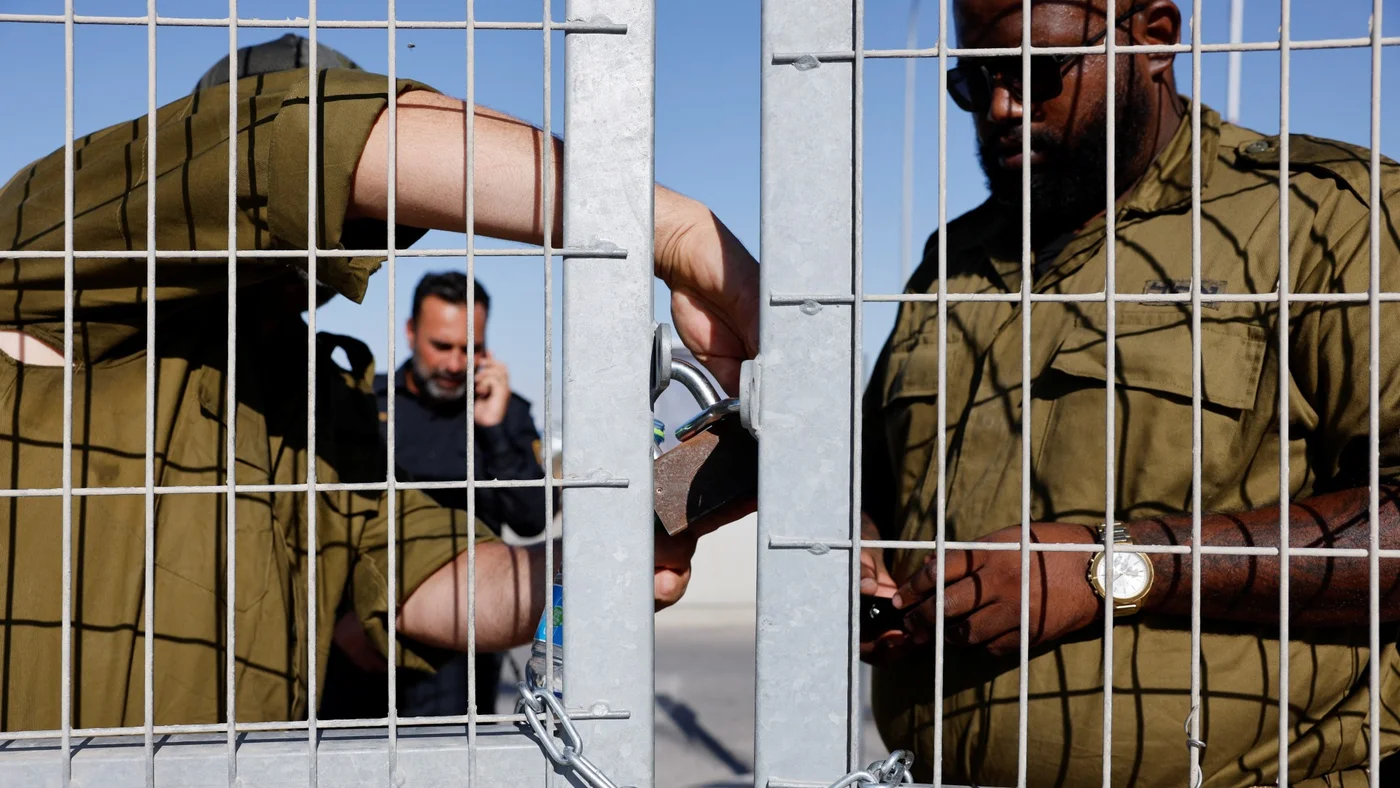
A groundbreaking new investigation by Euro-Mediterranean Human Rights Monitor has concluded that the widespread sexual torture and abuse of Palestinian detainees from Gaza held in Israeli detention facilities constitutes an organized state policy, explicitly endorsed by Israel’s highest political, military and judicial authorities. The report, which was shared exclusively with Middle East Eye, draws its chilling conclusions from first-hand testimonies collected from dozens of recently released Palestinian former detainees, painting a devastating picture of systematic, institutionalized cruelty across Israel’s prison network.
Accounts from survivors center heavily on Sde Teiman, the notoriously opaque detention facility where independent monitors and legal representatives have long been barred from access. One 42-year-old female detainee from northern Gaza, who was held at the site, described being bound naked to a metal table and repeatedly raped by two masked soldiers over a 48-hour period. She told researchers she was left shackled, naked and bleeding through the night before the assaults resumed the next day, recalling that her captors filmed the entire ordeal. Later, while she was hung by her wrists during interrogation, soldiers played the footage back to her and threatened to release it publicly if she refused to cooperate with their demands. Describing the unrelenting horror of her experience, she said she begged for death and framed the abuse as “another genocide behind walls.”
Multiple male survivors shared similarly graphic accounts of brutality, often involving the use of military dogs trained to carry out sexual assault. Amir, a 35-year-old detainee also held at Sde Teiman, recalled being forced to strip naked before soldiers ordered their dogs to urinate on him and rape him. “The dog penetrated my anus in a trained manner while I was being beaten,” he said. “This continued for several minutes. I felt profoundly humiliated and violated.”
In another documented case, Khaled Mahajna, an attorney with the Commission of Detainees and Ex-Detainees Affairs, described an incident where a soldier inserted the nozzle of a fire extinguisher into a Palestinian prisoner’s anus before discharging its contents, causing catastrophic internal injuries and extreme, prolonged pain. Forty-three-year-old Wajdi, another former Sde Teiman detainee, recounted a days-long campaign of abuse that began when he was shackled to a metal bed and repeatedly raped by both soldiers and a trained military dog. “I felt severe pain in my anus and screamed, but every time I screamed, I was beaten. This continued for several minutes, while soldiers filmed and mocked me,” he said. “The soldier left after ejaculating inside me. I was left in a humiliating position. I wished for death. I was bleeding.” After that first assault, Wajdi said he was untied and raped by the dog, before another soldier forced him to perform oral sex and urinated on him. The repeated assaults by multiple soldiers continued for days.
Khaled Ahmed, a field researcher for Euro-Med who conducted interviews with survivors, called Wajdi’s case uniquely devastating, noting that it accumulated “almost every form of torture, physical, psychological, and moral, layered with systematic humiliation.” “It also includes the deliberate use of multiple perpetrators and trained dogs as instruments of sexual violence,” Ahmed told Middle East Eye. “The result is not a single act of abuse, but an extended pattern of cruelty designed to destroy dignity, bodily integrity, and any sense of safety. These are acts that defy comprehension.”
Survivors consistently told researchers that the assaults were filmed and carried out in purpose-built, well-resourced institutional spaces specifically designed to enable torture and sexual violence. This structural coordination, the report argues, confirms the violence is not the work of rogue individual soldiers but an institutionalized state policy.
Ahmed acknowledged that collecting these testimonies was an emotionally grueling process. “The details the survivors described and the way they relived the emotions and events were overwhelming,” he said. Many interviewees broke down into uncontrollable crying fits while recounting their experiences, and a large number of potential survivors declined to speak publicly due to fear of reprisal from Israeli authorities and deep-seated social stigma around sexual violence in Palestinian conservative society. “But what we noticed was that all of them spoke about what happened as if they were seeing it in front of them,” Ahmed said. “They remembered every detail, as though the scene had been etched into their memory and could never leave it.”
Ahmed added that the vast majority of survivors who agreed to speak with researchers were men, as women face far more severe social stigma for sexual assault, making it nearly impossible for them or their families to disclose abuse. Researchers also documented that women’s bodies are frequently weaponized to blackmail male relatives: the report includes multiple cases of sexual assault against women who have family ties to Palestinians labeled as “wanted” by Israeli authorities.
Euro-Med Monitor’s final conclusion is unambiguous: the hundreds of testimonies collected do not reflect isolated incidents of abuse, but concrete evidence of a deliberate policy supported by Israel’s most senior civilian and military leaders, either through explicit orders or tacit approval, enabled by a broader culture of complete impunity for perpetrators.
The report explains that this scale of systematic abuse has only been made possible through Israeli legislation, military directives and emergency regulations that strip detainees of all legal protections. The 2002 Unlawful Combatants Law, for example, vastly expanded Israeli military detention powers without requiring any judicial oversight, effectively removing all legal safeguards for detainees. In the aftermath of the October 7 attacks, these legal frameworks have accelerated enforced disappearances of Palestinian detainees and turned Israeli detention centers into unaccountable “black holes” where human rights abuses thrive with no outside oversight. Sde Teiman, where multiple independent investigations have already documented routine torture, rape and murder, is the most prominent example of this system, as the International Committee of the Red Cross and legal representation for detainees are routinely denied access to the facility.
The report also stresses that institutional responsibility extends far beyond the soldiers who directly carry out the abuse. Medical personnel and the Israeli judicial system actively collude to cover up crimes and shield perpetrators, the investigation finds. Doctors reportedly help obscure evidence of torture by hiding injuries in official medical records, concealing perpetrators’ identities, and issuing “fit for interrogation” certificates that clear the way for further abuse. Meanwhile, the Israeli judicial system has repeatedly protected abusers by suppressing victim and witness evidence, downgrading serious felony charges to minor offenses, and dismissing cases entirely. Most notably, in March 2024, the Israeli military dropped all charges against five soldiers accused of gang-raping a Palestinian detainee at Sde Teiman, despite leaked CCTV footage that showed soldiers surrounding the detainee and pinning him against a wall during the alleged assault.
The authors of the report argue that these widespread abuses violate the Convention on the Prevention and Punishment of the Crime of Genocide. The abuse causes severe, lasting harm to individual detainees and members of the Palestinian community, and is intentionally aimed at preventing births within the Palestinian group, all as part of a broader goal of destroying the Palestinian community in Gaza partially or fully. The report reaffirms that legal and moral responsibility for these crimes extends to Israeli leadership and state institutions that shelter perpetrators, not just the individual soldiers who carry out the assaults.
This new investigation is not the first to document widespread sexual violence against Palestinian detainees in Israeli prisons. Multiple independent rights groups and news organizations, including Middle East Eye, have published extensive investigations confirming the scale of the abuse. A recent United Nations inquiry went as far as accusing Israel of using sexualized torture and rape as “a method of war… to destabilize, dominate, oppress and destroy the Palestinian people.”
Ahmed explained that the systematic use of sexual violence serves a deliberate, long-term strategic purpose for Israeli authorities. “It keeps the victim trapped in a cycle of violence, unable to escape it, even after the violence has practically stopped,” he said. “It continues to accompany the victim throughout their life. The survivor keeps experiencing both physical and psychological pain, and in many cases feelings of shame, humiliation, self-blame, inferiority, loss of dignity, and a lack of safety.”
The trauma does not end with the survivor, he added: it ripples outward to damage entire families and communities. “Especially in a conservative society where anything related to sexual assault is seen as an attack on the dignity of the entire family,” Ahmed said. “It is a complex crime that deeply impacts and fractures the very fabric of society.”