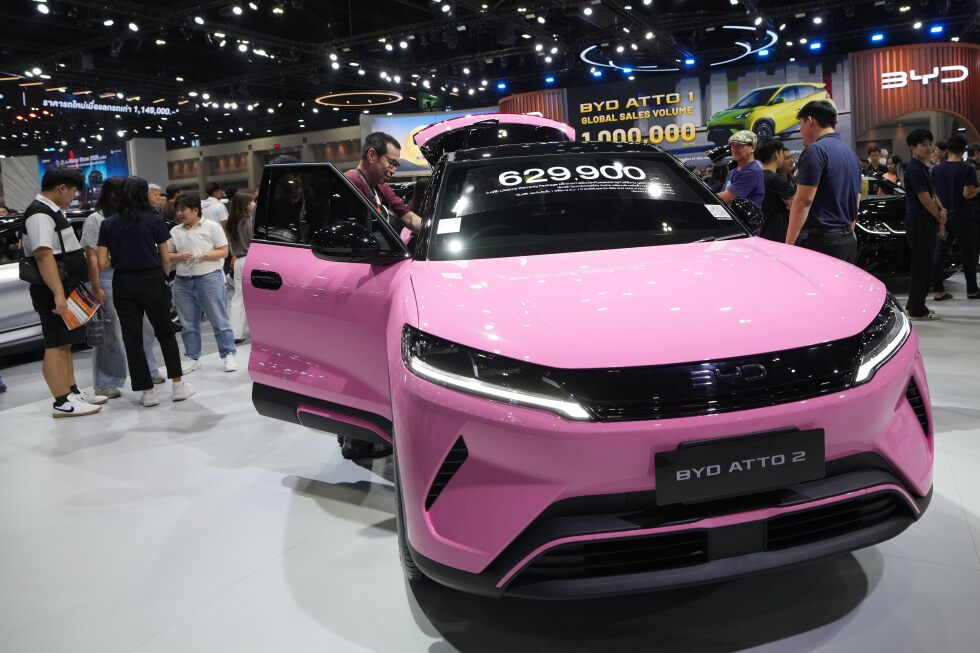
Against a backdrop of softening domestic auto demand and shifting global energy markets, China’s passenger car export sector delivered explosive growth in March, data from the China Association of Automobile Manufacturers (CAAM) released Friday shows. Domestic automakers’ aggressive global expansion strategy has driven this sharp uptick, with new energy vehicles (NEVs) leading the charge amid growing consumer interest triggered by volatile fuel prices tied to international conflict.
Last month, total passenger car exports hit approximately 748,000 units, marking an 82.4% jump from the same period in 2023 and a notable increase from February’s 586,000-unit total. The growth was even more dramatic for new energy passenger vehicles, which include pure battery electric vehicles and plug-in hybrid models. NEV exports soared more than 140% year-on-year to 363,000 units in March, rising 31% from February’s export volume of around 276,000 units.
Leading domestic automakers, including industry giants BYD and Geely Auto, have ramped up their global outreach in recent quarters, investing heavily in new production facilities outside China and expanding distribution networks across emerging and established markets alike. To date, Chinese auto brands have built meaningful market share across Europe, Latin America, and Southeast Asia, with analysts noting geopolitical developments are poised to further accelerate adoption.
The ongoing conflict in Iran has sent ripples through global energy markets, pushing fuel prices higher across many regions. While the full impact of this energy shock has not yet been reflected in March’s trade data, industry experts say it has already shifted consumer attitudes toward electric vehicles.
“In many markets that are structurally well suited for EV adoption, uptake has remained sluggish simply because consumers lacked urgency to make the switch,” explained Chris Liu, a Shanghai-based senior analyst at technology and industry advisory firm Omdia. “A sharp, sustained rise in fuel prices changes that calculation entirely.”
The push into overseas markets comes at a moment when China’s domestic auto market is facing notable headwinds. This year, the Chinese government rolled back support programs designed to encourage NEV adoption, while cutthroat price competition across domestic brands and a prolonged slump in the real estate sector have eroded consumer willingness to make large-ticket purchases like new vehicles.
CAAM data confirms that domestic passenger car sales fell 19.2% year-on-year in March, dropping to just under 1.7 million units. That marks the fifth consecutive month of year-over-year declines for domestic sales, putting pressure on automakers to offset slack at home with international growth.
However, industry analysts remain optimistic about the long-term outlook for Chinese automakers, arguing that strong export growth is more than sufficient to cushion the blow from temporary domestic weakness. “For the overall industry, the overseas market’s sales volume growth is more than enough to offset domestic decline on a full-year basis,” said Paul Gong, head of China autos research at UBS Investment Bank. Gong predicts that total annual passenger car exports by Chinese automakers could grow by 20% or more compared to 2023, a trend that will reshape the global auto landscape for years to come.