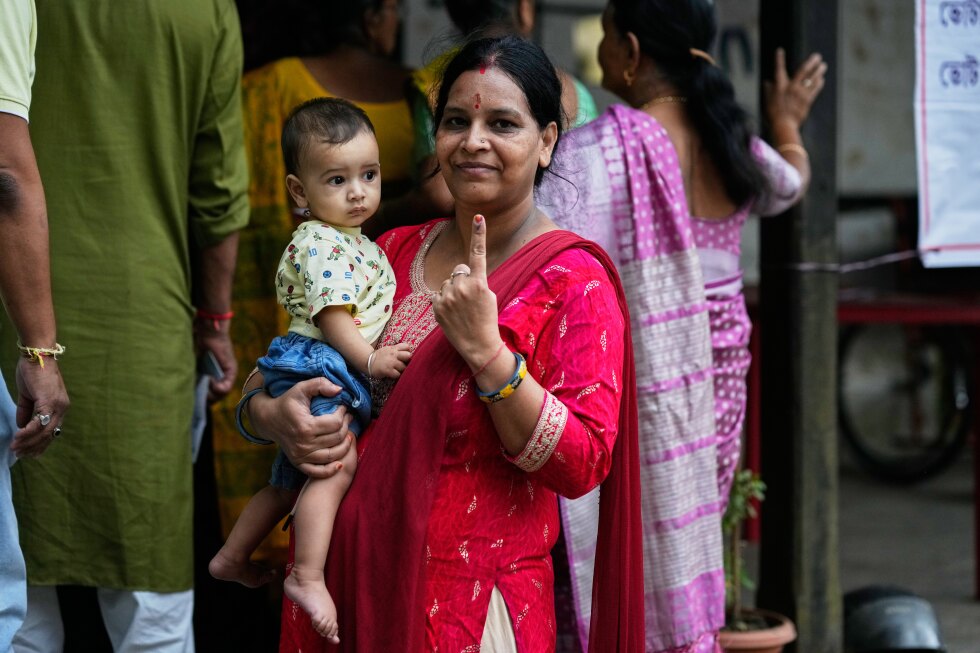
On Thursday, voters across three Indian regions — the states of Assam and Kerala, and the federal union territory of Puducherry — headed to polling stations to cast their ballots in the first phase of a series of critical state-level elections that are widely viewed as a critical barometer of public support for Prime Minister Narendra Modi and his ruling Bharatiya Janata Party (BJP).
These electoral contests have positioned the BJP and its regional coalition partners, the National Democratic Alliance (NDA), against a fragmented but unified front of national and regional opposition parties. Currently, the NDA holds governing power in Assam and Puducherry, while Kerala is under the control of a opposition-led administration. Two additional opposition-governed states, West Bengal and Tamil Nadu, are scheduled to hold their polling phases later this April, with official results for all five electoral contests set to be announced on May 2.
The elections unfold against a backdrop of growing public anxiety over skyrocketing energy prices and tightening supplies of cooking gas, economic pressures amplified by the ongoing conflict in the Middle East that has roiled global commodity markets.
For Modi and the BJP, the outcome of these state polls carries far-reaching political implications. After the 2024 national election, the BJP was forced to depend on a coalition of regional allies to form its federal government, so a strong performance across these five regions will not only cement the party’s reputation as India’s dominant political force but also strengthen Modi’s standing in the national coalition. A solid showing would also signal that the BJP is successfully making inroads into long-held opposition strongholds, expanding its geographic footprint across the country.
At the same time, these elections are a make-or-break moment for India’s fragmented opposition, which is working to build a cohesive, sustained challenge to the BJP’s national dominance after weaker-than-expected showings in recent national and state contests.
Each region carries its own unique political dynamics that shape the BJP’s campaign strategies. In the northeastern border state of Assam, which shares a frontier with Bangladesh, the BJP is fighting to retain its incumbent power by centering its campaign on a hardline stance toward immigration, one of the state’s most persistent and divisive issues. Ruling party leaders have leaned into sharp, polarizing rhetoric centered on claims of illegal immigration by Bengali-speaking Muslim communities, framing the election as a fight to protect the state’s demographic and cultural identity.
In the southern state of Kerala, the BJP faces a far steeper uphill battle. Power in Kerala has historically alternated between two rival coalitions led by the Indian National Congress and national communist parties, and the BJP has never managed to gain significant electoral traction in the state. Even so, the party has poured unprecedented resources and campaign effort into expanding its political presence in the region in this cycle.
For the small federal territory of Puducherry, the BJP is working to consolidate its influence by leveraging a pre-election coalition with a prominent regional party to hold and expand its current share of power.
The most closely watched and contentious of all the upcoming contests remains West Bengal, where the regional Trinamool Congress has held governing power for three consecutive terms. The BJP has never controlled the state, and already high political tensions have been amplified by allegations of widespread irregularities in a recent electoral roll revision process called the Special Intensive Revision.
Opposition parties claim the process has disenfranchised millions of eligible voters, disproportionately targeting minority Muslim communities. The Election Commission of India has rejected these claims, asserting that the revision was a routine procedural step designed to remove dead, duplicate, and fraudulent voter entries from the rolls. Similar electoral roll updates have already been carried out in multiple other Indian states in recent cycles.