Global K-pop phenomenon BTS is set to launch its sprawling ‘ARIRANG’ World Tour this Thursday, marking the next historic chapter of the group’s career after a blockbuster group comeback ending a multi-year hiatus for mandatory South Korean military service.
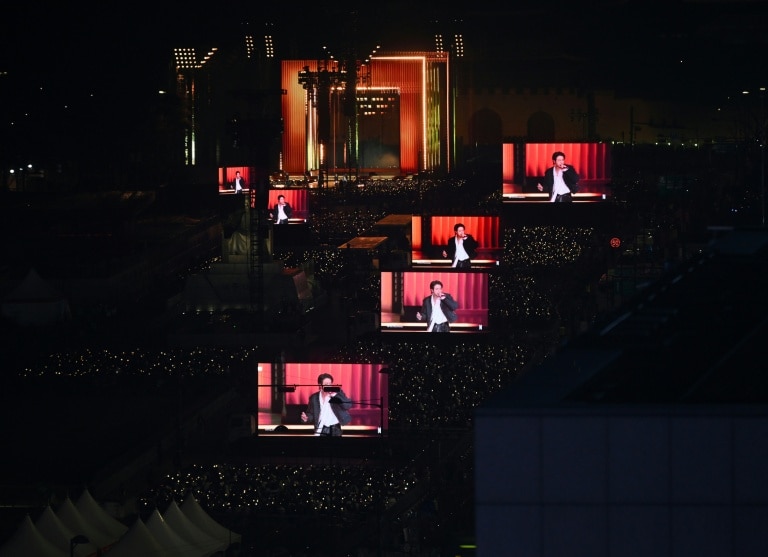
The seven-member ensemble, universally recognized as the most successful boy band in modern music history, released their latest full-length studio album *ARIRANG* last month before staging their first joint public performance in years at a landmark show adjacent to Seoul’s historic Gyeongbokgung Palace. According to the group’s label, the free Seoul concert drew more than 100,000 in-person fans to the city center, while streaming giant Netflix confirmed a global audience of 18.4 million viewers tuned in for the event’s live broadcast.
The tour will open with three opening shows at Goyang Stadium in Goyang, the hometown of BTS leader RM, located roughly 10 miles northwest of Seoul. Local authorities have already transformed the city into a purple-hued celebration hub, with iconic locations including Ilsan Lake Park lit up nightly in honor of the group and their global fanbase, dubbed ARMY. The three opening shows are projected to welcome a total of 120,000 attendees, with 40,000 fans expected each night from April 9 to 12. In a message to fans ahead of the opening dates, member Jimin reminded attendees to prepare for cool, potentially wet weather, urging, “To all the ARMYs coming to watch, please make sure to dress warmly!!”
Across the entire run, the tour will include 85 shows across 34 cities worldwide. Industry analysts project the tour will become one of the highest-grossing concert runs in history, with the potential to out-earn Taylor Swift’s record-breaking Eras Tour.
The album and tour take their name from *Arirang*, the iconic traditional Korean folk song centered on themes of longing and separation that is widely considered South Korea’s unofficial national anthem. The project is framed as a reflection of the group’s deepening connection to their Korean identity as they mature beyond their early career. Where BTS’s early discography centered on adolescent struggle and internal conflict, the group now enters a new phase of deeper self-reflection, according to Kim Jeong-seob, author of *The Universe of BTS*. Kim described the tour as the opening of a “new chapter” for the group, noting that contemporary global challenges including armed conflict and ethnic and religious division may be woven into their work through subtle, indirect messaging.
Long before their comeback, BTS has cemented a legacy of global social advocacy, leading UNICEF anti-violence campaigns, speaking out in support of the Black Lives Matter movement, and pushing back against rising anti-Asian racism across the globe.
To date, *ARIRANG* has already made history as the first album by a K-pop act to top the U.S. Billboard 200 chart for two consecutive weeks, with all album tracks securing top positions on major global streaming charts including Spotify’s Top Songs Global and Top 50 Global. This early success defies a common trend in the highly competitive K-pop industry, where many groups see their career momentum fade after completing mandatory military service. Pennsylvania State University sociologist Sam Richards notes that BTS’s post-hiatus success upends this pattern, carrying major implications for South Korea’s global soft power. “This is extremely significant for the future of K-culture and the nation of Korea because it means that unprecedented growth in soft power will continue,” Richards told Agence France-Presse.
Industry observers attribute BTS’s enduring global dominance to the unprecedented loyalty and organization of their ARMY fanbase. The group counts more than 80 million followers on Instagram alone, with over 34 million members registered in their official Weverse fan community. Billboard K-pop columnist Jeff Benjamin explains that BTS built their global following by prioritizing direct, authentic engagement with fans on social media platforms including Twitter and SoundCloud years before the wider music industry embraced this strategy. “ARMY were never made to feel like consumers, but like they were friends and participants in BTS’ story, making the group’s rise feel personal to millions of people in a way that superstardom doesn’t typically resonate,” Benjamin explained.