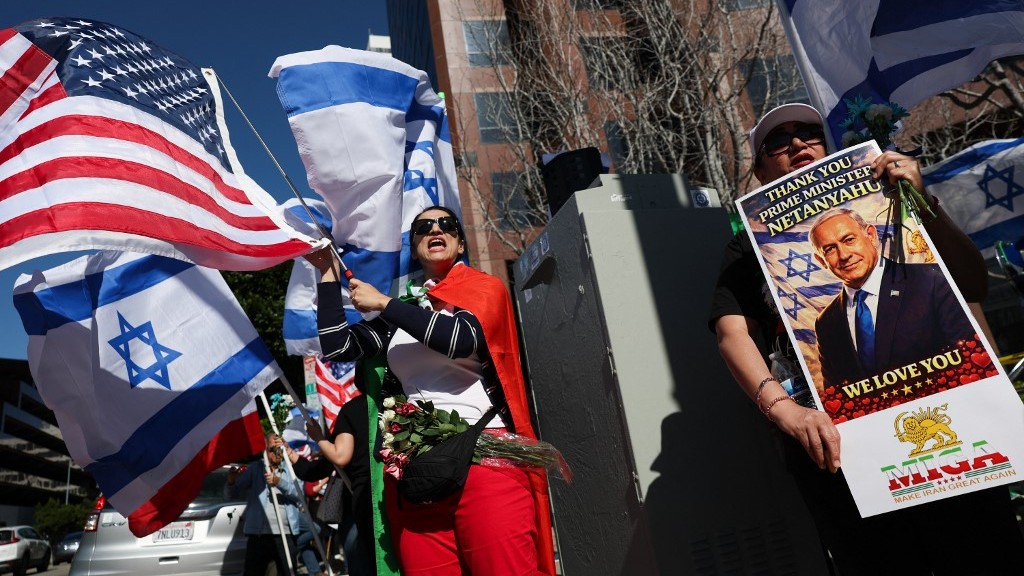
Weeks into the joint US-Israeli military campaign in Iran, a newly released Pew Research Center survey has documented a dramatic, sustained shift in American public opinion, with a clear majority of US adults now holding unfavorable views of the State of Israel. Data collected in late March, published Tuesday evening just as a ceasefire agreement between Washington and Tehran was announced, shows 60% of Americans now view Israel unfavorably — up 7 percentage points from 2023 and a nearly 20-point jump from 2022 levels.
The erosion of public support extends to Israeli Prime Minister Benjamin Netanyahu as well. The survey finds that six in 10 Americans have little to no confidence that Netanyahu will act appropriately in global affairs, marking a 7-point increase in disapproval since last year and a 20-point rise since early 2023. Partisan gaps have widened alongside this overall shift: half of all Democratic respondents now report holding no confidence at all in Netanyahu, up from 37% just 12 months prior, while 80% of Democrats and Democratic-leaning independent voters now view Israel unfavorably. That marks a steep climb from 69% in 2023 and just 53% in 2022.
Perhaps the most striking finding for Israel’s long-term standing in US politics is the deep generational divide that cuts across both major American political parties. A majority of all US adults under the age of 50, regardless of partisan affiliation, now hold negative views of both Israel and Netanyahu. Even among young Republicans — a voting bloc that was reliably pro-Israel as recently as three years ago — 57% now view Israel unfavorably, up from 50% last year, and only 30% express confidence in Netanyahu’s leadership on the world stage.
The most dramatic shift can be seen in the share of Americans holding intensely negative views of the country: the proportion of respondents who say they have a “very unfavorable” opinion of Israel has nearly tripled since 2022, rising from 10% to 28% today.
This shifting public mood has unfolded against a backdrop of escalating regional conflict that has had tangible global impacts. By the time the survey was fielded, the US-Israeli war in Iran had already entered its second month, leaving more than 4,000 people dead, sending global oil prices soaring, and destroying critical civilian infrastructure across Iran. Growing public discussion of Israel’s extensive influence over US political and policy decision-making has also reshaped popular perceptions of the country.
Weeks before the survey was published, the controversy over Israel’s role in the conflict spilled into the open when a senior former Trump administration intelligence official resigned in protest over the war, claiming US leaders had been manipulated into launching the conflict by an Israeli-aligned and pro-war “echo chamber.” Joseph Kent, then-director of the National Counterterrorism Center — the US agency responsible for coordinating all federal counterterrorism intelligence, which falls under the oversight of Director of National Intelligence Tulsi Gabbard — outlined his opposition in a public resignation letter. “I cannot in good conscience support the ongoing war in Iran,” Kent wrote. “Iran posed no imminent threat to our nation, and it is clear that we started this war due to pressure from Israel and its powerful American lobby.” In the final days of March, a coalition of anti-war US military veterans issued a similar rebuke, condemning what they described as disproportionate Israeli influence guiding American military policy in the Middle East.