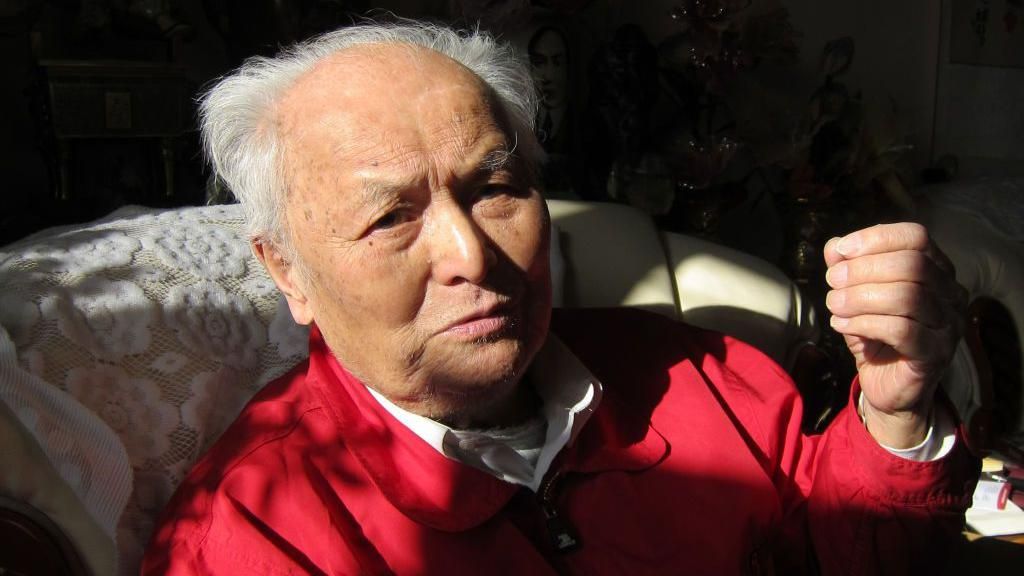
A long-running legal dispute over a vast collection of historical documents from late former Chinese Communist Party cadre Li Rui has concluded with a California court ruling that Stanford University’s Hoover Institution is the rightful owner of the materials. The collection, which includes decades of personal diaries, official correspondence, meeting minutes, work notes, creative writing, and personal photographs spanning from 1938 to Li Rui’s death in 2019, is widely regarded as an irreplaceable firsthand historical record of modern Chinese history and the CCP’s period of governance.
Li Rui, a once-prominent party figure who held reformist political views and became known for vocal criticism of CCP leadership in his later years, had long intended to preserve his materials outside of China to avoid censorship, according to court findings. When Li was still alive, his daughter Li Nanyang began transferring the documents to Stanford’s Hoover Institution in 2014, a step she says was taken in direct alignment with her father’s explicit wishes. Following Li Rui’s death in 2019, however, his widow Zhang Yuzhen launched a parallel legal claim in Beijing, arguing that Li had granted her authority to decide which documents would be made public, and that the transfer to Stanford was unlawful. A Beijing court ruled in Zhang’s favor, ordering the materials be returned to China.
Stanford subsequently initiated its own legal proceedings in the U.S. to confirm its ownership of the collection, arguing that the transfer aligned with Li’s wishes and that the documents would face censorship, redaction, or even destruction if returned to China, framing the case as a defense of academic freedom and open access to historical records. In its ruling, the California court noted key irregularities in the Chinese legal proceedings: it found that the Beijing lawsuit was likely not initiated by Zhang of her own free will, but was instead backed and financed by the CCP, with Zhang herself having previously stated she had no personal desire to sue her stepdaughter. Zhang passed away during the course of the U.S. trial proceedings.
The court’s final judgment confirmed that the original donation to the Hoover Institution was lawful and fully consistent with Li Rui’s documented intentions. It further ruled that the Beijing court’s order had no enforceable standing in the United States. The court specifically highlighted Li Rui’s own stated belief that his papers would be suppressed or destroyed if kept within China, and that his explicit goal in transferring the materials was to make them openly accessible to researchers and the public globally.
Condoleezza Rice, current director of the Hoover Institution and former U.S. Secretary of State, praised the ruling in a public statement, noting that the decision guarantees that one of the most valuable firsthand accounts of modern Chinese history will remain freely available for academic study. Stanford’s legal team echoed this sentiment, saying the university was pleased that Li Rui’s final wishes would be honored, and that the materials would remain open to any interested researchers. The BBC has reached out to Zhang’s former U.S. legal representation for comment on the ruling, with no response reported as of yet.