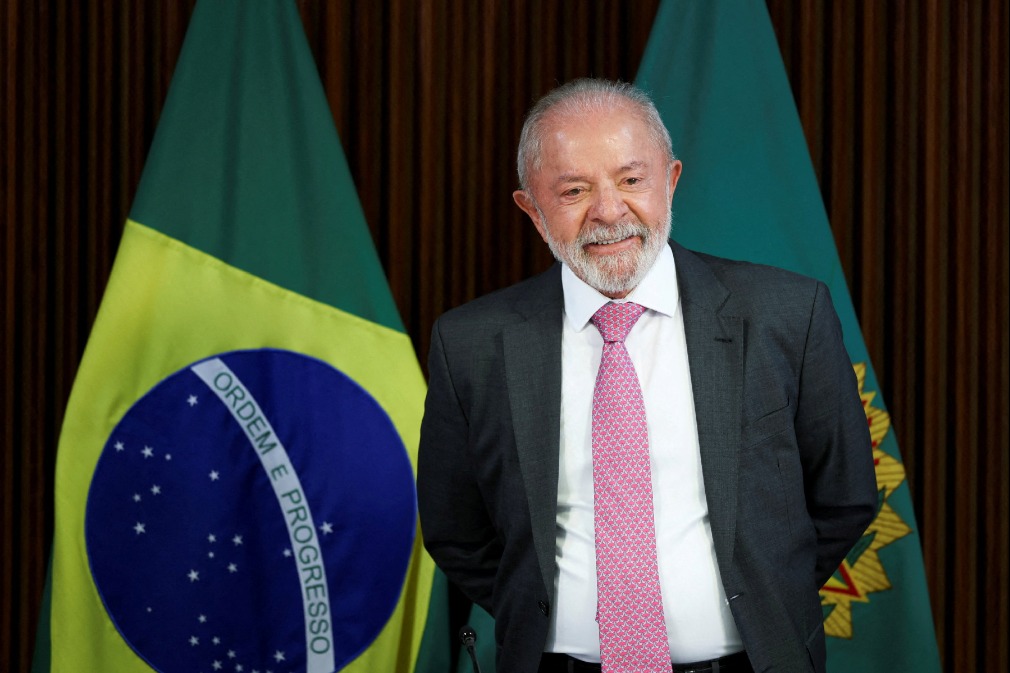
Less than two months after the United States and Israel launched joint military strikes on Iran that roiled global energy markets and disrupted international trade, Brazil’s President Luiz Inacio Lula da Silva has publicly called out the US for launching what he frames as an unnecessary conflict built on false claims. Speaking to reporters during an interview in Brazil’s northeastern state of Ceara on Wednesday, Lula pulled no punches in his criticism of American foreign policy in the Middle East. “The United States got involved in an unnecessary war in Iran, claiming that Iran had nuclear weapons or that they were trying to make nuclear weapons. That’s a lie!” Lula told assembled press. The Brazilian leader went on to draw a direct parallel to the 2003 US invasion of Iraq, a conflict that was justified by allegations of Iraqi stockpiles of weapons of mass destruction that were never uncovered after the invasion. Lula emphasized that this pattern of manufacturing pretext for military action has a long track record, arguing that armed conflict has never produced meaningful solutions to global disputes. “That’s just a pretext … and war has never solved anything,” he added. Beyond his critique of the conflict itself, Lula highlighted the tangible economic spillover that the conflict has already inflicted on Brazil, thousands of miles from the Middle East. He called on the United Nations Security Council to undertake deliberate, rational reflection on the escalating conflict to chart a path toward de-escalation. Disruptions to shipping through the Strait of Hormuz, a critical chokepoint for nearly a fifth of the world’s daily oil consumption, have driven sharp upward pressure on fuel prices globally, and Brazil has not been immune. Lula confirmed that diesel prices in the Latin American giant are facing notable upward pressure as a result of the conflict, which has exacerbated existing economic headwinds for working households. To mitigate the damage, Lula said his administration has already implemented targeted policy interventions, including cuts to fuel taxes and strengthened market oversight, all aimed at protecting the livelihoods of low-income Brazilian citizens who are disproportionately affected by rising energy costs. The regional conflict has sent shockwaves across the global economy since the joint US-Israeli strikes on Iran were launched on February 28. In addition to disrupting global shipping lanes and sending crude oil prices soaring in the immediate aftermath of the strikes, the escalation has introduced new uncertainty to a global economy still recovering from the aftershocks of the COVID-19 pandemic and ongoing inflationary pressures.