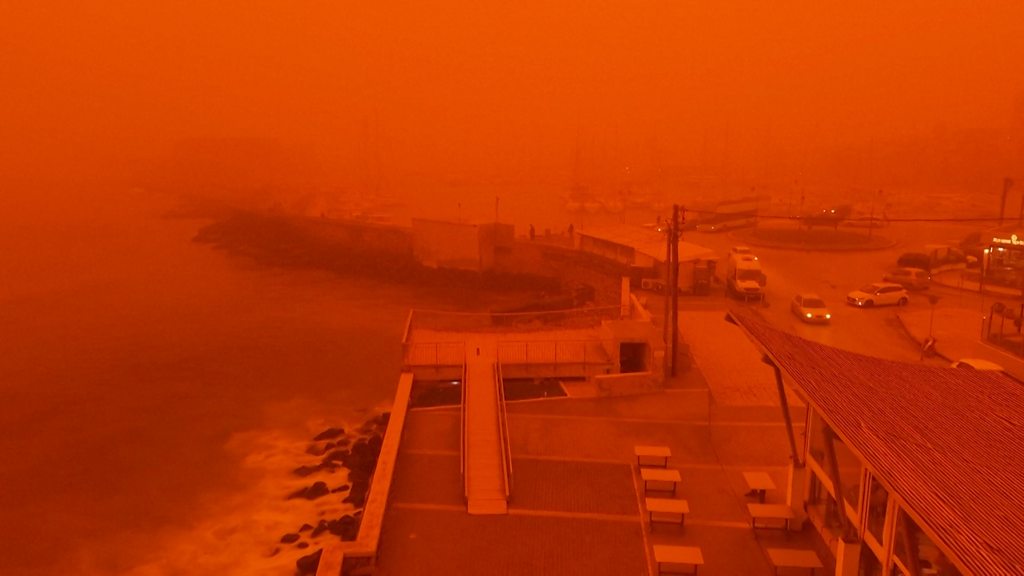
A dramatic and unusual weather event has unfolded across Greece this week, as two separate severe meteorological phenomena collided to disrupt daily life across multiple regions. While powerful storm systems battered parts of the Greek mainland with destructive gale-force winds and flash flooding, the southern island of Crete faced a far more surreal threat: a dense wall of dust carried thousands of miles from the Sahara Desert that turned the once blue Mediterranean skies a striking, ominous red.
Meteorological experts explain that strong southerly winds picked up millions of tons of fine dry dust from the Sahara Desert in North Africa earlier this week, lifting the particulate matter high into the atmosphere before transporting it north across the Mediterranean Sea. When the dust plume reached Greek airspace, it settled over Crete first, reducing visibility and creating the eerie red-hued sky that has been widely shared across social media by stunned local residents and tourists.
Meanwhile, other areas of Greece grappled with more conventional but equally damaging severe weather. The accompanying storm system brought sustained gale-force winds that have downed power lines, toppled trees, and disrupted maritime travel across the Aegean Sea. Heavy, sustained rainfall has also triggered flash flooding in low-lying coastal and inland communities, forcing local authorities to issue emergency warnings and evacuate some vulnerable neighborhoods.
As of the latest updates, Greek emergency services have been deployed across affected regions to respond to flood damage, clear blocked roadways, and assist residents impacted by the dual weather events. While the Saharan dust plume is expected to disperse gradually over the next 48 hours as winds shift, forecasters are warning that residual storm activity may bring additional scattered rainfall to parts of the country through the end of the week.