Despite steep trade barriers that currently block Chinese-made electric vehicles from the US market, a growing share of American consumers — particularly younger car shoppers — are increasingly open to purchasing these vehicles, new industry data and on-the-ground interviews reveal.
For years, Chinese EVs have been effectively locked out of the United States: the Biden administration imposed a punishing tariff of more than 100 percent on Chinese-made passenger vehicles under the banner of protecting domestic jobs, while additional federal restrictions limit access to Chinese automotive technology on national security grounds. Even with these regulatory hurdles, shifting market conditions and viral social media coverage have sparked rising curiosity about what Chinese EVs have to offer.
Much of this growing interest stems from three key factors: the attractive pricing, innovative design and advanced tech features of Chinese EVs, positive viral reviews across TikTok and YouTube, and sky-high prices for domestically available electric vehicles. Compounding this demand shift is the steady rise of US fuel costs tied to ongoing regional tensions between the US, Israel and Iran. Data from Kelley Blue Book shows the average new EV in the US carried a transaction price of $57,245 last year, putting many models out of reach for budget-conscious buyers.
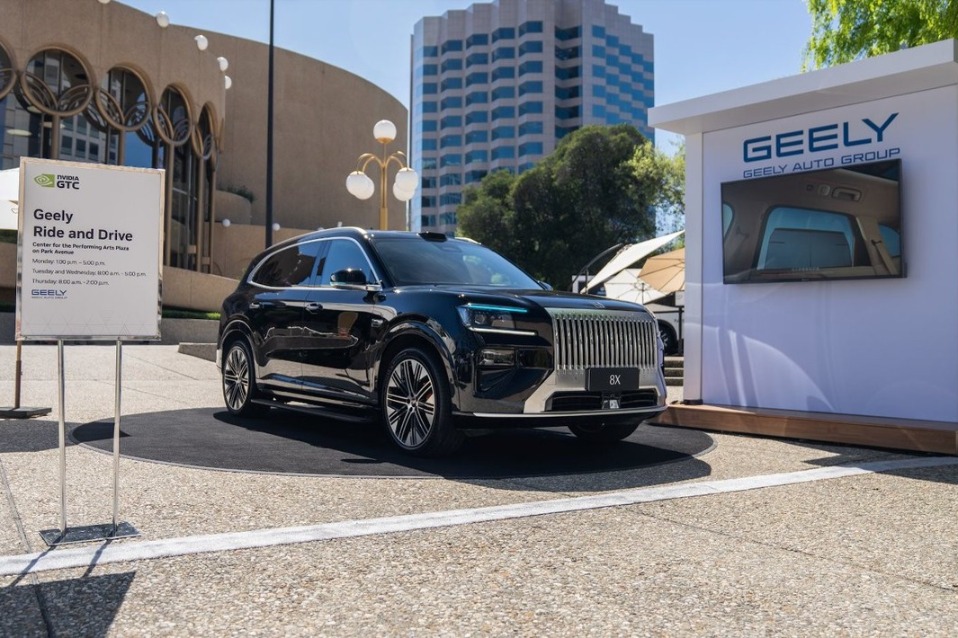
Industry analysts note that Chinese EVs hold clear competitive advantages that set them apart from Western and other Asian rivals. Bill Russo, founder and CEO of Shanghai-based automotive investment advisory firm Automobility Limited, explained that Chinese models stand out for their development speed, cost efficiency, and seamless integration of cutting-edge digital technologies. Leading Chinese brands have carved out distinct strengths in the global market: BYD leads in vertical integration and massive production scale, Geely (which owns the premium EV brand Zeekr) prioritizes global expansion, Xiaomi leverages its pre-existing digital consumer ecosystem, and NIO has built a loyal customer base through premium user experiences and after-sales services.
“Technically, these vehicles would be fully competitive in the US market,” Russo noted. “However, geopolitical friction and regulatory barriers — from steep tariffs to national security concerns — make large-scale entry into the US a major challenge in the near term.”
A new poll conducted by Cox Automotive between late December and early January confirms that openness to Chinese EVs breaks sharply along generational lines. The survey found that sentiment toward Chinese automotive brands is deeply divided: younger consumers already focused on EV adoption show significant willingness to buy Chinese models, while older buyers and shoppers loyal to domestic brands remain largely resistant.
The generational gap is especially stark: 69 percent of Gen Z car shoppers (aged 14 to 29) surveyed by Cox said they would be more likely to consider purchasing a Chinese auto brand than competing options. This openness crosses age groups for some consumers, however. Sarano LaGrande, a 72-year-old New York resident, told China Daily he is eager to test a Chinese EV for its fuel savings and affordable pricing. “I’ve seen these cars all over social media, and I like the way they look,” LaGrande said. “Why shouldn’t Americans have access to them? They’re beautiful, reasonably priced, and much cheaper than most domestic models that start at $30,000 and go up from there.” Other older consumers, like 59-year-old Alabama resident Beau who drives a European-made gasoline-powered Porsche, remain skeptical and prefer to buy European or American-made vehicles.
China’s EV industry has expanded rapidly over the past decades, backed by targeted investment and policy support, with more than 100 domestic manufacturers competing for customers at home. Today, China is the world’s largest auto producer and exporter, having already built a strong foothold for Chinese EVs in Europe and Latin America, and is now expanding into neighboring markets like Canada, which recently cut tariffs to 6.1 percent for an annual quota of 49,000 Chinese EVs. According to Reuters, Chinese automakers are also exploring factory acquisition opportunities in Mexico, which already allows imports of Chinese EVs.
In the US, where Tesla dominates the domestic EV market, domestic auto trade groups sent a letter to the Trump administration in March urging it to maintain restrictions on Chinese automakers. Notably, BYD surpassed Tesla as the world’s top-selling EV manufacturer in 2025. Still, President Trump has signaled potential flexibility: in a January speech at the Detroit Economic Club, he hinted he would be open to allowing Chinese automakers to enter the US market within the next two years, provided they build vehicles using American factories and workers. “Let China come in,” Trump stated.
Many American consumers share this view of open access. Tony Jackson, a 68-year-old New York resident originally from Missouri, said he would happily buy a well-made Chinese EV. “The most important thing for me is that the car is structurally safe in an accident, and has access to reliable charging infrastructure,” Jackson explained. “The US should let Chinese cars come in. If they offer good vehicles at fair prices, that’s a win for American consumers.”
Among US car dealerships, only 15 percent currently support opening the market to Chinese auto brands, per Cox Automotive’s survey. Russo reiterated that near-term widespread availability of Chinese EVs at US dealerships remains unlikely due to existing policy constraints. “That said, if these barriers were lowered, Chinese EVs would almost certainly be well received by consumers based on their clear value proposition: high-end features at competitive price points,” he added.