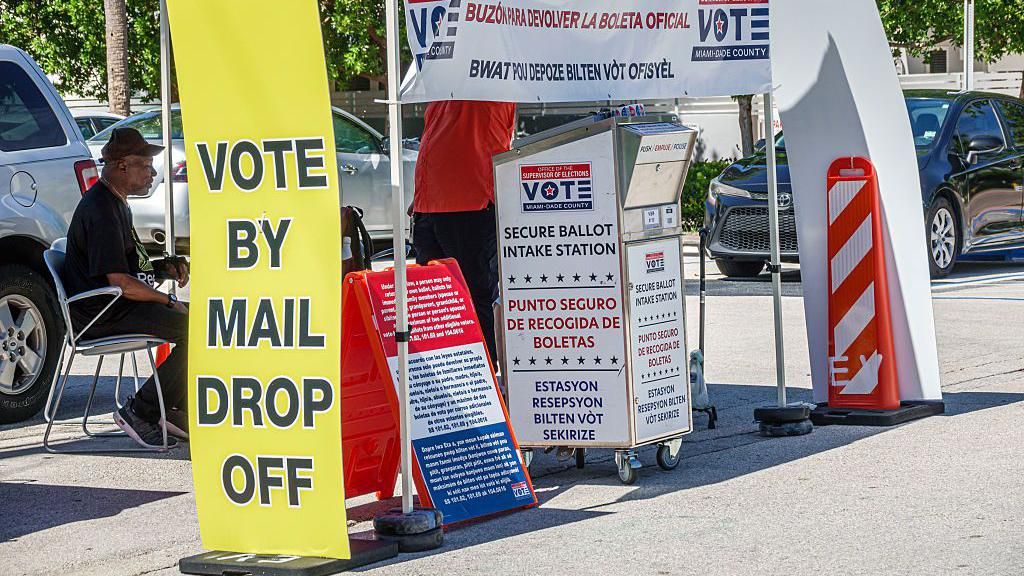
A legal showdown over election administration has erupted in the United States, as the top leaders of 23 states governed by the Democratic Party have filed a federal lawsuit aiming to halt newly imposed restrictions on mail-in voting unveiled by President Donald Trump via executive order earlier this week.
The core of the plaintiffs’ legal argument centers on constitutional authority: the lawsuit contends that the president lacks any constitutional mandate to interfere in the administration of U.S. elections, a power explicitly reserved for individual state governments. According to the court filing, the new executive rules “transgress Plaintiff States’ constitutional power to prescribe the time, place, and manner of federal elections” and amount to an unlawful attempt to “amend and dictate election law by fiat based on the President’s whims.”
The U.S. Constitution clearly outlines the division of election oversight authority: individual state legislatures hold the power to set the rules for federal elections, while Congress retains the right to modify those regulations at the national level. This framework puts Trump’s unilateral action directly at odds with long-standing constitutional separation of powers, the suit argues.
Trump has spent months pushing unsubstantiated claims that widespread voter fraud is inherent to mail-in voting, a narrative he has repeated even as members of his own household have taken advantage of the voting method. The president himself recently cast a mail-in ballot in Florida, citing his status as sitting president, and both his wife Melania and son Donald Trump Jr. have used mail-in voting in recent electoral cycles.
The executive order, signed by Trump this past Tuesday, includes two key provisions. First, it orders the federal government to build and maintain a national database of all U.S. citizens eligible to vote. Second, it directs the U.S. Postal Service to only deliver mail-in and absentee ballots to voters who appear on a state-maintained Mail-in and Absentee Participation List, a requirement designed to restrict ballot access to only those formally registered to vote by mail.
New York Attorney General Letitia James, a leading figure in the coalition of plaintiffs, emphasized the stakes of the legal challenge in a public statement following the filing. “Free and fair elections are the cornerstone of our democracy, and no president has the power to rewrite the rules on his own,” James said.
Independent legal experts have echoed the plaintiffs’ skepticism, noting that there is little precedent or constitutional support for the president unilaterally overhauling state-run election procedures. Most analysts agree that the new restrictions are extremely unlikely to go into effect ahead of November’s midterm elections, which will determine which party controls the majority in both chambers of the U.S. Congress.
This is not the first time the courts have pushed back against Trump’s election-related executive actions. Judges have already blocked a separate executive order that would have withheld federal election funding from states that refused to comply with Trump’s preferred voting rules.
The latest executive order comes as Trump continues to pressure congressional Republicans to pass the SAVE America Act, a sweeping voting reform proposal that would require all prospective voters to provide proof of U.S. citizenship in order to cast a ballot, a measure that voting rights advocates argue would disenfranchise millions of eligible voters.