Starting October 1, 2026, one of Australia’s most widely resented hidden consumer fees will disappear entirely, as the Reserve Bank of Australia (RBA) enforces a full ban on card payment surcharges. But small business owners across the country are already sounding the alarm: the policy change will backfire dramatically, pushing up general prices for all Australian consumers and forcing many small operators to close their doors.
The RBA’s long-awaited review of merchant payment costs and surcharging, released Tuesday, outlined three major reforms to Australia’s retail payment network. The core change is a total ban on separate card surcharges, requiring all businesses to include credit and debit card processing costs in their advertised sticker prices. To offset the burden of this shift, the central bank is lowering interchange fees – the charges paid by a merchant’s bank to a customer’s card-issuing bank – and has pledged to increase transparency around fees levied by major card networks. The RBA projects the reforms will save Australian consumers up to $1.6 billion annually, even as officials acknowledge not all savings will reach household budgets.
But small business owners say the RBA’s math ignores the reality of operating on thin margins amid a prolonged cost of living crisis, and argue any lost revenue from eliminated surcharges will simply be passed to shoppers through higher base prices.
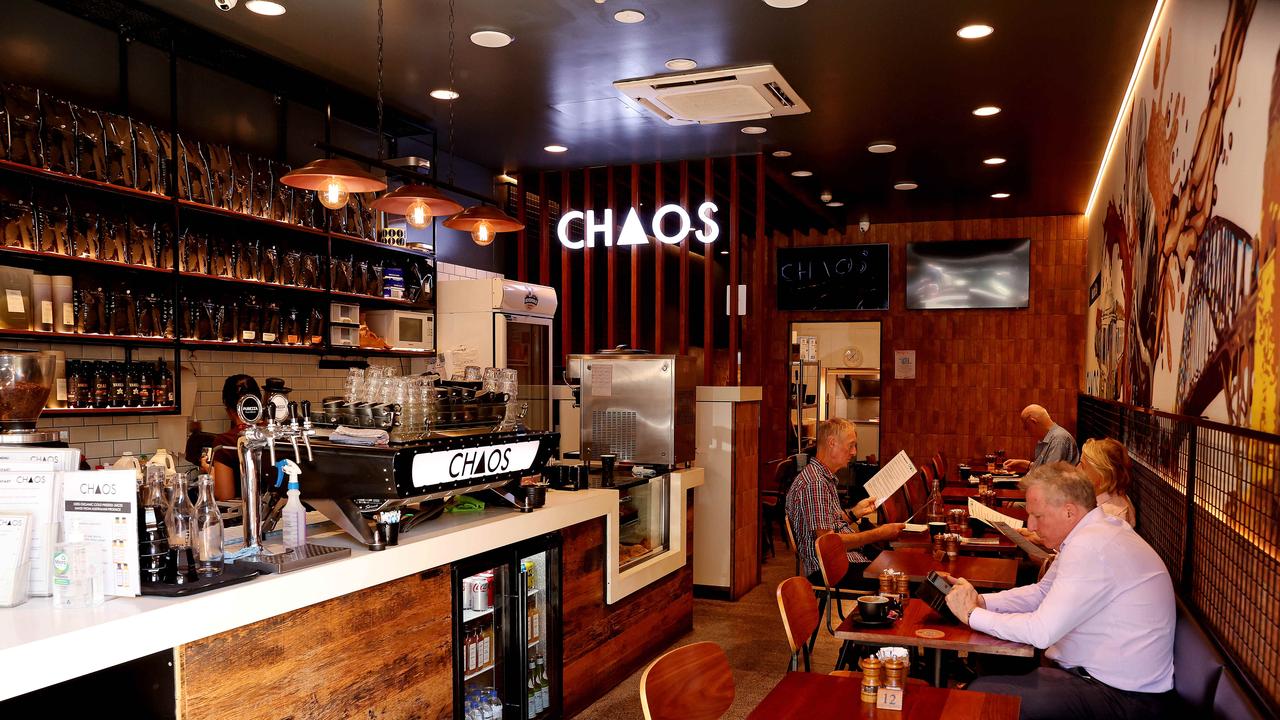
Kodar Eid, owner of Chaos Cafe with locations in Neutral Bay and Mosman, warned the change will deliver a devastating financial hit. For his Neutral Bay store alone, Eid estimates annual costs will jump by $22,000 when the ban takes effect. “That $22,000 isn’t going to disappear – where do you think it’s going to come from? What margin do you think I’m working with?” Eid asked. “Cost of living affects small businesses too. Small businesses absorb as much as they can, but if I take a $22,000 hit, I’ll be one of the businesses that close.”
Eid explained that for nearly 13 years, separate surcharges allowed his cafe to keep base menu prices lower, meaning customers paying with cash or debit cards did not bear the cost of credit card processing. The timing of the ban, he added, could not be worse: cafes already face soaring energy and supply chain costs, with many operators absorbing extra supplier fuel levies to keep prices low for struggling households. As discretionary spending drops amid cost of living pressures, cafes are already seeing fewer customers, and the new cost burden will only worsen the crisis. “The people in the room that made the decision, don’t they have a background in economics?” Eid said. “We are supposed to be happy they slugged the banks 0.3 per cent – seriously. Why not tell the bank to absorb the 1.2 per cent and the small business can cop the 0.3 per cent.”
Industry leaders echo Eid’s concerns, arguing the ban shifts the entire cost of card processing onto small businesses and all consumers, rather than forcing card users to pay for the benefits they receive. John Arnott, director of AMP Bank Go, said that if bank processing fees remain high, small businesses have no choice but to pass the costs onto all consumers through higher sticker prices.
“If surcharges are banned but bank fees stay high, small businesses are left carrying the cost. Australians will pay, just in less visible ways,” Arnott said. “You may not see a surcharge at the terminal, but you will start to see the surcharge flow through to the ticket. And small businesses are telling us they’ve got no choice. They’re already running on the smell of an oily rag.”
Arnott added that while big banks and card networks continue to record billions in annual profits, small business conditions are worsening rapidly. “If banks don’t slash card fees, Australians will keep paying – full stop. At some point, enough is enough, and small businesses need to start voting with their feet. And the payments industry needs to walk the talk.”
Critics also point out that cash and debit card users will be the biggest losers under the new rule. Currently, Australians pay roughly $1.6 billion in annual card surcharges, while businesses pay $200 million in fees to card providers. Jason Bryce, founder of Cash Welcome, argues that by banning surcharges for both debit and credit cards, the RBA has gone far beyond the original goal of cutting consumer costs – a move first flagged by the Prime Minister as a cost of living relief measure for debit card users.
“I’m concerned cash users are going to end up paying for the frequent flyer points and the benefits that accrue to people using fancy premium credit cards,” Bryce said. “So who is losing? Ordinary bank account holders with a debit card, cash users, people on a budget – and I can’t see how small businesses are going to like this at all.”
Bryce added that the ban does not eliminate processing fees, it simply hides them. “There’s no transparency, no little sign at the cash register that says if you pay this way it will cost you this much. Those signs, while very annoying, are very transparent.” He also noted that the RBA’s original 1990s surcharge framework made Australia a global leader in transparent card transaction pricing, a status the new reforms will end.
Not all observers oppose the change, however. Sally Tindall, data insights director at comparison site Canstar, said the reforms will simplify checkout pricing and crack down on hidden price-gouging. Canstar survey data of 3,001 Australian adults found 33 percent of shoppers switch to cash when a surcharge is applied, indicating widespread frustration with separate checkout fees.
“These changes will simplify the system, stop any price-gouging and help consumers compare apples with apples at the checkout,” Tindall said. “It’s a tiny fee in isolation, but plonked on top of the cost of a flat white every day, is enough to make people see red.”
But for small business owners already teetering amid rising costs, the reform is just one more burden that will leave both operators and consumers worse off. Arnott summed up the widespread industry concern: “It’s tough for small business right now, and the way things are headed, there’s only going to be more pain. Supporting local businesses matters – they’re at the heart of our communities and local economies. It’s your mate, your cousin, your local barista.”