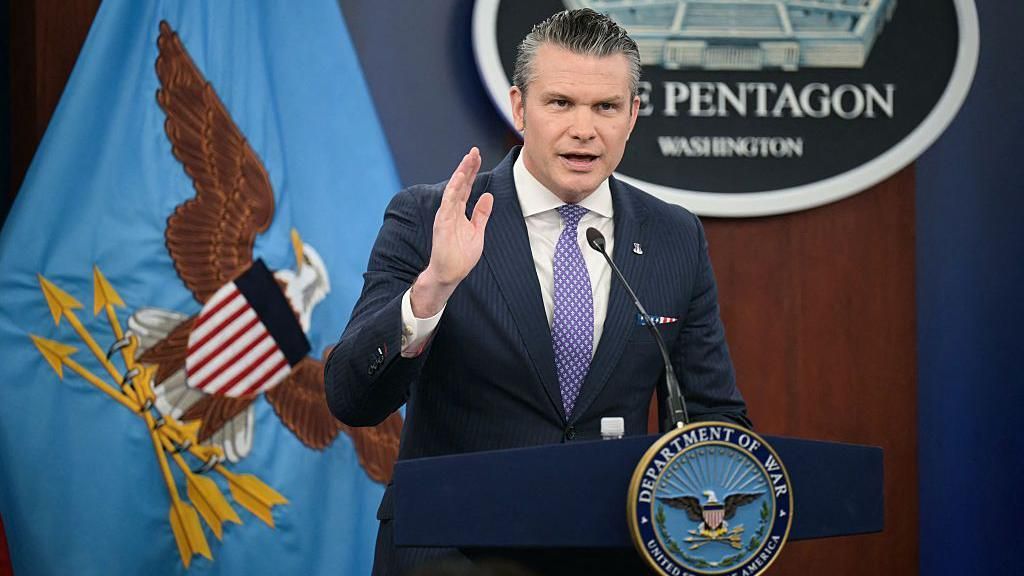
A dramatic shift in U.S. strategy over the closed Strait of Hormuz has put global alliances under unprecedented strain, as the second Trump administration has sharply demanded that U.S. allies take the lead on reopening the world’s critical energy shipping chokepoint rather than relying on American military power. The standoff dates back to February 28, when joint U.S. and Israeli strikes on Iran prompted Tehran to effectively close the 21-mile waterway – a route that normally carries 20% of the world’s daily oil and liquefied natural gas supplies. The closure has already sent global fuel prices skyrocketing, disrupting energy markets across every continent. Over the three weeks since Iran took control of the strait, the Trump administration has flipped its position repeatedly: it first requested support from NATO and European allies, then claimed it needed no help, accused partners of disloyalty, framed earlier requests as a loyalty test, and now is issuing increasingly blunt demands that allies seize the mission of reopening the waterway themselves. On Tuesday morning, former president and current U.S. commander-in-chief Donald Trump laid out his uncompromising position in a post on his Truth Social platform, targeting allies that declined to join the February strikes on Iran. “Countries like the United Kingdom that could not get jet fuel because of the restrictions around the Strait should build up some delayed courage, go to the Strait, and just TAKE IT,” Trump wrote, adding that “the hard part is done” after U.S. strikes decimated Iran’s naval and missile capabilities. He doubled down on this stance during an interview with CBS News, the U.S. partner of the BBC, arguing that “Countries have to come in and take care of it. Iran has been decimated, but they’re going to have to come in and do their own work” and downplaying risks, claiming “there’s no real threat” in the Strait. Recent reporting from The Wall Street Journal has shed additional light on the administration’s shifting endgame for the conflict: the outlet cited anonymous sources familiar with internal discussions saying Trump has told aides he is willing to wrap up the U.S. military campaign against Iran even if the strait remains closed. After severely damaging Iran’s military infrastructure, the plan under consideration would shift to sustained diplomatic pressure to force Tehran to reopen trade routes, rather than continuing active combat operations. The BBC has reached out to the White House for official confirmation of this reporting, which represents a major departure from earlier U.S. war aims that listed reopening the strait as a core non-negotiable demand. U.S. Secretary of Defense Pete Hegseth echoed Trump’s pressure campaign during a Tuesday press conference, doubling down on the call for allies to contribute militarily. “It’s not just the job of the US to secure this critical waterway,” Hegseth told reporters, adding that “There are countries around the world who ought to be prepared to step up on this critical waterway as well. It’s not just the United States Navy.” In a pointed remark directed at the United Kingdom, which has repeatedly stated it will not be dragged into the ongoing conflict, Hegseth said the nation’s “big, bad Royal Navy” should be prepared to step into the mission. The defense secretary also framed the demand as a test of alliance commitment, warning that “A lot has been laid bare. A lot has been shown to the world about what our allies would be willing to do for the United States of America… the president is pointing out you don’t have much of an alliance if you have countries that are not willing to stand with you when you need them.” Hegseth also adjusted the administration’s public timeline for the conflict, pushing the projected duration from the previously stated four to six weeks out to six to eight weeks. On the Iranian side, Tehran has repeatedly denied holding any peace talks with U.S. negotiators. As recently as Monday, Iranian foreign ministry spokesperson Esmaeil Baqaei reiterated that “Iran had ‘had no negotiations with America in these thirty-one days,’” referencing the full length of the conflict since the initial U.S.-Israeli strikes. While Hegseth omitted reopening the strait from his prepared list of U.S. war aims on Tuesday, he later confirmed it remains the ultimate goal of the ongoing pressure campaign. The new U.S. position carries profound, potentially history-altering implications for the post-WW2 global alliance system, as the administration openly threatens to abandon long-standing security partnerships if allies refuse to comply with its demands in the Persian Gulf.