NICOSIA, Cyprus – The European Union’s top energy official issued a stark warning Tuesday that the crippling surge in European oil and gas prices driven by the ongoing Iran conflict will not return to pre-war levels in the near term, even if a peace agreement is reached immediately.
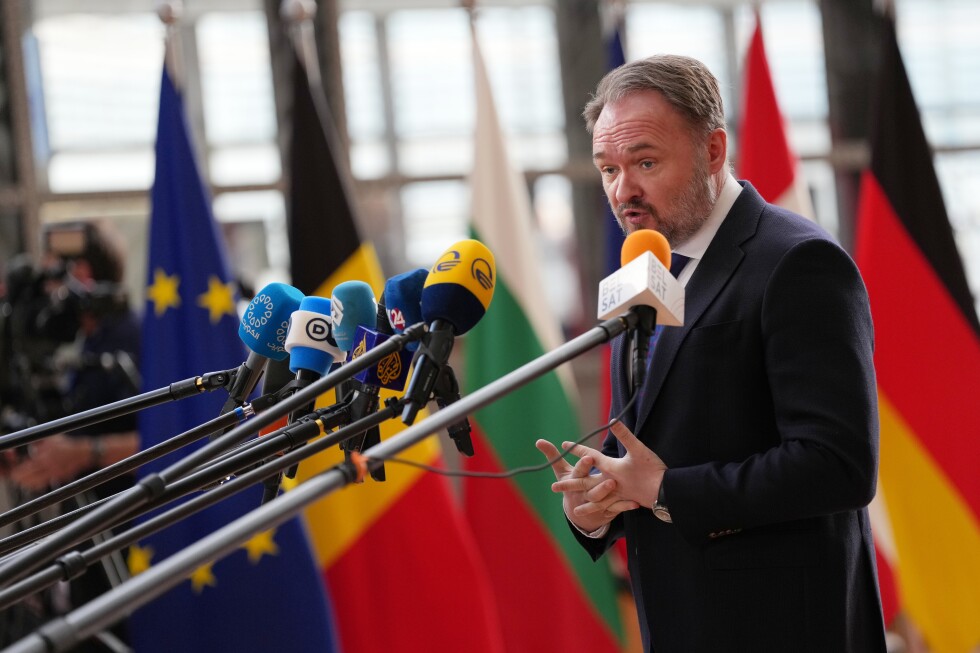
Speaking to reporters following a gathering of EU energy ministers, Commissioner Dan Jørgensen clarified that while the 27-nation bloc currently faces no immediate shortfall in crude oil or natural gas supplies, critical bottlenecks have emerged for diesel and jet fuel. Persistent tightening constraints across global natural gas markets are also pushing electricity prices sharply higher across the continent.
“It is extremely important that I state this as clearly as possible: even if peace is achieved tomorrow, we will not see a return to normal energy prices in the foreseeable future,” Jørgensen emphasized.
The ongoing war has sent energy costs soaring across Europe, with natural gas prices jumping roughly 70% and crude oil prices rising around 60% since hostilities began. Jørgensen noted that the EU’s total import bill for fossil fuels has ballooned by an extra 14 billion euros since the conflict started.
To buffer households and businesses from these unprecedented cost spikes, Jørgensen revealed that the European Commission, the EU’s executive branch, is currently finalizing a broad package of targeted support measures. Coordinated action across all member states is critical, he stressed, to avoid fragmented national policies that could send confusing and destabilizing signals to global energy markets.
The full set of policy tools, which Jørgensen said will be released publicly “quite soon,” includes provisions to make it easier for national governments to decouple retail electricity prices from volatile natural gas market rates. The commission is also actively evaluating a proposal from Commission President Ursula von der Leyen to cut taxes on electricity for consumers.
While Jørgensen said he does not expect a repeat of the 2022 European natural gas crisis, when energy firms recorded extraordinary windfall profits from skyrocketing prices, he confirmed that a one-time windfall profit tax on energy sector companies remains on the table as a policy option.
Jørgensen added that the commission is working to expand and simplify existing avenues for member states to provide direct financial support to vulnerable households and energy-intensive industries that are facing extraordinary financial pressure from rising costs.
In addition to structural support measures, Jørgensen encouraged EU countries to adopt the International Energy Agency’s 10-point energy reduction plan, which includes policy measures like expanded work-from-home arrangements, lowered highway speed limits to cut fuel consumption, expanded subsidies for public transit, and incentives for carpooling.
Turning to the bloc’s long-term energy transition strategy, Jørgensen reaffirmed the EU’s commitment to its ban on Russian natural gas imports, a policy implemented to cut Moscow’s revenue for its ongoing invasion of Ukraine and reduce European dependence on Russian fossil fuels. He reported that the bloc’s reliance on Russian gas has already fallen sharply from 45% before the Ukraine war to just 10% today, and will drop to zero as import infrastructure for alternative suppliers is scaled up, most notably from the United States. The EU is also pursuing expanded energy imports from Azerbaijan, Algeria, Canada, and smaller producing nations across the globe.
Jørgensen concluded by stressing that the bloc must not repeat the overreliance on Russian energy that allowed President Vladimir Putin to weaponize energy exports as a political tool against European nations. “It would be totally unacceptable for the EU to continue purchasing energy that indirectly helps finance the terrible war that Putin is conducting in Ukraine,” he said.