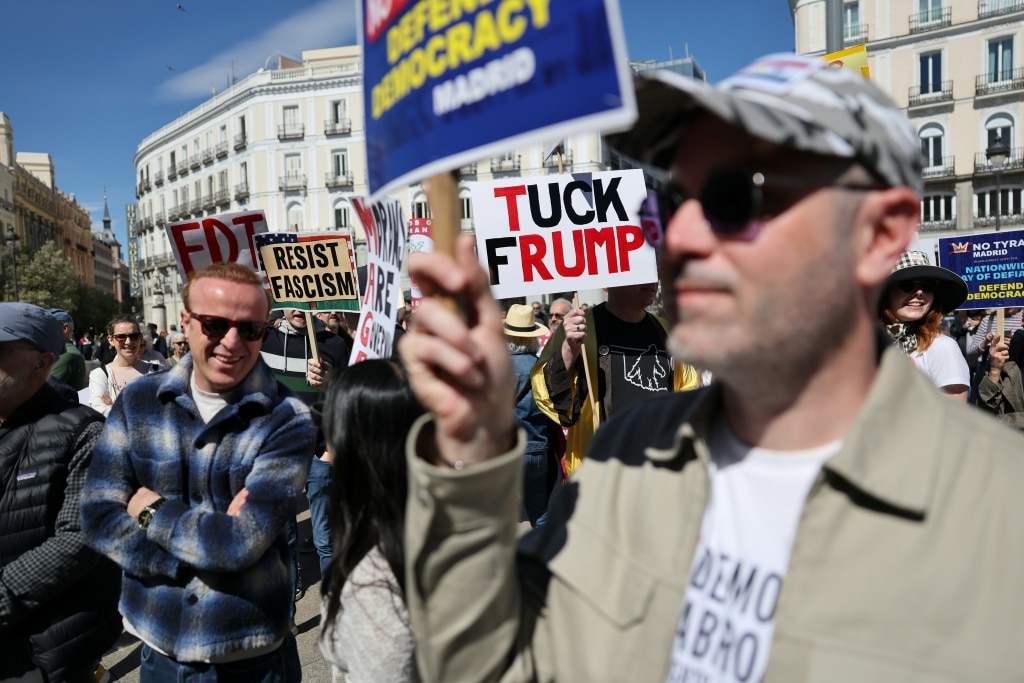
On a frigid Saturday, a formidable wave of dissent swept across the United States and numerous international cities as the ‘No Kings’ movement orchestrated its third major national day of protest against President Donald Trump. Since its inception last year, this grassroots coalition has emerged as the most visible channel for opposition to Trump’s administration, which began its second term in January 2025. Demonstrators voiced profound outrage over what they perceive as an authoritarian shift in governance, citing the President’s propensity for ruling by executive decree, the weaponization of the Justice Department against opponents, and a reckless foreign policy exemplified by the ongoing war with Iran, launched in collaboration with Israel.
The scale of mobilization was unprecedented, with organizers reporting over 3,000 planned rallies extending from major metropolitan centers to suburban and rural communities, including the remote Alaskan town of Kotzebue above the Arctic Circle. In Atlanta, thousands congregated in a public park to decry authoritarianism, while in West Bloomfield, Michigan, citizens braved sub-freezing temperatures to join the cause. The symbolic march in the nation’s capital saw a procession of activists carrying banners with messages like ‘Trump Must Go Now!’ and ‘Fight Fascism’ across the Potomac River toward the historic Lincoln Memorial.
This movement has significantly expanded its reach since its first demonstration in June 2025, which coincided with Trump’s 79th birthday and a military parade in Washington. The October protest reportedly drew an estimated seven million participants. Current efforts aim to surpass those numbers, fueled by Trump’s sinking approval ratings below 40% and the approaching midterm elections, which threaten Republican control of Congress. The participation base has also broadened, with data indicating a sharp increase in protesters from non-urban areas, challenging the notion that anti-Trump sentiment is confined to Democratic strongholds in big cities.
The events also featured cultural figures amplifying the message. In St. Paul, Minnesota, rock legend Bruce Springsteen performed his protest ballad ‘Streets of Minneapolis,’ written in memory of two U.S. citizens, Renee Good and Alex Pretti, who were fatally shot by federal agents during January protests against Trump’s immigration policies. The state of Minnesota itself has become a focal point in the national debate over the administration’s aggressive immigration crackdown.
As articulated by Naveed Shah of the veterans association Common Defense, aligned with the movement, the grievances are multifaceted: ‘This administration has dragged us deeper into war. At home, we’ve watched citizens killed in the streets by militarized forces. We’ve seen families torn apart and immigrant communities targeted. All of it done in the name of one man trying to rule like a king.’ The protests underscore a deep and passionate political schism in America, mirroring the intensity of support Trump receives from his ‘Make America Great Again’ base.