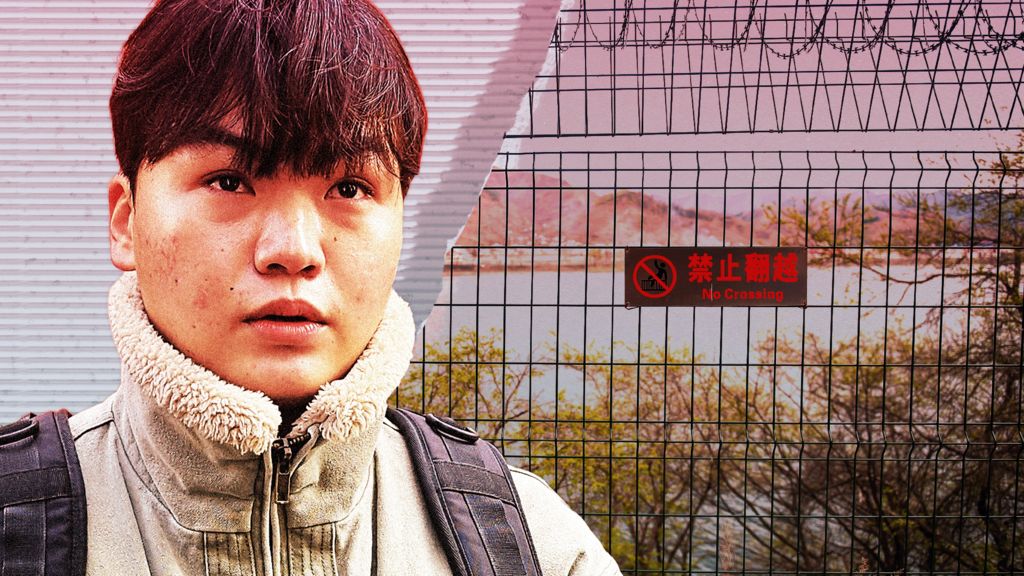
In a poignant tale of separation and sacrifice, a North Korean refugee now faces his greatest fear: the potential repatriation of his mother from China back to the oppressive regime they risked everything to escape.
Geumseong’s journey to freedom began in 2019 when he and his mother Eunhee crossed the heavily fortified Yalu River into China. What the teenager didn’t know was that his mother had arranged her own sale as a bride to a Chinese man—a desperate measure to finance her son’s escape to South Korea through an underground network of brokers. This heartbreaking sacrifice enabled Geumseong’s 4,000-kilometer journey through China to Thailand and eventually to Seoul, where he was granted citizenship under South Korea’s constitutional protection of North Korean defectors.
Their emotional Christmas Eve 2020 video reunion—arranged after Eunhee appeared on a refugee podcast that miraculously reached Geumseong’s friends—provided temporary comfort. But their separation took a devastating turn in January 2025 when Eunhee, attempting to join her son in South Korea, was captured near the Myanmar border and imprisoned in northeastern China.
Geumseong now races against time, fearing his mother could join the estimated 1,000 North Koreans forcibly repatriated since October 2023—a fate that human rights groups warn often leads to torture, imprisonment, or execution. ‘I just want to ask them to please give her one more chance to live a normal life,’ Geumseong pleads, having already attempted unsuccessfully to visit his mother in prison.
This personal tragedy unfolds against a broader backdrop of declining North Korean defections. Post-pandemic border reinforcements—including double-layered electrified fences and enhanced surveillance along the 1,420-kilometer Sino-Korean border—have reduced annual arrivals in South Korea from approximately 1,000 before 2020 to just 223 in 2025.
The phenomenon of North Korean women being sold as brides in China reflects both gender imbalance (with 34 million more men than women) stemming from China’s former one-child policy, and the desperate circumstances driving escapees. While some marriages offer relative stability, many women live in legal limbo—monitored through biometric data collection and entirely dependent on their husbands’ whims.
Human Rights Watch’s Lina Yoon describes their predicament as a ‘cruel paradox—never legal, never safe.’ For Geumseong, the paradox is personal: his mother’s sacrifice granted him freedom, but now threatens her very existence. His desperate appeal echoes beyond his personal tragedy, highlighting the ongoing humanitarian crisis at the intersection of geopolitics, human rights, and individual courage.