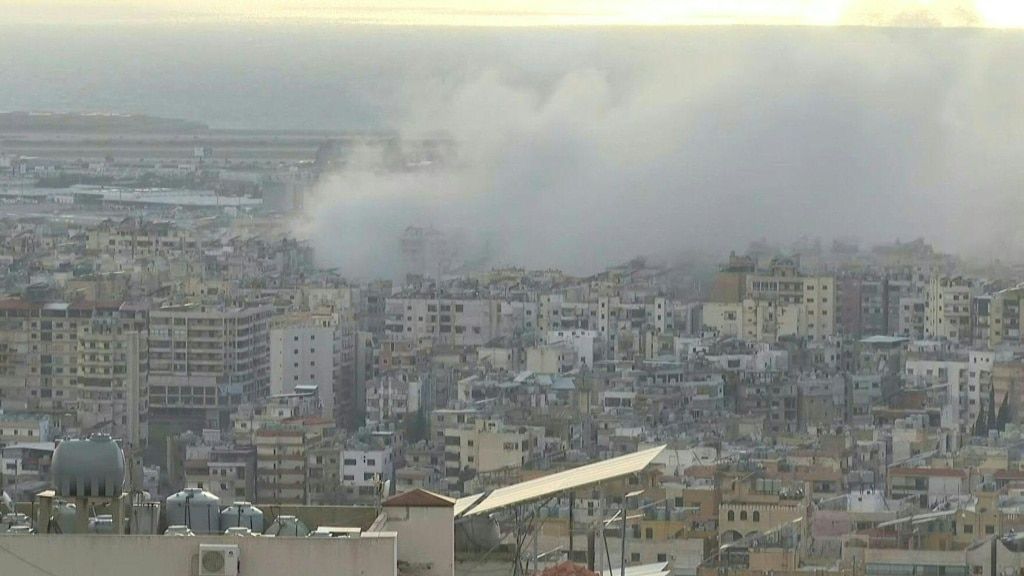
The United Nations has issued a grave warning that Lebanon stands on the brink of a full-scale humanitarian catastrophe as the Middle East conflict enters its fourth week. UN agencies report that over one million residents—representing approximately 20% of the population—have been forcibly displaced from their homes since hostilities escalated on March 2.
Karolina Lindholm Billing, UNHCR’s representative in Lebanon, described the situation as ‘extremely worrying’ during a virtual briefing from Beirut to journalists in Geneva. ‘We are witnessing a rapidly deepening humanitarian crisis on the ground,’ she stated, emphasizing that ‘the risk of a humanitarian catastrophe is real.’
The displacement crisis has overwhelmed Lebanon’s infrastructure, with more than 136,000 displaced individuals crammed into 660 collective shelters, primarily school facilities operating far beyond their intended capacity. Conditions in these shelters remain dire, with limited access to sanitation facilities and elderly residents struggling to sleep on classroom floors.
Complicating relief efforts, Israel’s destruction of critical bridges in southern Lebanon has isolated over 150,000 people and severely restricted humanitarian access to the most affected regions. UN Women reports that pregnant women are giving birth in temporary shelters with inadequate medical care, while women throughout the displacement camps describe constant fear, sleeplessness, and exhaustion as they comfort frightened children.
The crisis has particularly affected children, with UNICEF reporting that more than 370,000 Lebanese children have been displaced with ‘no safe place’ to go. Marcoluigi Corsi, UNICEF’s Lebanon representative, characterized the situation as ‘a sudden, chaotic mass displacement tearing families apart and hollowing out entire communities,’ noting that the mental and emotional toll on children is ‘devastating.’
UNHCR has appealed for over $60 million to scale up its response operations, warning that needs are escalating faster than available resources. The crisis compounds Lebanon’s existing multidimensional challenges, placing immense strain on families and already strained public services.
Despite the organized relief efforts—including the World Health Organization’s first humanitarian convoy reaching Lebanon via Syria and the Lebanese Red Cross distributing essential supplies—humanitarian workers face extreme dangers. The International Federation of Red Cross and Red Crescent Societies reported that one Lebanese Red Cross volunteer has been killed and several others wounded during ambulance missions conducted between March 2-23.
The overwhelming sentiment among the displaced population, according to UN officials, is a simple but powerful desire: ‘They simply want to go home.’