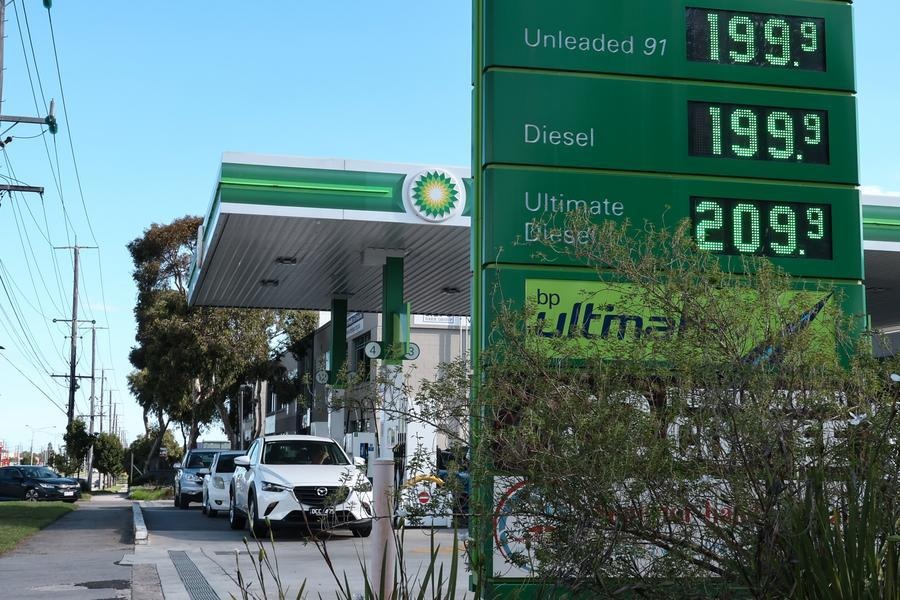
Australia is confronting a severe fuel supply crisis as escalating Middle East tensions trigger widespread panic buying and send gasoline prices to unprecedented levels. The situation has prompted authorities to implement emergency measures while urging consumers to avoid stockpiling behaviors that exacerbate shortages.
According to New South Wales’ official fuel monitoring platform, Premium 95 gasoline reached a record A$2.58 per liter on Monday, significantly exceeding the previous high of A$2.27 recorded just twelve days earlier. Gas stations across the nation are displaying substantially higher prices while implementing purchase limitations and anti-hoarding notices. National broadcaster ABC reports that rural and regional stations are experiencing particularly acute shortages due to consumer stockpiling.
Despite the visible disruptions, government officials maintain that adequate fuel supplies continue entering the country. The crisis stems primarily from the effective closure of the Strait of Hormuz, which has disrupted crude oil shipments from Australia’s primary suppliers in the Asia-Pacific region.
Financial expert Lurion De Mello of Macquarie University warned that panic purchasing “risks creating the very shortages we are worried about,” noting that while gasoline supplies remain relatively secure, Australia’s diesel-dependent economy faces greater vulnerability to supply chain interruptions.
University of Sydney supply chain management professor Ben Fahimnia characterized the situation as “primarily an upstream supply disruption” exacerbated by consumer behavior. He explained that panic buying creates false demand signals that ripple through the entire supply chain, ultimately driving prices higher across transportation and production systems.
In response to the crisis, Prime Minister Anthony Albanese met with International Energy Agency Executive Director Fatih Birol and announced the release of 20% of national fuel reserves following agency recommendations. The government has implemented additional measures to secure supply chains and address distribution challenges.
The Middle East conflict has simultaneously disrupted global liquefied natural gas supplies, driving international prices upward. ABC reports the Australian government is considering implementing a “windfall tax” on the domestic LNG industry to address resulting economic pressures.