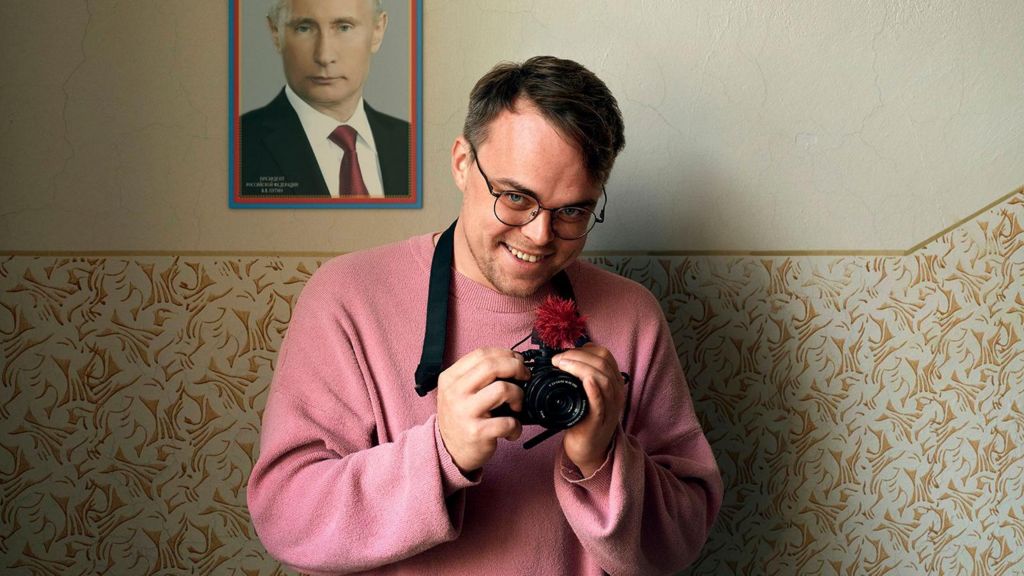
A Russian court in Chelyabinsk has issued a ruling requiring the removal of the Oscar-winning documentary “Mr Nobody Against Putin” from three online streaming platforms, declaring it extremist and terrorist propaganda. The decision marks the latest escalation in Russia’s systematic crackdown on dissenting narratives regarding its war in Ukraine.
The documentary, a Danish-Czech co-production that recently secured the Academy Award for Best Documentary Feature, provides a stark examination of wartime indoctrination within the Russian educational system. The film utilizes footage captured by Pavel Talankin, a former school events coordinator who subsequently fled Russia in 2024. It documents the pervasive militaristic propaganda implemented in a school near Karabash following the 2022 invasion of Ukraine, including mandatory lessons on weapons handling, mine detection, and ideological lectures on the purported need to “denazify” Ukraine.
Russian prosecutors successfully argued before the court that the film cultivates a “negative attitude towards the [war in Ukraine] and the current government.” They further condemned its depiction of the white-blue-white flag, a symbol adopted by anti-war activists, labeling it an emblem of a “terrorist organization.”
This legal action follows earlier condemnation from a Russian governmental human rights body, which alleged the documentary improperly used footage of children without parental consent and vowed to petition the Academy of Motion Picture Arts and Sciences to launch an investigation.
The film powerfully interweaves scenes of state-mandated patriotism with tragic outcomes, including accounts of Talankin’s former students who enlisted and perished in the conflict. It also chronicles Talankin’s own acts of resistance against the system. In his poignant Oscar acceptance speech, Talankin contrasted the universal hope represented by shooting stars with the grim reality of falling bombs and drones in conflict zones, concluding with a plea to “end all wars for the sake of our future, and for the sake of all our children.”
The Kremlin has consistently avoided addressing the documentary’s international acclaim. Presidential spokesman Dmitry Peskov stated he had not viewed the film, while President Vladimir Putin, in a separate cultural meeting, criticized Russian cinemas for showing “stupid and unnecessary” foreign films instead of supporting domestic productions. This case exemplifies the intensified repression of dissent and control over information in Russia since the full-scale invasion began, where public opposition to the war can result in lengthy prison sentences.