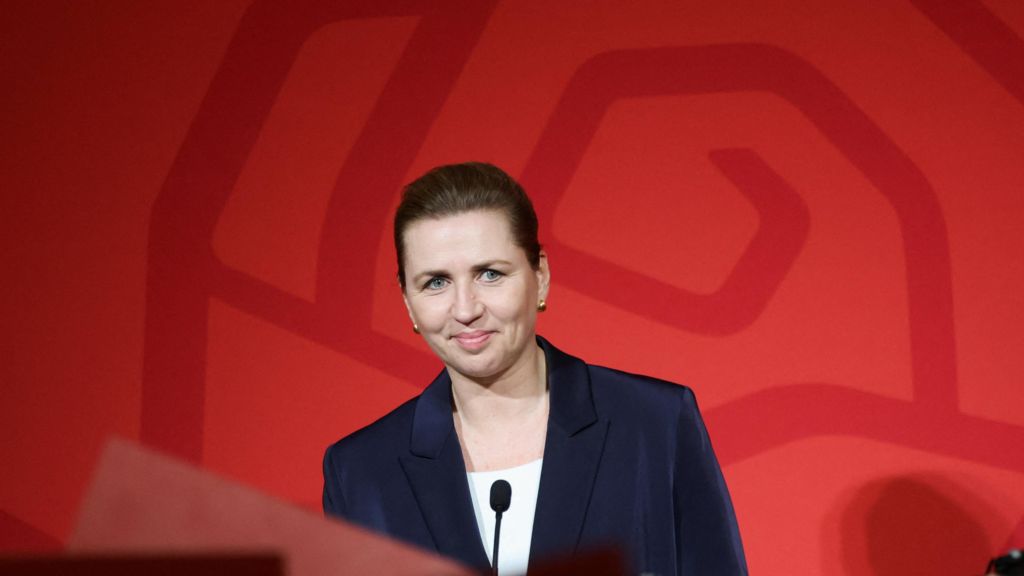
Denmark’s political landscape has been reshaped by a general election that produced a fragmented parliament, leaving Prime Minister Mette Frederiksen’s Social Democrats victorious yet weakened. Despite securing 21.9% of the vote and 38 parliamentary seats—making them the largest party by a significant margin—the Social Democrats achieved their poorest electoral performance in over a century, falling far short of the 90-seat majority needed in the 179-seat Folketing.
The election night at Christiansborg Palace saw mixed emotions as Frederiksen addressed supporters. ‘I’m sorry that we did not get more votes. I had also hoped for a better result,’ she acknowledged, while simultaneously celebrating that ‘the Social Democrats have once again become the Danes’ absolute favourite political party.’
The electoral mathematics reveals a deeply divided nation. The left-leaning ‘red bloc’ commands 84 seats against the right-aligned ‘blue bloc’s’ 77 seats, with both coalitions failing to reach the majority threshold. This deadlock places unprecedented influence in the hands of the Moderates, a centrist party led by former Prime Minister Lars Løkke Rasmussen, which secured 14 seats and now holds the balance of power.
Rasmussen, fresh from international attention following his diplomatic handling of the Greenland standoff with the United States and his viral fist-bump with Vice President JD Vance, declared his intention to form a government ‘across the centre.’ His position contrasts sharply with Troels Lund Poulsen of the Liberals, the blue bloc’s largest party, who has explicitly rejected governing with the Social Democrats.
Political analysts, including DR’s Christine Cordsen, suggest the most plausible outcome involves a center-left coalition comprising the Social Democrats, Red-Greens, the Moderates, and the Danish Social Liberal Party. However, complex negotiations spanning days or weeks are anticipated.
The election, called prematurely by Frederiksen hoping to capitalize on her handling of Trump’s threats to annex Greenland, ultimately turned on domestic concerns. Voters prioritized economic stability, cost of living pressures, welfare issues, and environmental concerns including pesticide contamination from pig farming and agriculture’s climate impact over geopolitical matters.
Frederiksen, who has led Denmark for nearly seven years, affirmed her readiness to continue as prime minister, though her path to a third term depends on navigating the most complex government formation process in recent Danish history.