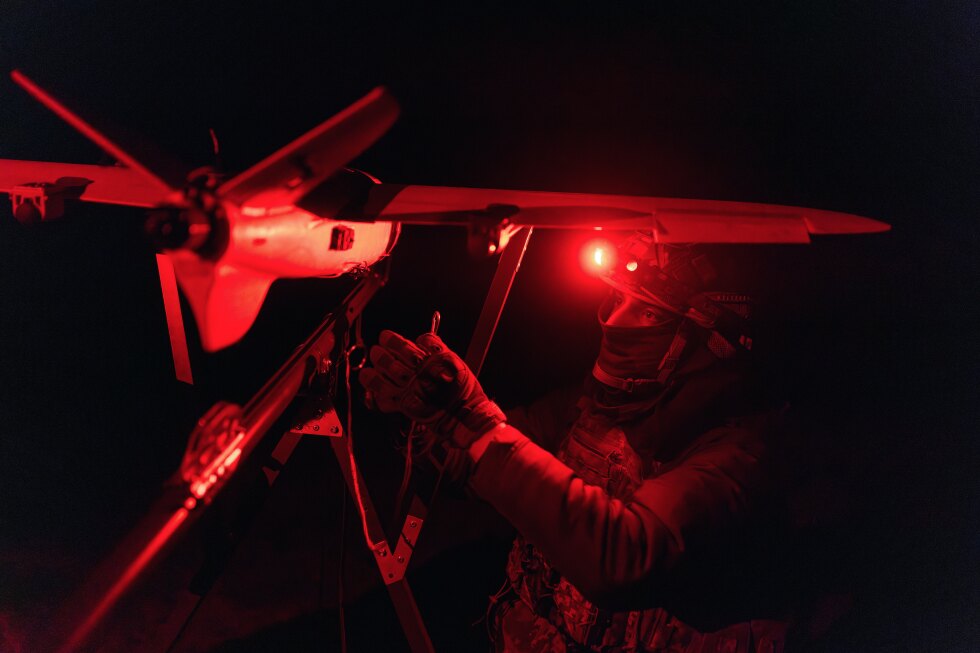
KHARKIV, Ukraine — Under the starlit skies of eastern Ukraine, specialized military teams maintain vigilant watch for Iranian-designed Shahed drones—the low-cost loitering munitions that Russia has deployed by the tens of thousands in its four-year conflict. These mobile units represent the frontline of a remarkable military innovation story: Ukraine’s grassroots development of drone interception technology that has evolved from battlefield necessity into a globally significant defense solution.
When Shahed drones first appeared in autumn 2022, Ukraine possessed limited capabilities to counter them. Today, through continuous adaptation and ingenuity, drone crews successfully intercept these aerial threats mid-flight using increasingly sophisticated homemade technology. The 127th Brigade exemplifies this transformation, with soldiers constantly testing and refining their interceptor drones during lulls in combat operations.
The evolution began approximately two years ago when conventional air-defense missiles proved ineffective against agile reconnaissance drones. A pivotal moment occurred when a Ukrainian pilot successfully downed a Russian Orlan surveillance drone using another drone—an event that military personnel now recognize as the dawn of a new era in aerial warfare. “That’s when I realized—this is a drone war. It had begun,” recalled a 27-year-old captain leading the brigade’s efforts, who spoke anonymously due to military regulations.
Ukraine’s domestic drone interceptor market has subsequently flourished, with key developers showcasing their products at international arms exhibitions. The collaboration between military units and defense companies has been particularly fruitful in Kharkiv, where soldiers work alongside local manufacturers to test and refine aircraft-style interceptor drones capable of matching Shahed speeds exceeding 200 kilometers per hour (124 mph).
Civil society organizations have played a crucial bridging role in this innovation ecosystem. The Come Back Alive Foundation launched its “Dronopad” (Dronefall) initiative in summer 2024 to systematize early successful interception cases into scalable solutions. Project lead Taras Tymochko emphasized the importance of rapid feedback loops between battlefield testing and technical refinement: “It’s always action and counteraction. That cycle is what drives the evolution of drone warfare.
The technology’s cost-effectiveness represents perhaps its most revolutionary aspect. While a Patriot missile system costs approximately $2 million per interceptor, these drone systems operate at roughly $2,200 per unit—with the added advantage of being reusable when missions prove unsuccessful. As one pilot noted: “The difference is huge. And the effect? Not any worse.”
The success of Ukraine’s drone defense approach has attracted international attention, with President Volodymyr Zelenskyy confirming that U.S. allies in the Middle East have sought Ukrainian expertise in defending against Iranian drones—the same systems that have occasionally overwhelmed sophisticated Western air defenses in the region.
What began as improvisation has matured into a formal military capability, with the 127th Brigade now establishing dedicated air defense units centered on interceptor drone crews—a model being adopted across Ukraine’s armed forces. Nearly two years after initial skepticism, these systems have demonstrated that sometimes, as Tymochko observed, “air defense for the poor can be more effective than air defense for the rich.”