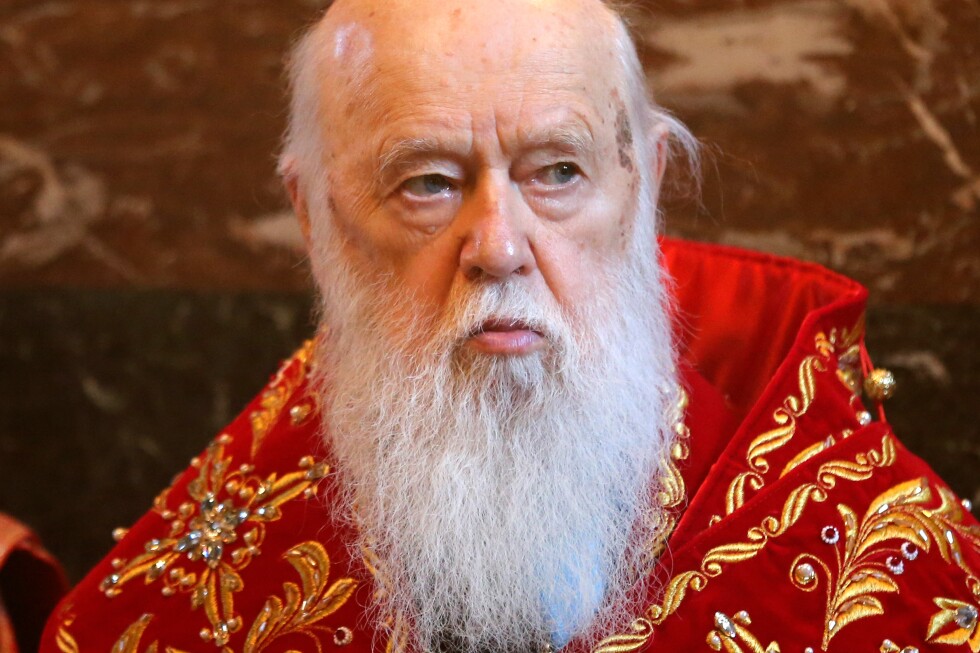
Patriarch Filaret of Kyiv, the seminal figure who dedicated his life to establishing an autonomous Ukrainian Orthodox Church free from Moscow’s religious dominion, passed away Friday at age 97. The Orthodox Church of Ukraine confirmed his demise resulted from complications of chronic illnesses.
Filaret’s passing marks the conclusion of an era in Eastern Orthodox history. Though his influence diminished in recent years amid escalating Ukraine-Russia hostilities, his theological legacy fundamentally reshaped the region’s religious landscape. His decades-long campaign ultimately succeeded in gaining international recognition for Ukraine’s ecclesiastical independence.
Metropolitan Epiphanius of Kyiv, current primate of the OCU, memorialized Filaret as occupying “a special place in the modern history of both the local Ukrainian Orthodox Church and Ukraine as a whole.” Despite historical tensions between the two church leaders, Epiphanius acknowledged Filaret’s pivotal role in preserving Christian practice during Soviet religious suppression and spearheading Ukraine’s spiritual revival.
Ukrainian President Volodymyr Zelenskyy conveyed personal condolences, characterizing the patriarch’s death as “a great loss for Ukrainians” in an official Telegram statement. Zelenskyy credited Filaret as “one of the most steadfast defenders of Ukrainian church, independence and statehood,” emphasizing that “many of Ukraine’s accomplishments simply would not have been possible” without his determined leadership.
Born Mykhailo Denysenko in 1929 in Donetsk region, Filaret’s spiritual journey began amid Soviet atheist policy. His father’s WWII death profoundly influenced his religious vocation. After taking monastic vows, he ascended through Russian Orthodox hierarchy before championing Ukrainian ecclesiastical independence following the Soviet collapse.
Filaret’s 1992 establishment of the Ukrainian Orthodox Church – Kyiv Patriarchate provoked immediate condemnation from Moscow, resulting in his defrocking and excommunication. These sanctions were later invalidated when Ecumenical Patriarch Bartholomew of Constantinople recognized the merged Orthodox Church of Ukraine in 2019, creating permanent schism within Eastern Orthodoxy.
The religious division paralleled worsening geopolitical tensions between Kyiv and Moscow, with Russian authorities accusing the United States of orchestrating the ecclesiastical split. Though Filaret later conflicted with OCU leadership over church governance, he reconciled with Epiphanius in 2025, jointly praying for Ukrainian victory against Russian aggression.
Controversial beyond ecclesiastical matters, Filaret attributed the COVID-19 pandemic to divine retribution for same-sex marriage in a 2020 television interview. His numerous honors included Ukraine’s highest civilian distinction, the Hero of Ukraine award, bestowed in January 2019.