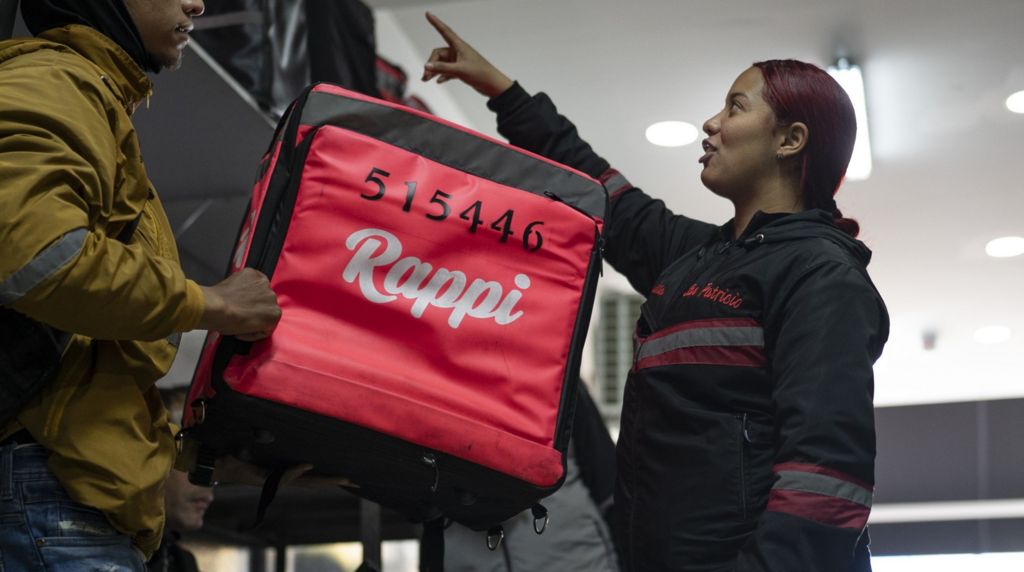
Bogota’s streets serve as a dynamic showcase of Colombia’s technological transformation, where Rappi’s distinctive orange-bagged delivery bikes have become ubiquitous symbols of innovation. Hailed as the nation’s most triumphant tech startup, this delivery platform has achieved unicorn status with a valuation surpassing $5 billion while attracting more than 35 million active monthly users.
Rappi’s extraordinary growth signals Colombia’s remarkable economic evolution, particularly following the landmark 2016 Peace Accord that helped transform the country’s international standing. Beyond attracting global tourists, Colombia has emerged as a magnet for immigrants from the United States, Canada, and the United Kingdom, with cities like Medellín and Bogotá becoming preferred destinations.
The nation has established itself as a significant business hub with a rapidly expanding startup landscape. According to a recent KPMG analysis, Colombia now hosts approximately 2,100 startups, representing a 24% year-over-year increase. Maria Peñaranda, KPMG Colombia’s manager of emerging giants and innovation, confirms that “the country now occupies the second position among Latin America’s most promising startup ecosystems, trailing only Brazil.”
Approximately 80% of Colombian startups remain in early developmental stages, demonstrating remarkable dynamism in new enterprise creation. Peñaranda emphasizes that “long-term success stories like Rappi continue influencing the ecosystem as catalysts for talent recycling and investor confidence.” She cites additional examples including global payments processor Yuno and renewable energy firm Erco Energy, both of which have evolved into established companies generating over $10 million in revenues while expanding across international markets.
Among Colombia’s emerging success stories is Foodology, a virtual restaurant enterprise operating through strategically located dark kitchens. Since its 2019 Bogota founding, the company has secured over $60 million in funding, employs more than 800 staff members, and maintains full profitability. Co-founder and CEO Daniela Izquierdo explains her vision: “I sought to develop methods for Colombia to access exceptional cuisine through faster, more innovative channels.”
The company operates thousands of digital storefronts managed by sophisticated software systems that coordinate inventory and maintain consistent menu offerings across approximately 400 different locations. Foodology has begun licensing this proprietary technology while expanding operations into Mexico and Peru, reflecting a common pattern among Colombian startups that quickly seek international growth due to domestic market limitations.
Despite these success stories, Colombia’s startup landscape faces substantial investment challenges. The initial enthusiasm generated by SoftBank’s 2019 Latin America innovation fund has diminished, according to Daniel Vásquez, managing partner at US-based Actions Capital. He notes that “the majority of those investments haven’t produced successful outcomes for various reasons,” causing many investors to withdraw from the region.
Izquierdo confirms this trend: “Latin America experienced tremendous growth between 2021 and 2022, but recent years have proven difficult. The US stock market decline triggered a global venture capital slowdown, and emerging markets typically suffer first during such contractions.”
With limited domestic investment options, Colombian entrepreneurs must seek international funding sources. Vásquez observes that promising companies sometimes fail because “they exhaust resources before securing subsequent funding rounds necessary for achieving profitability.” He emphasizes that sustainable growth requires increased local institutional and family investments in technology, noting that “when venture capitalists observe limited local technology investment, they interpret this as indicating restricted opportunities.”
Some companies have nonetheless thrived despite these challenges. Habi, a Bogotá-based property technology company co-founded by Brynne McNulty Rojas and Sebastián Noguera, achieved unicorn status following a $200 million funding round. The platform specializes in used home transactions while offering complementary services including financing, property listings, and mortgage brokerage.
McNulty Rojas acknowledges benefiting from improved regional investment conditions compared to previous decades, though she expresses desire for greater local investor participation. Despite financial obstacles, she strongly recommends Colombia for entrepreneurship, citing abundant talent and market potential that have made her business journey exceptionally rewarding.