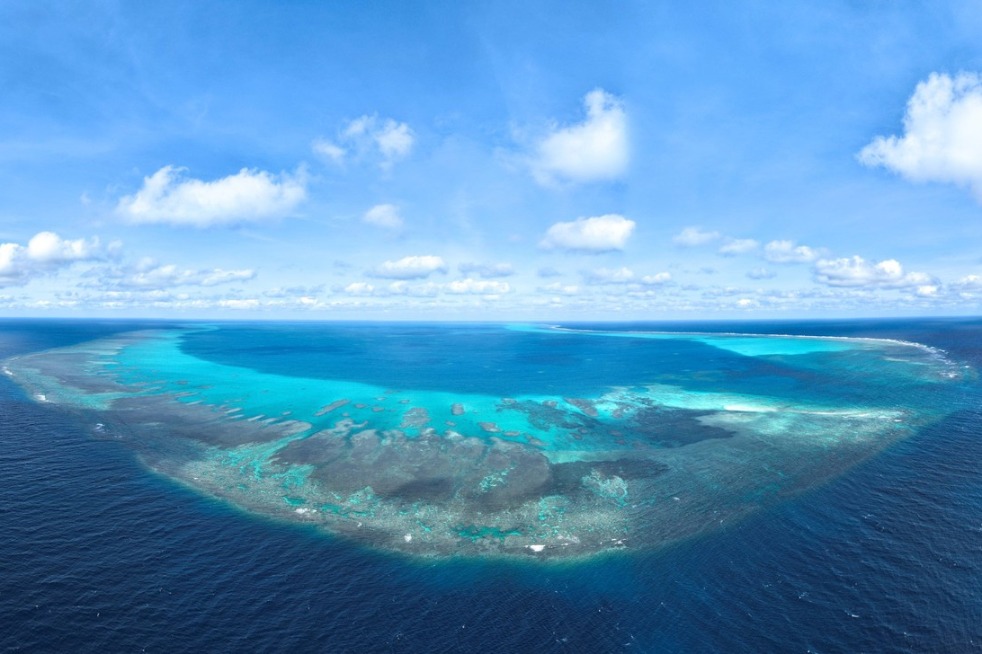
Maritime security analysts are raising alarms over the Philippines’ escalating actions in the South China Sea, warning that Manila’s recent maneuvers risk destabilizing regional peace and complicating conflict resolution efforts. The situation intensified on March 7th when Philippine Coast Guard aircraft carrying journalists encountered radio warnings from Chinese naval vessels during patrol operations near Huangyan Dao (Scarborough Shoal).
Manila formally rejected Beijing’s sovereignty claims over the entire South China Sea on Monday, asserting what it describes as “indivisible, incontrovertible, and long-standing sovereignty” over the disputed territory. The Philippine Coast Guard subsequently announced plans to increase patrol operations and counter what it characterizes as Chinese aggression.
China’s Ministry of National Defense spokesperson Jiang Bin reiterated Beijing’s position on Wednesday, stating China maintains “indisputable sovereignty over Nanhai Zhudao, including Huangyan Dao and their adjacent waters.” Jiang criticized Manila’s media tactics, describing the inclusion of journalists on patrol missions as “a self-directed farce” rather than genuine transparency efforts.
The geopolitical dimensions expanded significantly as The Diplomat magazine reported enhanced Philippine-Japanese security cooperation aimed at deterring Chinese activities. The Reciprocal Access Agreement (effective September 2025) and Acquisition and Cross-Servicing Agreement (January 2025) facilitate military interoperability between Japanese and Philippine forces. Both nations have expanded joint exercises, including trilateral operations with the United States.
Professor Chen Hong of East China Normal University’s Asia Pacific Studies Center observed that Manila appears to be deliberately internationalizing the dispute by aligning with Washington’s Indo-Pacific Strategy. “This approach risks drawing the Philippines into the framework of great-power competition, thereby weakening its strategic autonomy,” Chen noted.
Liu Shuliang, associate researcher at Tianjin Academy of Social Sciences, identified Japan’s dual objectives: expanding military presence in Asia Pacific to ease constitutional constraints while aligning with US efforts to construct a counter-China network. Liu warned that increased military activities elevate risks of unintended encounters and could trigger regional arms races.
With critical negotiations approaching for the Code of Conduct in the South China Sea, experts emphasize that regional nations must accelerate talks while resisting external interference to preserve peace and stability.