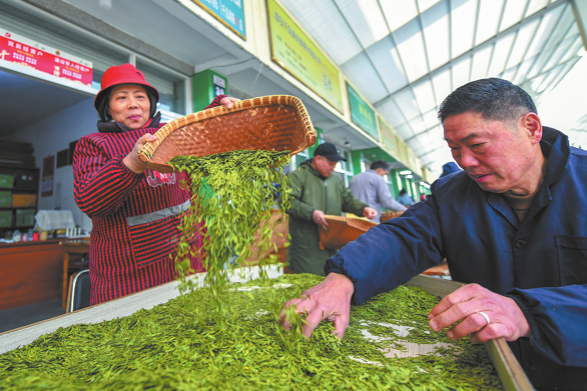
As the Spring Equinox arrives, marking one of China’s 24 solar terms with perfect balance between day and night, a parallel equilibrium is found in the season’s most prized agricultural product: first-flush spring tea. The chun fen period has ushered in peak harvest season across eastern China’s misty mountains, where tea growers are gathering leaves that embody the essence of seasonal transition.
Professional tea taster Weng Huiqiong explains that these early buds, harvested after winter dormancy, contain significantly higher concentrations of amino acids and theanine, creating a distinctive flavor profile characterized by crisp briskness followed by subtle sweetness. “Spring tea is the ultimate flavor of the season,” Weng notes, describing the tender single buds as “nature’s most concentrated energy pods.”
While traditional varieties like West Lake Longjing remain celebrated, Weng recommends exploring regional specialties including Jiangnan’s fruity Biluochun and Sichuan varieties such as Mengding Ganlu, Emei Xueya, and Zhuyeqing. Jasmine tea also serves as an ideal transitional choice for early spring, with its fresh floral aroma helping to clear the senses.
The ancient tea culture is undergoing contemporary transformation through the emergence of “tea mixologists” who blend traditional ingredients with modern techniques. At Hangzhou’s Four Seasons Hotel, this innovation manifests in the Osmanthus Longjing Latte—part of their Grand Canal Cultural Tea Series—which replaces espresso with carefully brewed Longjing tea, textured microfoam, and dried osmanthus flowers.
Using low-temperature extraction methods to preserve delicate aromas, these modern creations allow vegetal and floral notes to emerge through creaminess without overpowering the drink. Yet the season remains fleeting: as Spring Equinox passes, the window for the freshest spring tea narrows rapidly, making each cup a temporary moment of balance before the year progresses.