A recent military escalation between Israel and Iran has triggered significant geopolitical repercussions and exposed potential fissures in the U.S.-Israel alliance. Following Israeli airstrikes on Iran’s South Pars gas field—the world’s largest natural gas reservoir—and subsequent Iranian retaliation against Qatari energy infrastructure, global energy markets experienced immediate price volatility.
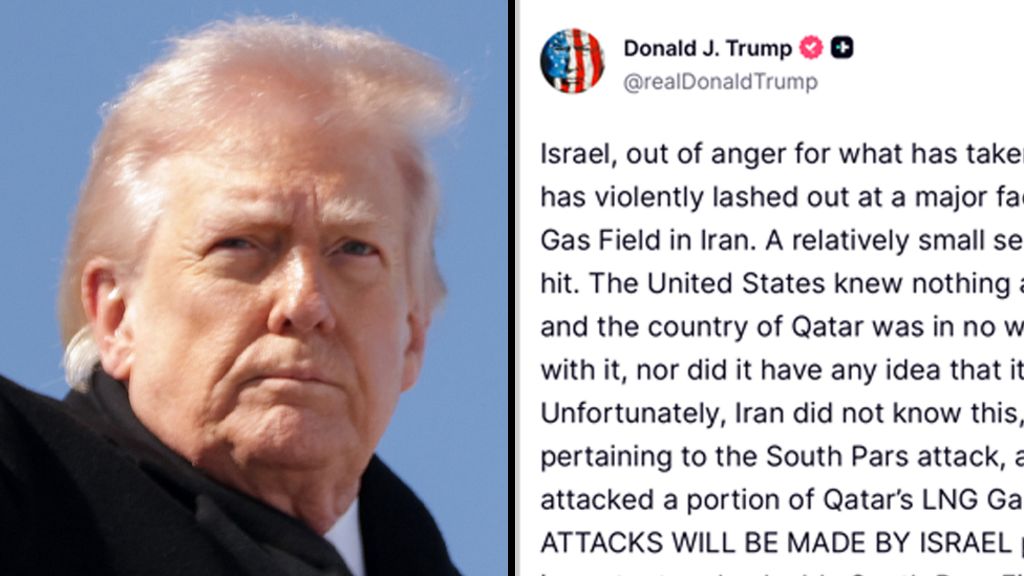
President Donald Trump utilized his Truth Social platform to issue a characteristically forceful statement regarding the conflict. Notably, he asserted that the United States had no prior knowledge of Israel’s offensive operation—a claim directly contradicted by multiple Israeli media outlets. Centrist publication Yedioth Ahronoth reported the attack was “coordinated in advance with the United States,” while right-wing Israel Hayom indicated Trump had discussed the impending strike with Persian Gulf leaders.
Trump’s rhetorical approach raised diplomatic eyebrows as he described Israel’s actions as having “violently lashed out”—terminology typically reserved for Iranian retaliation patterns rather than calculated military operations by a strategic ally. This linguistic choice suggested potential disapproval of Israel’s decision-making process.
The president’s social media communication contained a singular all-caps declaration: “NO MORE ATTACKS WILL BE MADE BY ISRAEL pertaining to this extremely important and valuable South Pars Field.” This directive, coupled with his unusual emphasis on requiring Israeli consent for future U.S. actions, implied a possible recalibration of the bilateral military relationship.
Despite these indicators, Israeli officials maintain strong alignment with Washington. Alex Gandler, spokesman for Israel’s London embassy, emphasized complete synchronization regarding objectives toward Iran’s nuclear program and Islamic Revolutionary Guard Corps. However, strategic differences appear emerging in operational priorities: while U.S. forces focus on degrading Iran’s missile capabilities and naval assets, Israel has concentrated on leadership targeting and disrupting internal security apparatuses.
The conflict’s domestic political implications are equally significant. With American public support for the war dipping below 50% and energy prices climbing due to continued hostilities, the administration faces mounting pressure. Meanwhile, Prime Minister Netanyahu potentially benefits from heightened conflict rhetoric despite possible strain on the U.S.-Israel partnership.
Trump’s assertion that Iran mistakenly believed Qatar was complicit in the initial attack—while not absolving Tehran of responsibility—introduces a nuanced interpretation of retaliatory motives. This analysis, combined with threats of “unprecedented” counterstrikes against Iranian infrastructure, presents a complex portrait of an administration navigating unexpected conflict dynamics while attempting to maintain strategic coherence.