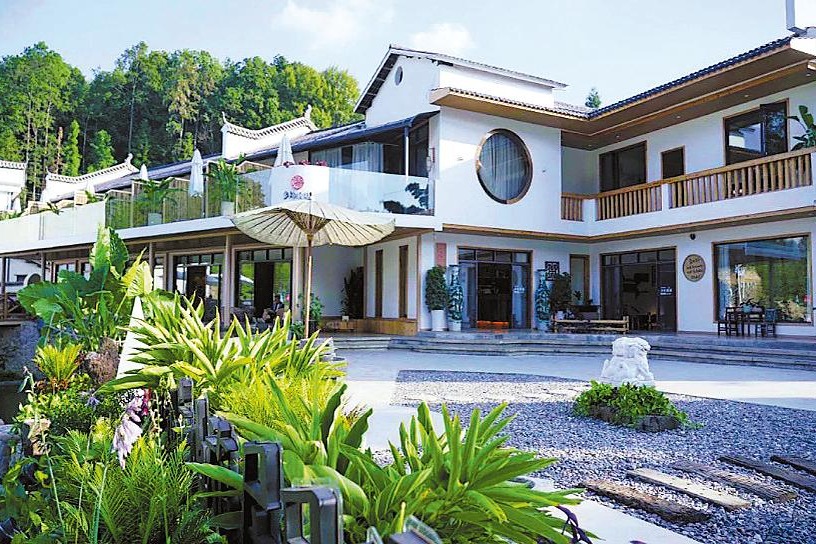
Nestled in the outskirts of Guiyang, Gaozhai village has undergone a remarkable metamorphosis from traditional farming community to a buzzing digital economy hub, demonstrating China’s innovative approach to rural revitalization through technology integration.
The transformation centers around the Xiaolanshan project, a digital cultural initiative connecting seven villages in Guizhou province’s Guanshanhu district. Unlike conventional development models that involve clearing existing structures, Xiaolanshan’s architects adopted a preservation-forward strategy, repurposing abandoned chicken sheds and vacant buildings into modern workspaces for digital enterprises.
At the heart of this digital renaissance lies a novel mechanism for revitalizing collectively owned village construction land. Project Director Fu Lidong revealed that while only 17.6 hectares of new construction land was available, the real asset emerged from 266 vacant rural buildings spanning approximately 100,000 square meters.
The project has successfully attracted approximately 50 technology companies and over 600 digital professionals, creating a comprehensive ecosystem encompassing audio-visual content production, data annotation services, and scenario-based applications. This convergence of traditional village life and modern digital industry has generated substantial economic benefits, with reported digital economy output exceeding 800 million yuan ($116 million) in 2025.
Local residents have experienced tangible improvements in their quality of life. More than 80 villagers now enjoy stable employment within their community while simultaneously benefiting from rental income derived from previously idle properties. The integration of new digital residents has fostered cultural exchange, with community activities and volunteer initiatives helping bridge traditional and modern perspectives.
The development carefully maintains ecological balance, respecting environmental protection boundaries and permanent farmland regulations. This balanced approach has preserved the area’s rural character while introducing cutting-edge digital infrastructure, creating a unique model for sustainable rural development in the digital age.