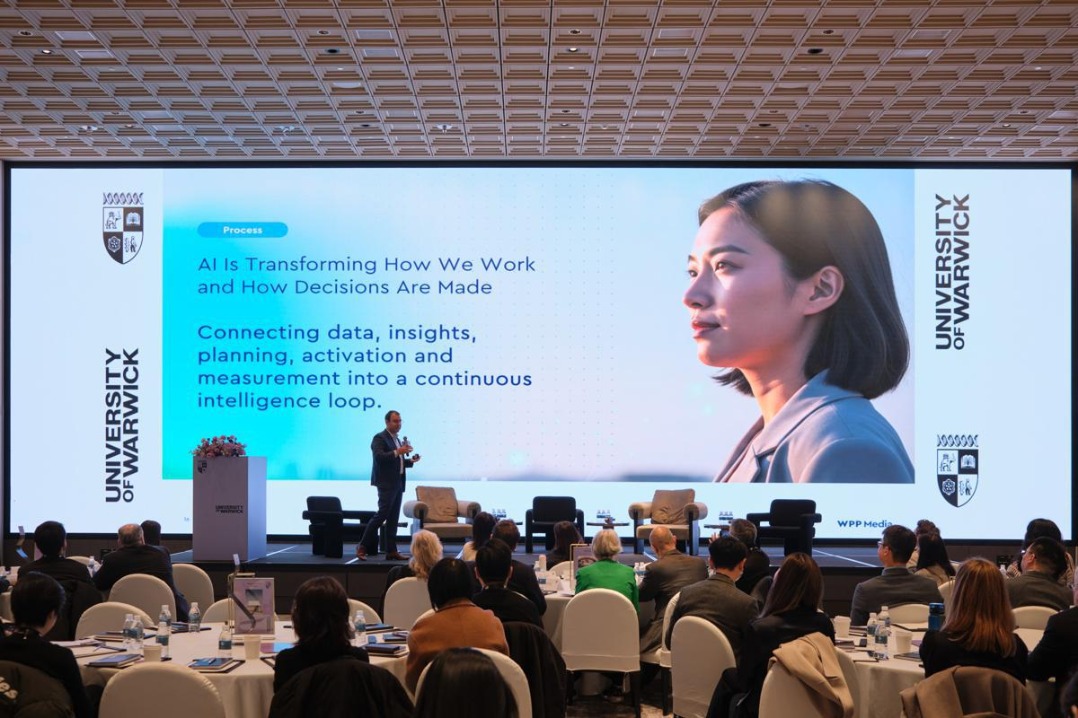
Shanghai served as the international nexus for artificial intelligence discourse this week as Chinese and British academics convened for a high-level symposium on AI’s expanding role in global sustainability initiatives. The collaborative forum, jointly organized by the University of Warwick and the British Chamber of Commerce Shanghai, brought together leading researchers, corporate innovators, and policy experts to explore cutting-edge applications of artificial intelligence in addressing pressing environmental challenges.
Caroline Meyer, Provost of the University of Warwick, framed the discussion by noting that ‘AI and sustainability have become fundamental questions of competitiveness, opportunity and resilience for every organization.’ Her remarks underscored the critical intersection of technological innovation and environmental stewardship that defined the day’s proceedings.
Throughout the conference, speakers highlighted China’s distinctive position in the global sustainability landscape, emphasizing the nation’s unprecedented scale, rapid implementation capabilities, and growing innovation capacity. The event showcased several ongoing collaborative research initiatives between Warwick and prestigious Chinese institutions including Shanghai Jiao Tong University and Fudan University, demonstrating how transnational academic partnerships are generating insights with far-reaching practical applications.
Technical sessions led by scholars from both nations examined AI’s evolving capacity to redesign complete systems for enhanced sustainability. Presenters illustrated concrete examples of AI-driven breakthroughs across multiple disciplines, including accelerated discovery of low-carbon materials, improved climate resilience modeling, and optimization of smart energy networks.
Dr. Gu Sai, Deputy Pro-Vice-Chancellor (East and Southeast Asia) of the University of Warwick, presented compelling evidence regarding AI’s potential to dramatically reduce both time and financial resources required for materials science research. ‘This computational efficiency,’ Gu noted, ‘could unlock essential breakthroughs for transitioning to cleaner energy systems and sustainable manufacturing processes.’
The commercial implications of AI transformation received significant attention through a keynote address by Austin Winters, President of Choreograph China and WPP Tech China. Winters detailed how AI-powered marketing platforms are revolutionizing brand engagement through sophisticated integration of data analytics, technological infrastructure, and creative strategy.
Beyond immediate applications, discussions also addressed the evolving nature of organizational leadership and talent development in the AI era. Participants noted the gradual shift from traditional specialized departmental structures toward more integrated, diamond-shaped organizational models that combine creativity, data science, and technological capabilities within cohesive operational frameworks.