The ongoing Middle East conflict continues to send shockwaves through global energy markets, with multiple nations implementing emergency measures to address supply disruptions. Oil prices exhibited volatility on Wednesday, with West Texas Intermediate dropping over 3% to approximately $93 in Asian trading, while Brent crude declined more than 2% yet maintained above $101 per barrel. This reversal followed Tuesday’s price surge triggered by Iran’s renewed attacks on oil-producing neighboring countries.
Supply chain adaptations are emerging as key strategies to navigate the crisis. South Korea announced a significant arrangement with the United Arab Emirates to receive 18 million additional barrels of oil through alternative channels that bypass the strategically critical Strait of Hormuz. This development is particularly significant given that approximately 70% of South Korea’s oil imports traditionally transit through this vulnerable waterway.
The Strait of Hormuz itself remains a focal point of geopolitical tension. Tracking data indicates Iran is selectively permitting passage to vessels from nations it considers friendly, while Iraqi officials are negotiating for safe passage of their oil tankers. Mohamed Bagher Ghalibaf, Speaker of Iran’s Parliament, issued a stark warning that the strategic waterway “won’t return to its pre-war status,” suggesting permanent alterations to global energy transit routes.
International responses reflect the conflict’s widening economic impact. Germany has moved to empower its competition watchdog to investigate energy companies suspected of exploiting the crisis through unjustified fuel price increases. Meanwhile, Australia’s Reserve Bank implemented a 25 basis point interest rate hike to 4.10%, explicitly citing “sharply higher fuel prices” driven by the Middle East conflict.
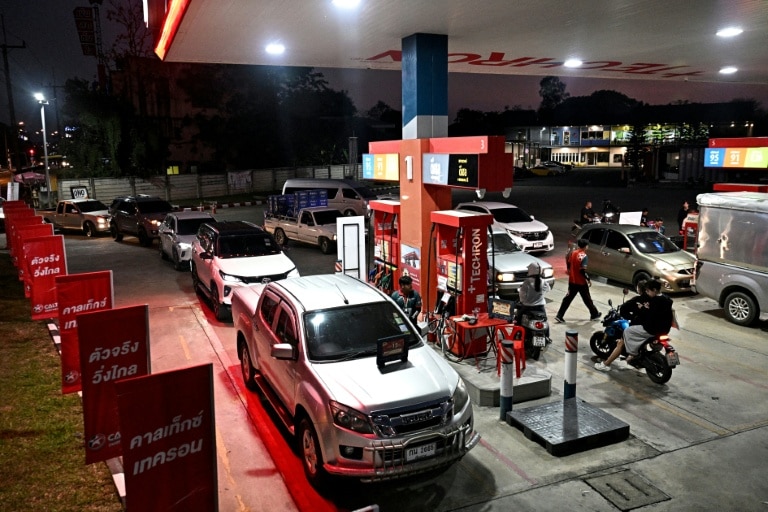
Consumer-level effects are becoming increasingly visible across continents. In Thailand, motorists formed extensive queues at petrol stations from Bangkok to Chiang Rai province amid worsening shortages and anticipated price increases following the expiration of government-imposed diesel price caps. The aviation sector also faces mounting pressure, with Scandinavian airline SAS announcing the cancellation of at least a thousand April flights due to unsustainable fuel costs, while U.S. carriers warned of challenging months ahead if current price levels persist.
The situation remains fluid, with Iran’s Foreign Minister Abbas Araghchi asserting on social media platform X that the “wave of global repercussions has only begun and will hit all — regardless of wealth, faith, or race.” This statement underscores the potentially far-reaching economic consequences extending well beyond immediate energy supply concerns.