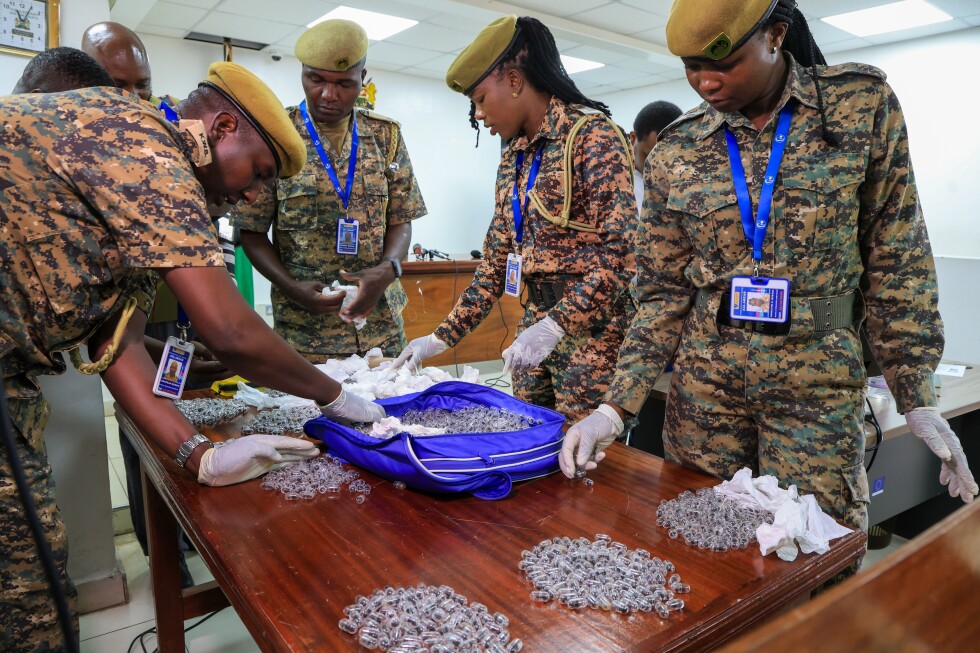
NAIROBI, Kenya — Kenyan authorities have intensified their campaign against wildlife trafficking following the recent prosecution of an international smuggling operation specializing in ant species. The latest case involves Chinese national Zhang Kequn and Kenyan citizen Charles Mwangi, who faced multiple charges in a Nairobi courtroom on Tuesday for illegal wildlife trading and conspiracy to commit felony offenses.
Court documents reveal the sophisticated nature of the operation, with prosecutors detailing how Kequn allegedly purchased initial batches of 600 and 700 ants from Mwangi for 60,000 Kenyan shillings ($463) and 70,000 shillings ($540) respectively. The investigation culminated on March 10 with the discovery of 1,948 garden ants meticulously stored in specialized laboratory tubes and an additional 300 specimens concealed within tissue rolls.
This case represents the continuing pattern of ant trafficking that Kenyan authorities identified last year as an emerging conservation threat. The insects are reportedly destined for markets in Europe and Asia, though officials have not yet determined whether the ants are sought as exotic pets, for scientific purposes, or other applications.
Defense attorney David Lusweti, representing Kequn, asserted that the defendants were unaware they were violating Kenyan wildlife protection statutes. “They recognized potential commercial opportunities for international sales and believed they could establish legitimate livelihoods through this trade,” Lusweti told reporters.
The case echoes previous incidents, including last year’s prosecution of two Belgian teenagers found with 5,000 ants in test tubes—a shipment Kenyan authorities valued at approximately 1 million shillings ($7,700). In a separate 2023 case, a Kenyan and Vietnamese national faced similar charges for possessing 400 ants.
The Kenya Wildlife Service has expressed serious concerns about these developments, emphasizing that illegal ant exports compromise national sovereignty over biological resources and deprive local communities and research institutions of potential ecological and economic benefits. Both suspects remain in custody as investigations continue.