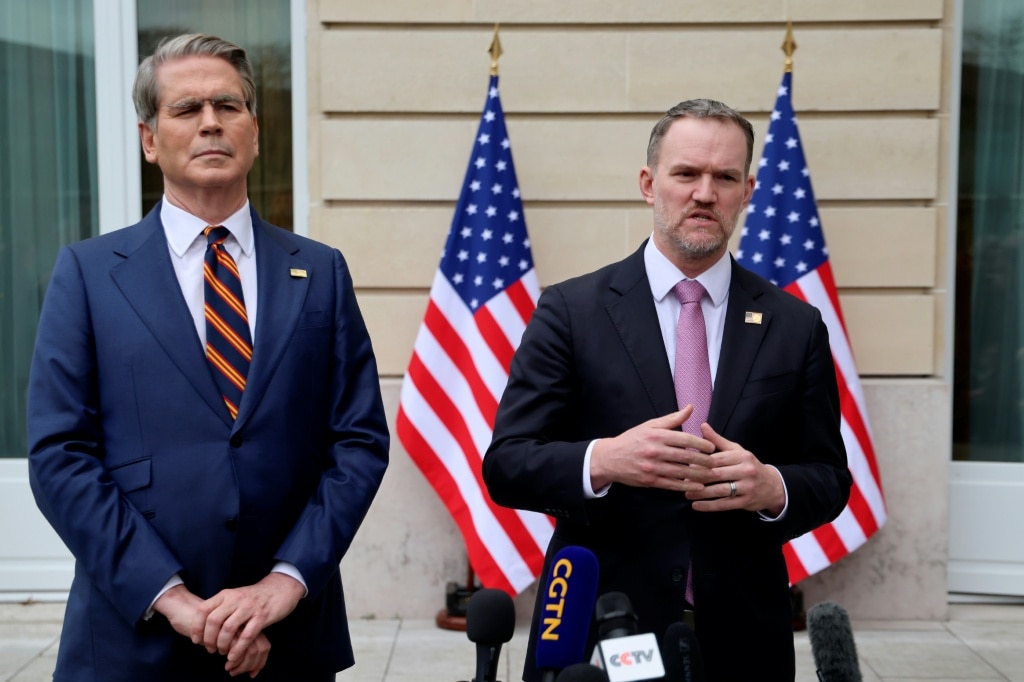
Senior officials from the United States and China convened in Paris for trade discussions characterized by both nations as “constructive,” signaling a potential stabilization of their volatile economic relationship. However, the prospect of an upcoming summit between President Donald Trump and President Xi Jinping appears increasingly uncertain, likely delayed by escalating Middle East tensions.
US Treasury Secretary Scott Bessent affirmed the positive nature of the dialogue, telling reporters the talks “were constructive and they show the stability of the relationship.” Chinese state media Xinhua similarly described the exchange between Bessent and Chinese Vice Premier He Lifeng as “candid, in-depth and constructive,” noting it would inject “greater certainty and stability” into global trade.
The Paris meeting was intended to lay groundwork for President Trump’s state visit to China, originally scheduled for late March. US officials confirmed the trip is now likely postponed due to Washington’s military engagement with Iran. The closure of the critical Strait of Hormuz by Iran in retaliation against US and Israeli actions has created a flashpoint in US-China relations, with Trump pressuring NATO allies and China to assist in reopening the vital oil transportation route.
Beijing’s Foreign Ministry confirmed both capitals “are maintaining communication regarding President Trump’s visit to China,” with spokesman Lin Jian emphasizing that “head-of-state diplomacy plays an irreplaceable strategic guiding role in China-US relations.” When questioned about Trump’s pressure campaign regarding Hormuz, Lin acknowledged the “tense situation” has “disrupted international trade routes for goods and energy” without directly addressing the US demands.
The trade discussions occurred against a backdrop of renewed US trade investigations announced last week targeting excess industrial capacity in 60 economies, including China. These probes will examine alleged “failures to take action on forced labor” and whether these practices burden US commerce. Bessent noted his team provided Chinese counterparts with “a preview of what we’re doing on US trade policy as we adjust to the Supreme Court” following its striking down of Trump’s global tariffs.
China’s Commerce Ministry responded forcefully, calling the investigations “extremely unilateral, arbitrary and discriminatory” and accusing Washington of “attempting to construct trade barriers.” Beijing stated it had “lodged representations” and urged the US to “correct its erroneous” trade practices, reaffirming its preference to “resolve issues through dialogue and negotiations.”
The Middle East conflict has driven global oil prices up 40-50 percent since its inception, with Iran’s blockade of Hormuz and attacks on regional energy infrastructure creating significant market disruption. While experts note China’s substantial oil reserves position it better than many nations to weather the energy shock, Beijing remains concerned about the conflict’s broader impact on global trade. Recent Chinese trade data from January and February, collected before the Iran war began, showed exports and international trade continue to be crucial drivers of the Chinese economy.