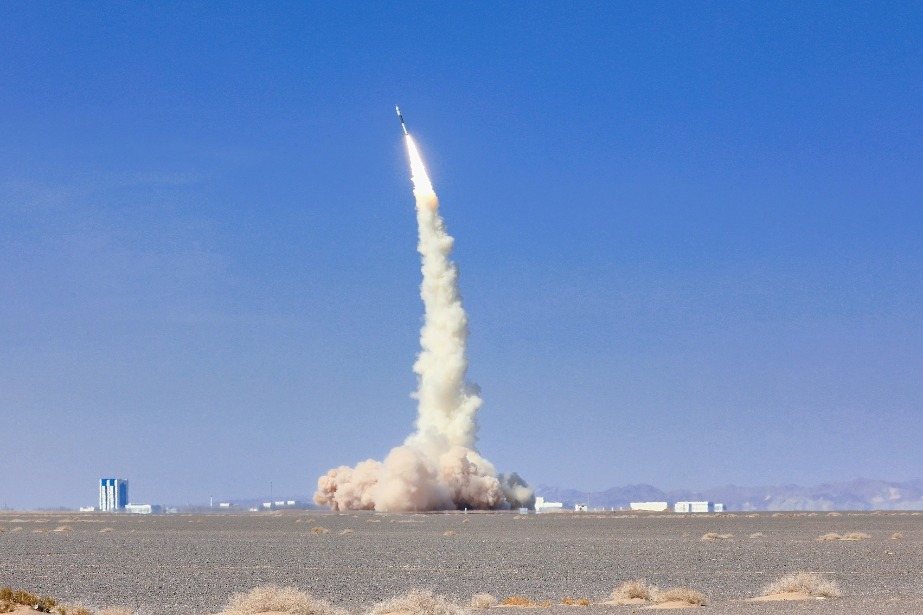
China has marked another significant milestone in its aerospace program with the successful launch of the Kuaizhou-11 Y7 carrier rocket from the Jiuquan Satellite Launch Center in Northwest China. The launch occurred precisely at 12:12 pm Beijing Time on Monday, demonstrating China’s growing capabilities in rapid deployment space missions.
The medium-lift solid-propellant rocket executed a flawless ascent, transporting eight newly developed satellites to their predetermined orbital positions. The mission represents the latest achievement in China’s expanding satellite constellation projects, which support various applications including Earth observation, communications, and scientific research.
The Kuaizhou (meaning ‘Fast Vessel’) series represents China’s strategic emphasis on developing responsive launch capabilities that can deploy satellites with minimal preparation time. This launch capability provides significant advantages for both civilian and potential defense applications, offering rapid replacement or augmentation of orbital assets when needed.
This successful mission follows previous Kuaizhou-11 launches and demonstrates continued technical refinement of China’s commercial space infrastructure. The achievement highlights China’s increasing presence in the global space industry, where it continues to advance both government-led and commercial space initiatives.
The Jiuquan Satellite Launch Center, situated in the Gobi Desert, has served as China’s primary space facility since 1958 and continues to play a crucial role in the country’s ambitious space program, which includes lunar exploration, space station operations, and satellite deployment missions.