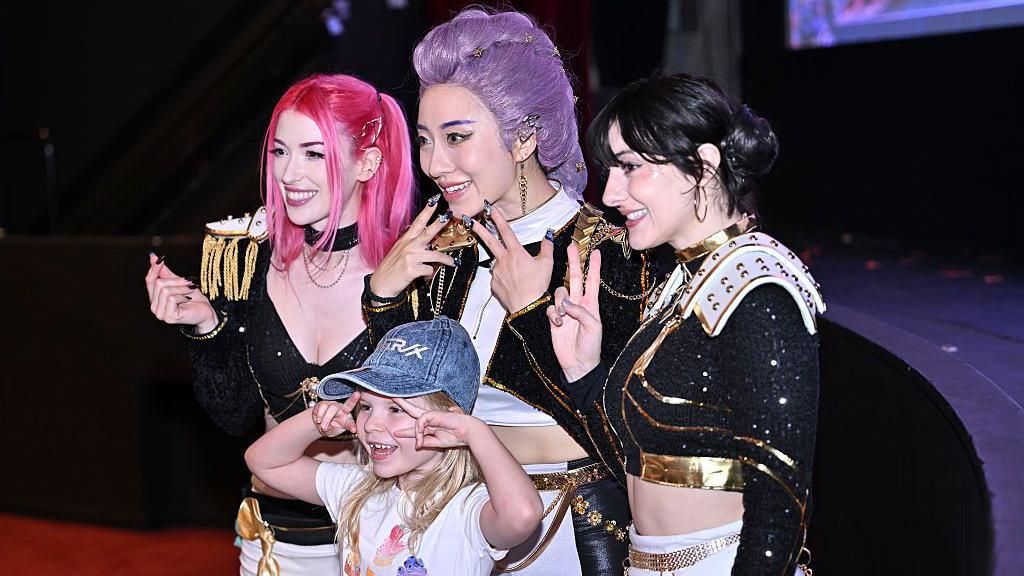
The unprecedented triumph of ‘Kpop Demon Hunters’ at the 2026 Academy Awards, where it secured the Oscar for Best Animated Feature, represents a cultural watershed moment in global entertainment. This groundbreaking film has captivated audiences worldwide since its Netflix debut last summer, achieving what few animated features have accomplished: genuine cross-generational appeal.
At San Francisco’s elementary schools, children like eight-year-old Oona Herman trade character stickers as prized commodities while attending themed birthday parties featuring movie merchandise and life-sized character cutouts. Yet the phenomenon extends far beyond childhood fascination. Parents like Christine Kao find themselves unexpectedly moved by the film’s emotional depth, frequently moved to tears by its narrative beauty despite initial expectations of mere children’s entertainment.
The film’s genius lies in its multi-layered construction. On its surface, it presents as a vibrant musical adventure where a K-pop girl group battles demons through the power of their golden voices. Yet beneath this colorful exterior lies a profound exploration of identity through protagonist Rumi’s struggle with her dual heritage as both demon hunter and half-demon. This tension resonates particularly with Asian American audiences who recognize the cultural nuances of family expectations and personal identity.
Musically, the film represents an evolutionary leap in cultural fusion. The soundtrack—crafted by an international team of K-pop and Hollywood producers—creates what musicologist Ray Seol of Berklee College describes as ‘a clever intersection between K-pop and Western pop music.’ The producers engineered a ‘global sound’ that maintains K-pop’s essential character while incorporating familiar Western pop elements, making it accessible to international audiences while preserving its authentic Korean roots.
Lyrically, the songs transcend typical animated film music, serving as narrative vehicles that explore themes of self-discovery and identity. Tracks like ‘What It Sounds Like’ function on multiple levels, simultaneously referencing physical markings that reveal Rumi’s heritage while metaphorically addressing emotional scars and personal growth.
The film arrives at a pivotal moment in Korean cultural expansion, building upon the foundation laid by Gangnam Style’s global breakthrough in 2012. Where BTS and Blackpink paved the way for K-pop’s Western acceptance, ‘Kpop Demon Hunters’ represents the maturation of this cultural movement into a comprehensive ‘K-everything’ phenomenon that encompasses animation, storytelling, and cultural diplomacy. South Korean President Lee Jae Myung has explicitly embraced this cultural output as soft power instrument for diplomatic and economic advancement.
From merchandise shortages that surprised Netflix to academic analysis at institutions like Yale University, where sociology professor Dr. Grace Kao studies its cultural impact, the film has demonstrated an extraordinary capacity to bridge demographic and cultural divides while advancing the ongoing global influence of Korean creative industries.