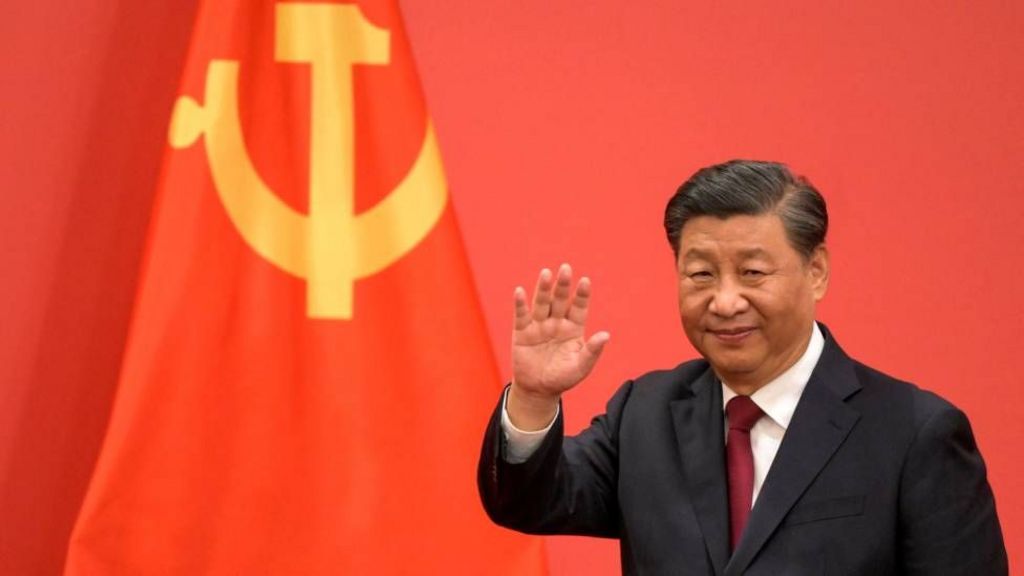
The recent National People’s Congress in Beijing revealed more through its absences than its attendances, with approximately 100 delegates missing from the meticulously orchestrated proceedings. These vacant seats represent the latest casualties in President Xi Jinping’s relentless anti-corruption campaign that has defined his leadership since 2012.
This sweeping initiative emerged in response to what experts describe as endemic corruption within the Communist Party’s massive bureaucracy. Professor Kerry Brown of King’s College London notes that with over 100 million members and millions of officials, systemic corruption became inevitable in a system where underpaid officials wielded enormous power with minimal accountability.
The campaign has produced staggering numbers: nearly one million individuals disciplined in 2025 alone, with ten high-ranking ‘tigers’ removed in January 2024. The purge has spanned all levels of governance, from village administrators to government ministers, demonstrating Xi’s commitment to his ‘tigers and flies’ approach targeting both elite and grassroots corruption.
However, analysts suggest the campaign serves dual purposes. Neil Thomas of the Asia Society Policy Institute observes that while addressing genuine corruption, the initiative also functions as “a cudgel to remove political enemies” and consolidate control. This political dimension has become increasingly apparent in recent purges, particularly within military leadership where 52% of PLA leadership positions have been affected according to the Center for Strategic and International Studies.
The recent dismissal of Generals Liu Zhenli and Zhang Youxia—despite Zhang being one of Xi’s closest military allies—signals that perceived disloyalty has become as punishable as financial corruption. Researchers at the Mercator Institute for China Studies note that these purges represent Xi’s effort to prevent the party fragmentation that contributed to the Soviet Union’s collapse, a historical lesson Xi frequently references.
As China faces economic challenges and intensified competition with the United States, Xi’s anti-corruption drive has become existential rhetoric for national rejuvenation. With his historic third term concluding next year, the campaign continues to narrow Xi’s circle of trusted allies while reinforcing his control over the party and military apparatus that ensures his political longevity.