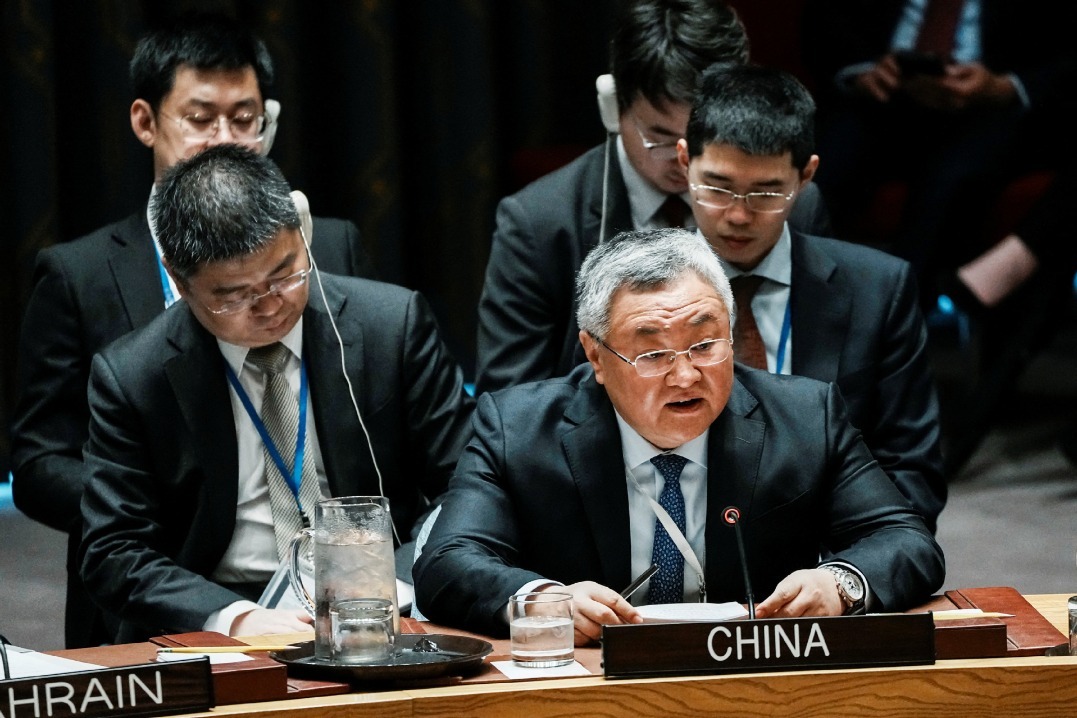
Deep divisions within the United Nations Security Council surfaced during a contentious session on Thursday regarding Iran’s nuclear program and the reinstatement of sanctions mechanisms. The meeting, convened under the United States’ March presidency, exposed significant geopolitical rifts concerning Middle East tensions and diplomatic approaches to Tehran.
China’s Permanent Representative to the UN, Ambassador Fu Cong, delivered a stern critique of the proceedings during a mandated meeting of the 1737 Sanctions Committee. He expressed grave concerns that the American decision to convene the meeting would exacerbate regional conflicts and undermine prospects for political resolution of the Iranian nuclear issue.
Ambassador Fu emphasized that holding the meeting amid renewed Middle East hostilities and an increasingly complex nuclear landscape would only intensify confrontations among parties. The diplomatic clash centered on the legal status of the sanctions committee established in 2006 to monitor restrictions on Iran’s nuclear activities, which was suspended following the 2015 Joint Comprehensive Plan of Action (JCPOA).
The current controversy stems from August actions by France, Germany, and the United Kingdom (the E3) triggering the JCPOA’s ‘snapback’ mechanism to restore UN sanctions after the US withdrawal from the agreement in 2018. While Western nations maintain Iran seeks nuclear weapons capabilities, Tehran consistently denies these allegations.
China and Russia opposed the US move to resume the committee’s reporting, with Ambassador Fu asserting that Resolution 2231 expired in October last year, terminating the Security Council’s formal consideration of Iran’s nuclear dossier. He supported Russian Ambassador Vasily Nebenzya’s procedural motion and declined to comment on the committee’s work, citing its obsolete status.
The Chinese diplomat called for immediate cessation of US and Israeli military operations against Iranian facilities under International Atomic Energy Agency safeguards, warning against further regional escalation. He attributed the current crisis to Washington’s unilateral abandonment of the nuclear accord and subsequent military actions during negotiations with Iran, which he characterized as violations of international law and UN Charter principles.
Ambassador Fu urged European nations to contribute constructively to de-escalation efforts rather than exacerbating tensions, emphasizing that the Security Council must not serve as an instrument for individual countries’ sanctions agendas or political objectives.