France’s municipal elections, unfolding over two consecutive Sundays, have emerged as a critical barometer for the nation’s political trajectory ahead of the 2027 presidential contest. These local votes are testing the resilience of mainstream parties against rising political polarization and the strategic dilemmas posed by far-left and far-right factions.
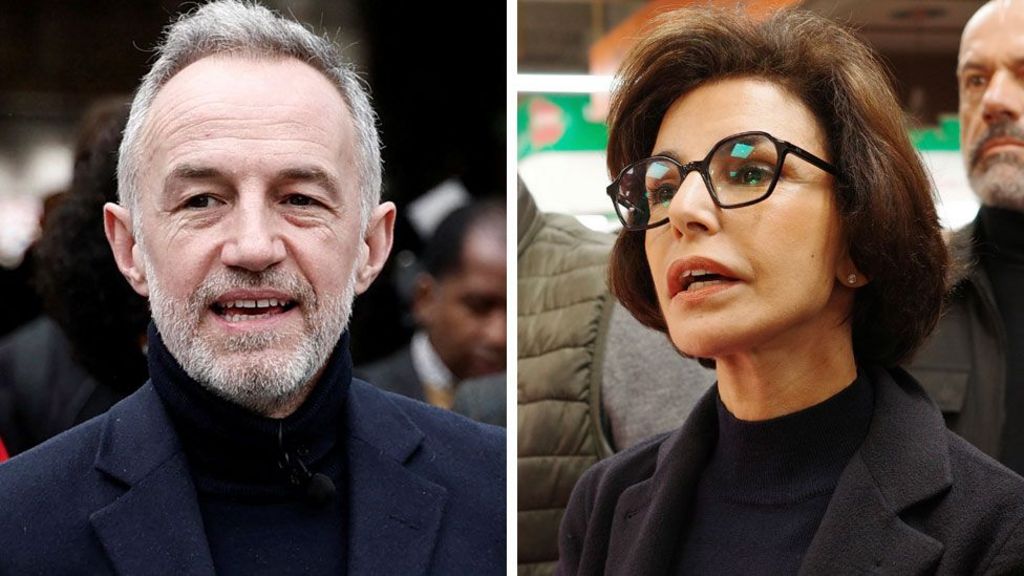
The spotlight shines brightest on Paris, where the mayoralty hangs in balance after a quarter-century of leftist governance. The capital’s race features an unprecedented fragmentation with five candidates potentially advancing to the 22 March run-off. Defending the Socialist stronghold is Emmanuel Grégoire, 48, former deputy to outgoing Mayor Anne Hidalgo. Leading the conservative charge is Rachida Dati, 60, ex-culture minister and protégée of Nicolas Sarkozy.
They are challenged by Pierre-Yves Bournazel (pro-Macron center), Sophia Chikirou (radical-left France Unbowed), Sarah Knafo (radical-right Reconquest), and Thierry Mariani (National Rally). Current polling suggests all except Mariani could clear the 10% threshold for second-round qualification, setting the stage for intense inter-round negotiations.
The electoral arithmetic creates profound ethical dilemmas: should Dati’s center-right allies coalesce with Knafo’s far-right faction, they risk being labeled fascist enablers. Similarly, should Grégoire’s Socialists unite with Chikirou’s far-left, they face accusations of tolerating antisemitism—a tension exacerbated by February’s lethal far-left militant attack in Lyon.
Dati’s campaign leverages public discontent over crime, cleanliness, and Paris’s €10 billion debt, asserting ‘Paris is dirty and unsafe.’ She frames Grégoire as ‘Hidalgo’s co-pilot’ responsible for Socialist failures. Grégoire counters with environmental achievements: 1,500km of cycle lanes, pedestrianized riverbanks, and 40% pollution reduction over a decade—transformations that have reduced car usage by 60% since 2001.
Complicating Dati’s bid is her September corruption trial over alleged €1 million illicit payments from Renault during her EU parliament tenure. While maintaining innocence, a conviction could force her mayoral resignation.
Beyond Paris, critical contests unfold in Le Havre (where ex-PM Édouard Philippe’s presidential hopes hinge on re-election), Nice (featuring a conservative civil war between Horizons’ Christian Estrosi and RN-allied Eric Ciotti), and Marseille (where Socialists confront RN advances). National Rally aims to expand its control beyond 15 medium towns, targeting Marseille, Toulon, Carcassonne, and Lens.
This election also debuts a reformed Parisian voting system that personalizes campaigns by having voters directly elect central council members—a change potentially favoring charismatic figures like Dati. Across France, these municipal battles reveal the deepening fissures in a politically polarized nation where traditional parties must navigate extremist alliances or risk electoral irrelevance.